
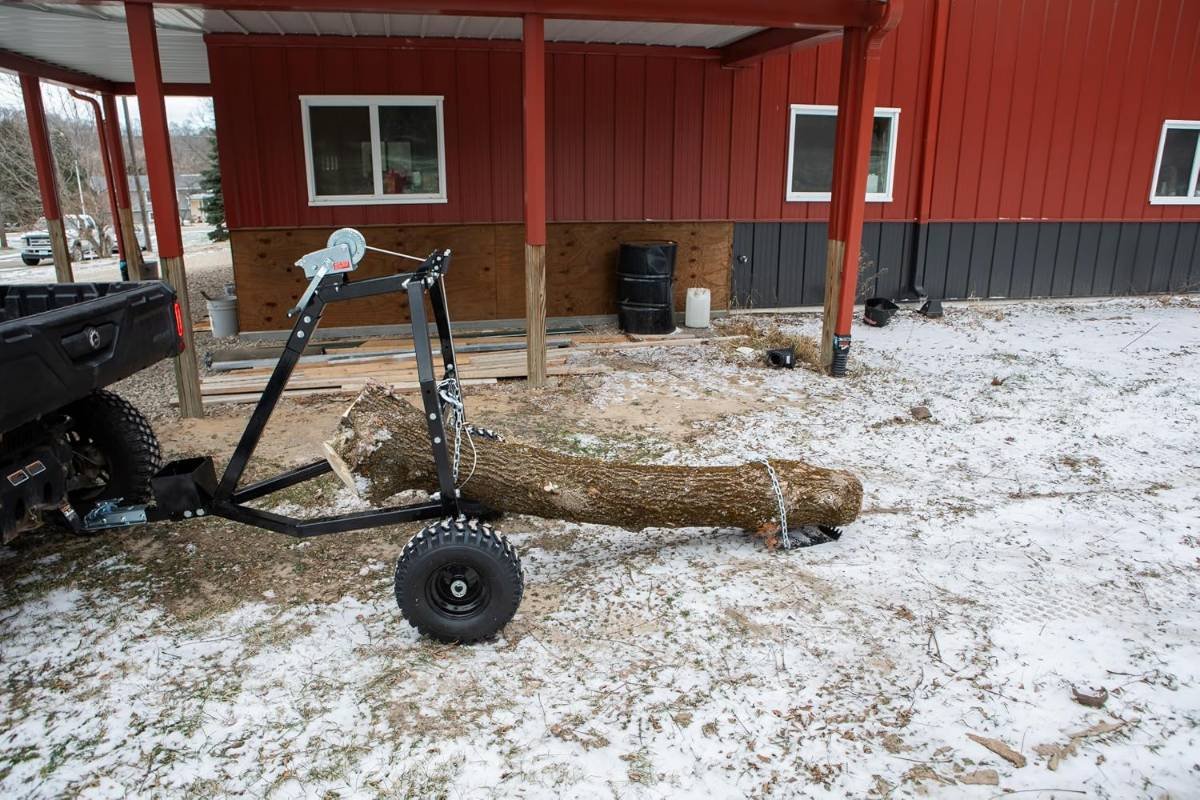
A log arch is the tool that turns a sawlog you cannot budge into one you can roll out of the woods. It lifts the front end of the log off the ground and carries it on two wheels, so the log rolls along behind you instead of plowing into dirt, roots, and rocks. For anyone running a portable sawmill or a chainsaw mill, that also means cleaner bark and fewer stones buried in it, which is exactly what you want in front of a blade.
This guide covers how a log arch works, the three main types, how to size one to the logs you cut, and four arches sold on Amazon. It also covers the chain gear you need to run one, and how to skid a log without tipping the arch or the ATV pulling it.
Table of Contents
What Is a Log Arch and How Does It Work?
A log arch is a frame shaped like an upside-down U, set on an axle with two wheels. You roll it over the end of a log, wrap a chain or tongs around the log, and lift that end up into the frame. Some arches lift with a winch, some with a long lever handle, and some lift as you pull forward.
The Nova Scotia Department of Natural Resources describes the design simply: the load hangs inside the arch, letting it swing so the wheels can climb over obstacles. Its small-scale harvesting module also points out a detail that matters a lot on an ATV. When the log hangs slightly ahead of the wheel center, part of the butt weight presses down on the hitch, giving the ATV more traction instead of less.
The payoff is less work and less damage. A University of Missouri Green Horizons article on low-impact harvesting notes that with an arch, the back of the log barely scratches the soil. The log is also less likely to snag on roots or stumps, and you can move logs your machine could never drag flat on the ground.
Log Arch vs Dragging, Skidding Tongs, or a Trailer
Dragging a log with a chain works for short pulls on clean ground. The trouble is friction. The whole log is on the dirt, so the pulling machine fights all of its weight, and the log digs in, snags on stumps, and packs grit into the bark. That grit dulls a bandsaw blade or ripping chain (a chain sharpened to cut along the grain) faster than almost anything else on the log.
Skidding tongs speed up hookup but don't lift much. A trailer carries the whole log, but you need a way to load it. A log arch sits in between. It lifts only one end, so you get most of the benefit of a trailer with almost none of the loading work. If you only move short logs around the mill yard, a good pair of log tongs and a cant hook or peavey may be all you need. Once the logs are in the woods and the pull is long, an arch pays off.
Hand, ATV, or Tractor: Which Type of Log Arch Fits
Log arches split into three rough groups, and the right one depends on what you pull it with and how big your logs run.
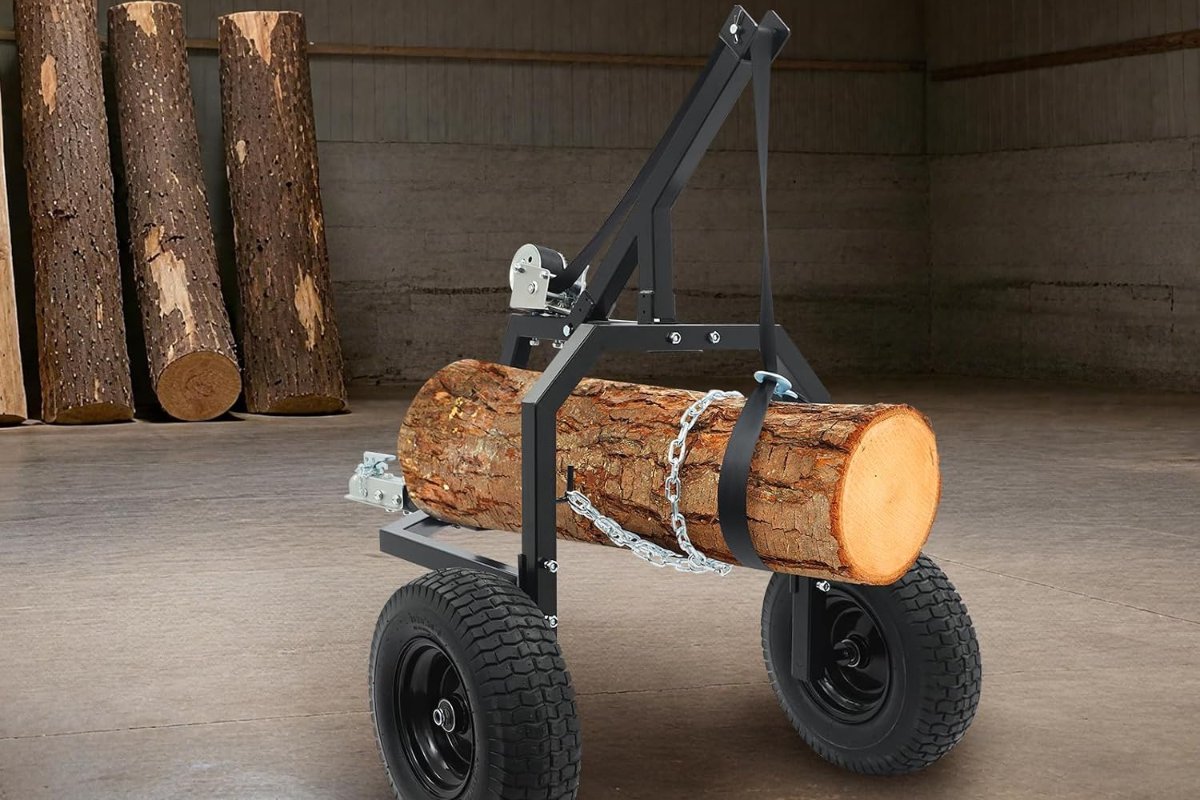
- Hand arches. Narrow frames and lever handles light enough for one person to pull. LogRite, a log handling tool maker that sells direct from its own site, rates its Junior arch for straight logs from 4 to 16 inches in diameter and up to 1,000 pounds. These shine for firewood rounds, short sawlogs, and tight spots no machine can reach.
- ATV and UTV arches. Wider frames, bigger tires, and a hitch tongue. Most use a hand crank winch or an electric winch to lift the log. This is the biggest group on Amazon and the best fit for most small woodlot sawyers.
- Tractor arches. Heavy frames built for a three-point hitch or drawbar, and logs well over two feet in diameter. LogRite says its midsize arches carry 25-inch logs and fully suspend 2,000-pound loads, and its large arches go beyond that. These cost more and need a machine heavy enough to control the load.
How to Size a Log Arch to Your Logs
Two numbers matter on every log arch listing: the largest log diameter that fits under the frame, and the weight the arch can lift. Buy for the logs you cut, then add some headroom.
- Diameter. Measure the butt end of your typical sawlog, not the small end. If most of your logs run 14 to 18 inches, an arch rated for 24 inches gives you room for the bigger ones and the flare at the base.
- Weight. Green logs are heavy. A 16-inch log that is 10 feet long holds about 14 cubic feet of wood, and green hardwood at that size lands deep into the hundreds of pounds. Run your species and length through our lumber weight calculator before you trust a rating.
- Lift point weight vs total weight. An arch only carries one end, so it sees part of the log weight, not all of it. Some listings rate the load at the arch and some rate the whole log. Read which one you are looking at.
- Your pulling machine. The Missouri article gives a simple rule of thumb for ATVs: do not pull more than the machine weighs, and use four-wheel drive.
Log Arches Worth Buying
The log arch market on Amazon is newer than most logging tool categories. Plenty of listings come from brands with only a handful of reviews, so these picks focus on clear specs, sensible designs, and sellers that plainly state what is and isn't in the box. Check the current listing for price and stock before you buy.
Titan Attachments Towable Log Arch
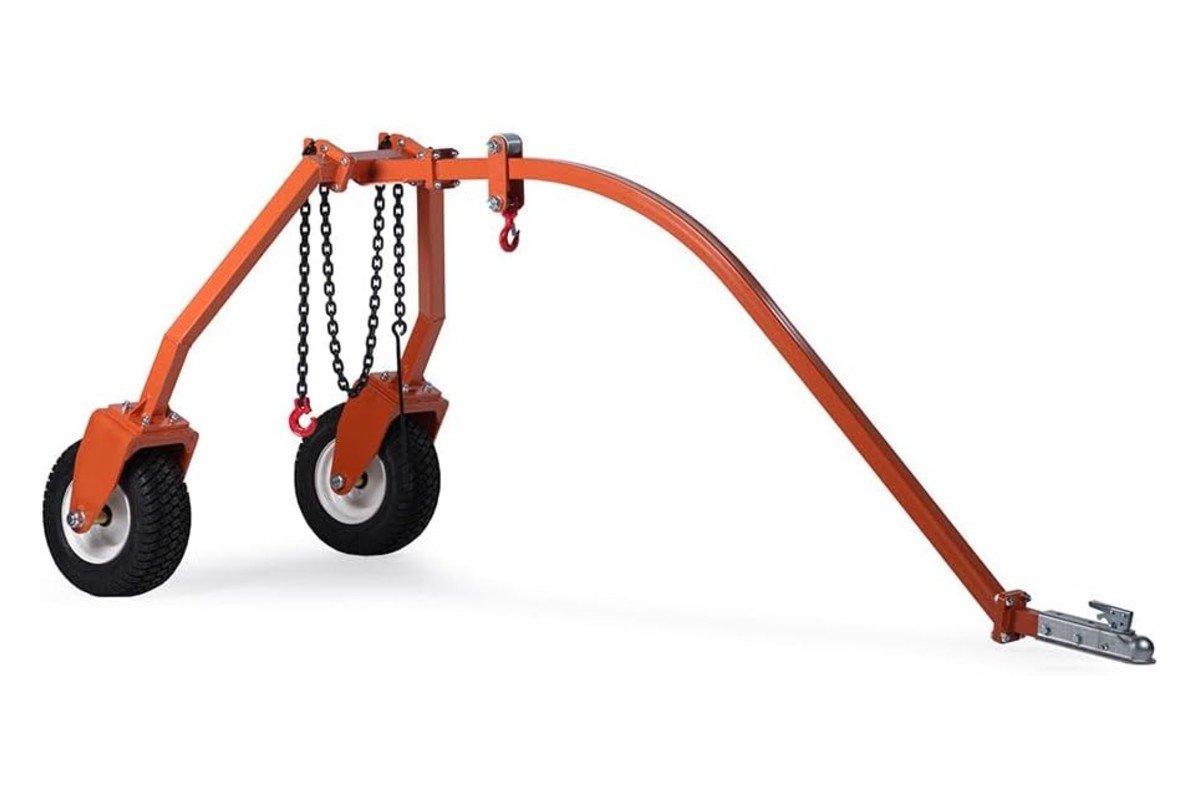
The Titan arch skips the winch entirely. You hook the choker chain around the log, connect it to the arch, and drive forward. The forward pull raises the log off the ground. Fewer moving parts means less to fix, and setup is fast. Titan lists it for logs up to 18 inches wide with 500 pounds of capacity at the arch, built from 2-inch steel tubing, and the frame ships in two boxes and bolts together. It hooks to an ATV, a UTV, or anything with a ball hitch.
See the Titan Attachments Towable Log Arch on Amazon
Impact Implements Log Hauler Kit with Front and Rear Arch
This kit from MotoAlliance pairs a front arch with a rear arch, so both ends of the log ride off the ground. That turns the setup into something closer to a log trailer, and it helps over gullies and hills where a single arch would let the tail end dig in. The frame is 11-gauge, thick-walled steel rated for 1,500 pounds. It works with a manual or electric winch, and it includes wheel chocks for loading logs onto the rear arch.
See the Impact Implements Log Hauler Kit on Amazon
MIOUYTRT ATV Log Skidding Arch, 2,000 Pound Capacity
For a classic winch arch with plenty of capacity, this one checks the main boxes. It is rated for 2,000 pounds and logs up to 24 inches in diameter, lifts with a manual winch using a polyester strap and iron chain, and rolls on two 16-inch pneumatic tires. It attaches to an ATV with a 2-inch trailer hitch and weighs about 75 pounds, so you can move it by hand when it is empty.
See the MIOUYTRT ATV Log Skidding Arch on Amazon
Gelacie Log Dolly with Skidding Arch, 31 Inch Tires
The Gelacie dolly is the pick for smaller logs and rough ground. Its 31-inch tires are far taller than the 16-inch wheels on most ATV arches, and tall wheels roll over branches and ruts much more easily. Gelacie rates it for logs up to 16 inches and 1,000 pounds. Because the arch holds the log slightly off the ground, it also works as a sawbuck for bucking firewood, so the chain stays out of the dirt.
See the Gelacie Log Dolly with Skidding Arch on Amazon
If you want an established name and do not mind buying outside Amazon, look at LogRite. Its arches sell through its own site and through dealers. Wood-Mizer, for one, carries the LogRite Junior in its logging tool lineup for sawmill owners.
The Chain Gear You Need to Run a Log Arch
An arch is only half the system. You still need something to grab the log and something rated to take the pull. These four items cover most setups.
- Skidding tongs. The Earth Worth 25-inch Skidding Tongs open wide enough for most sawlogs and have a large ring for a 3/8 inch chain. They carry more than 1,700 ratings on Amazon, a long track record for a logging tool. Tongs are the fastest hookup for single logs.
- Choker hooks. A choker hook lets a chain cinch tight around the log and release cleanly. The Mytee Products 5/16 inch G80 Choker Hooks come as a 2-pack with a 4,500-pound working load limit. Mytee does not rate them for overhead lifting, which is fine for skidding.
- Log chain. The YATOINTO Grade 80 Log Chain, 5/16 inch by 14 feet, has a grab hook on one end and a slip hook on the other, with a 4,900-pound working load limit. Fourteen feet is long enough to choke together two or three small logs.
- Come along. A hand winch helps when a log is wedged behind a stump or you need to pull it a few feet into position under the arch. The BIG RED 2 Ton Come Along has a 9-foot steel cable and two hooks with safety latches.
Match the working load limit of your weakest piece to the load. A G80 chain does you no good hooked to a light hook. For rolling and turning logs once they reach the mill, see our guide to log turners for your sawmill.
How to Skid a Log With a Log Arch
- Buck the log to length first. A shorter log is lighter, turns easier, and is less likely to bind on a tight trail.
- Back the arch over the butt end, or the heavier end, so the frame straddles the log.
- Wrap the choker chain or set the tongs a foot or two in from the end, so the log does not slip out of the hold.
- Lift the end until it clears the ground by a few inches. You do not need it high. A low load is a stable load.
- Pull slowly and in a straight line where you can. Take turns wide, because a binding log is what tips arches over.
- On slopes, travel straight up or straight down, never across the hill. Ease off before the log can push the machine downhill.
- Lower the log at the mill deck or log pile before you unhook anything.
Nova Scotia's woodlot module suggests a rotating or swivel hitch between the ATV and the arch, so if the arch tips on rough ground, it can roll without taking the ATV with it. The same module warns that most ATV brakes are built for light duty and that hauling downhill can wear them out early, so keep downhill loads small.
Build a Log Arch or Buy One?
Plenty of log arches are homemade. Small Farmer's Journal published a reader's design built from a modified trailer axle and a strap winch, sized for a pony or small horse. The Nova Scotia module profiles a homemade two-wheel ATV arch with a hand winch and 25 feet of cable that carries one 16-foot log, 12 inches at the butt, about two feet off the ground.
Building makes sense if you weld and have a spare axle. For most people, a bought arch costs less than the steel, tires, and time, and the load ratings come from the maker instead of a guess. The welding also has to hold under shock loads every time a log hits a root. That's where homemade frames most often go wrong.
Log Arch Safety
- Stand clear of the log and chain while it lifts. A chain under load can snap back if a hook slips.
- Never ride an ATV sideways across a slope with a log on the arch.
- Keep hands out of the space between the log and the frame.
- Wear boots, gloves, and eye protection, and keep a second person in sight on long pulls.
- Read the OSHA logging eTool (OSHA is the federal workplace safety agency) for general log handling hazards, and see our chainsaw mill safety guide for the cutting side of the job.
Log Arch FAQ
What is a log arch used for?
A log arch lifts one end of a log off the ground so you can pull it out of the woods on wheels. It cuts the pulling force needed, keeps the log from plowing into the soil, and keeps dirt and stones out of the bark before milling.
Can an ATV pull a log arch?
Yes. Most log arches on Amazon are built for ATVs and UTVs. Use four-wheel drive, keep the load lighter than the ATV itself, and drive straight up and down slopes rather than across them.
What size log arch do I need?
Pick an arch rated for logs a few inches larger than the butt end of your typical sawlog, and check the weight rating against the green weight of your species at that length.
Do I need a winch on a log arch?
Not always. Winch arches lift the log with a hand crank or electric winch. Pull-to-lift designs, like the Titan arch, raise the log as the vehicle moves forward. Hand arches use a long lever handle.
Is a log arch better than skidding tongs?
They do different jobs. Tongs grab the log fast but leave most of it on the ground. An arch lifts the end. Many sawyers use tongs and an arch together.
Can I build my own log arch?
Yes, if you can weld and have a sturdy axle. Homemade arches are common, but a bought arch comes with a tested load rating, which matters when a heavy log shifts.
Which Log Arch to Buy
A log arch is one of the simplest ways to get sawlogs out of the woods clean, without a tractor or a skidder. For small and midsize logs, the winch-free Titan arch is the simplest to run. For bigger sawlogs on an ATV, a 2,000-pound winch arch like the MIOUYTRT gives you the most capacity. If your trails are rough or steep, the two-arch Impact Implements kit keeps both ends of the log up. Pair any of them with good tongs, rated chain, and a set of felling wedges for the cutting end, and moving logs stops being the hardest part of milling.