
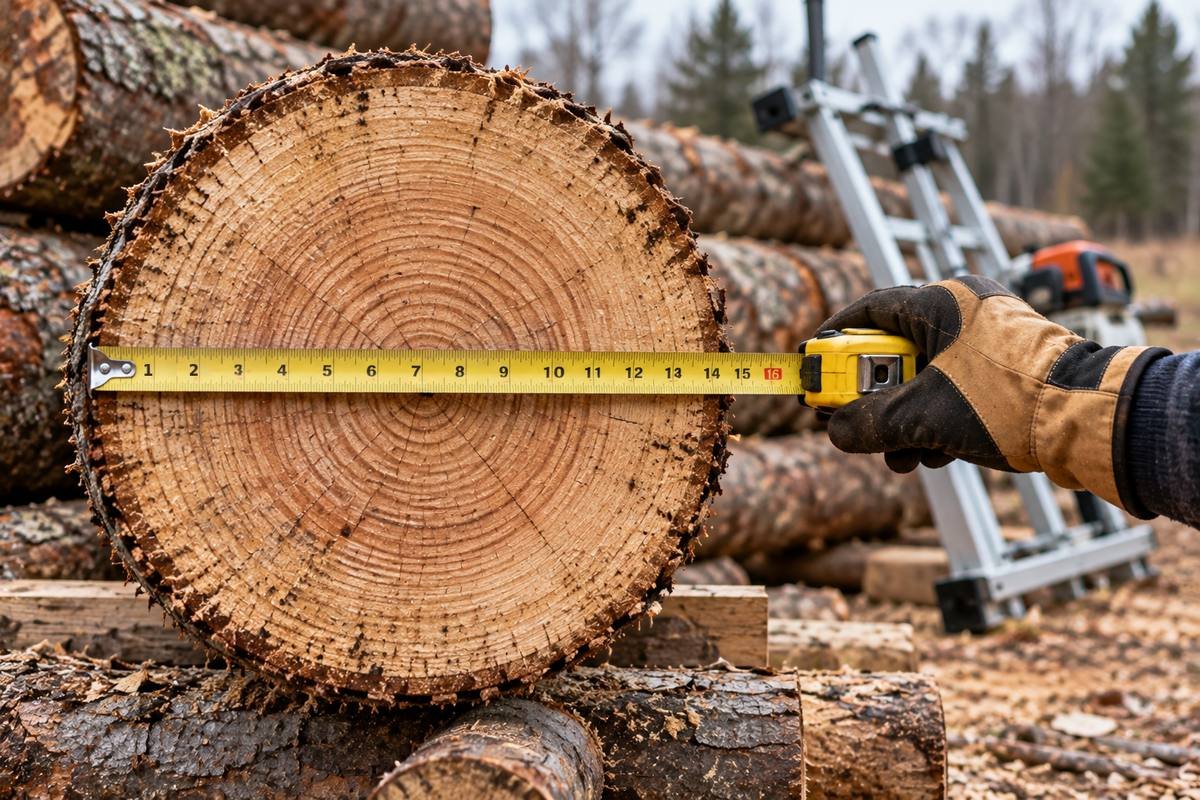
The first question is how big your logs are.
Portable sawmills and chainsaw mill attachments range from a low-cost attachment that clamps onto a chainsaw you already own to hydraulic-fed machines built for daily commercial use. Most of that price difference has nothing to do with the blade: it's how the mill handles the log.
Before comparing horsepower or brand names, figure out the largest diameter you'll realistically cut and how often you'll be moving the mill between sites. Everything else follows from those two answers.
Three classes of mill, and what separates them
Ordered from least to most capable. Price climbs with log-handling capability, not with cutting quality: a low-cost attachment and a top-end hydraulic mill can leave a similar finish on the board.
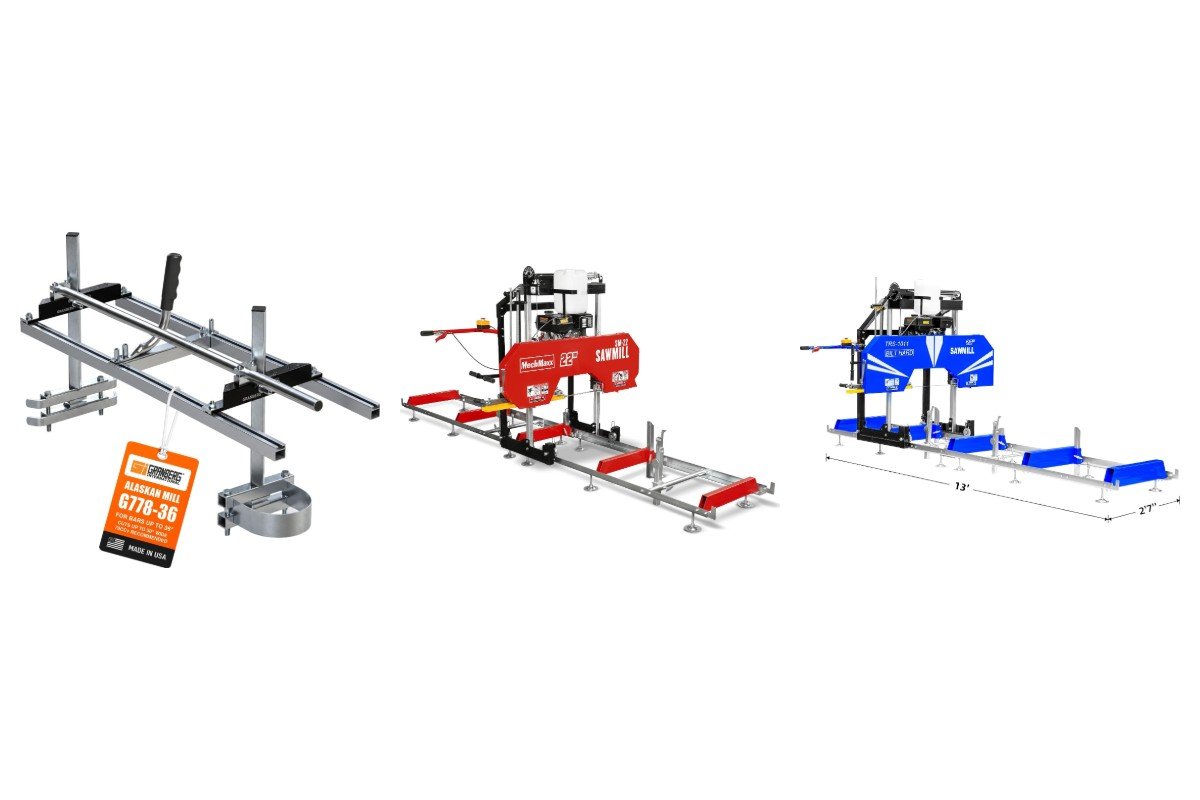
Lowest cost way to find out if milling is for you. No separate machine to store: it mounts on a saw you likely already own.
Fully manual, slow, and limited by your bar length. Not a realistic tool for selling lumber.
Real cutting speed and accuracy for the money. The default choice for a serious hobbyist milling regularly.
You're still rolling and dragging logs onto the bunks by hand: that's the real bottleneck at this tier, not the blade.
Powered loading arms turn log handling from the bottleneck into a non-issue. This is what makes daily production volume realistic.
The price only makes sense if the mill is paying for itself. Don't buy this tier because you can afford it.
"A bigger engine gets most of the attention on a spec sheet. The track and log-handling system are usually what determine how much lumber you cut in a day."
Start here
The guides worth reading first, in the order most people need them.