
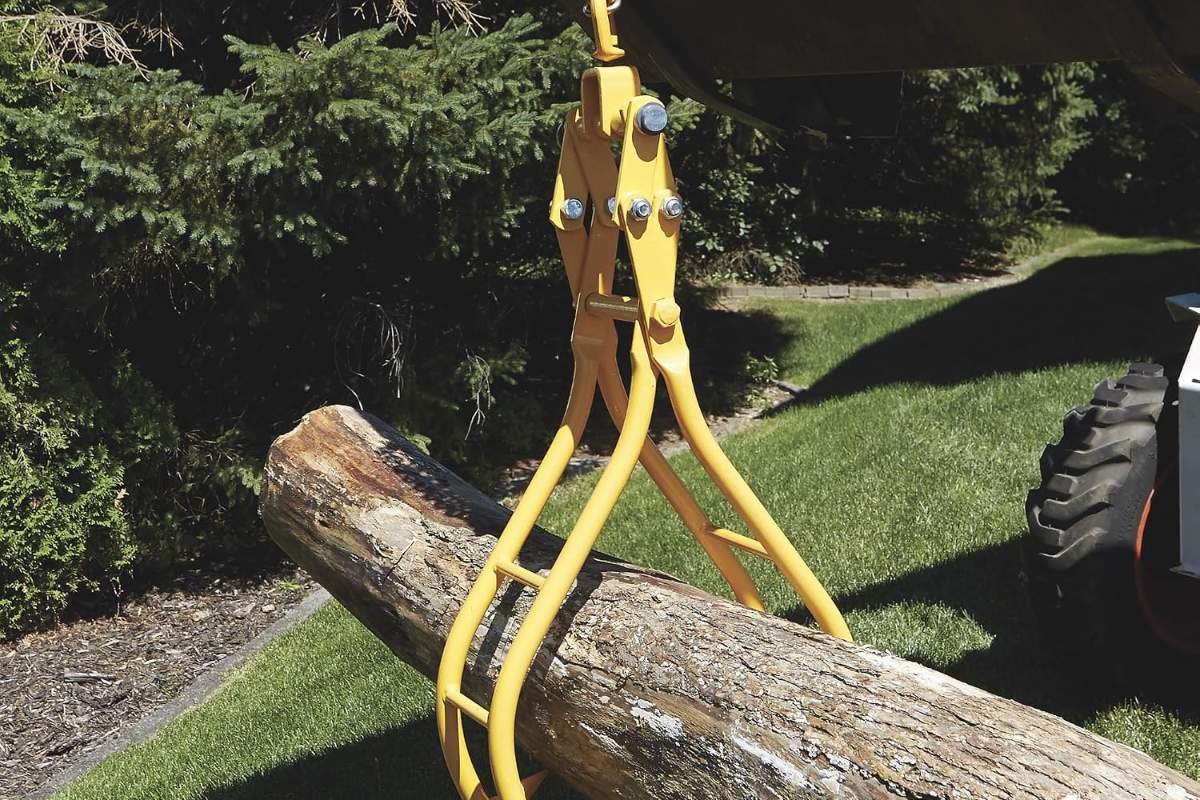
Log tongs are the tool most people reach for only after they have already hurt their back rolling a round across the yard by hand. A good pair turns a log you can barely budge into something you can drag, lift, or load with one motion. The design is very simple: two curved jaws, a pivot, and a hook or ring at the top that tightens the grip the harder you pull.
This guide covers how log tongs work, the three tong styles you will run into, how to size a pair to the logs you cut, a few real products worth looking at, and how to use them without getting hurt.
Table of Contents
What Are Log Tongs and How Do They Work
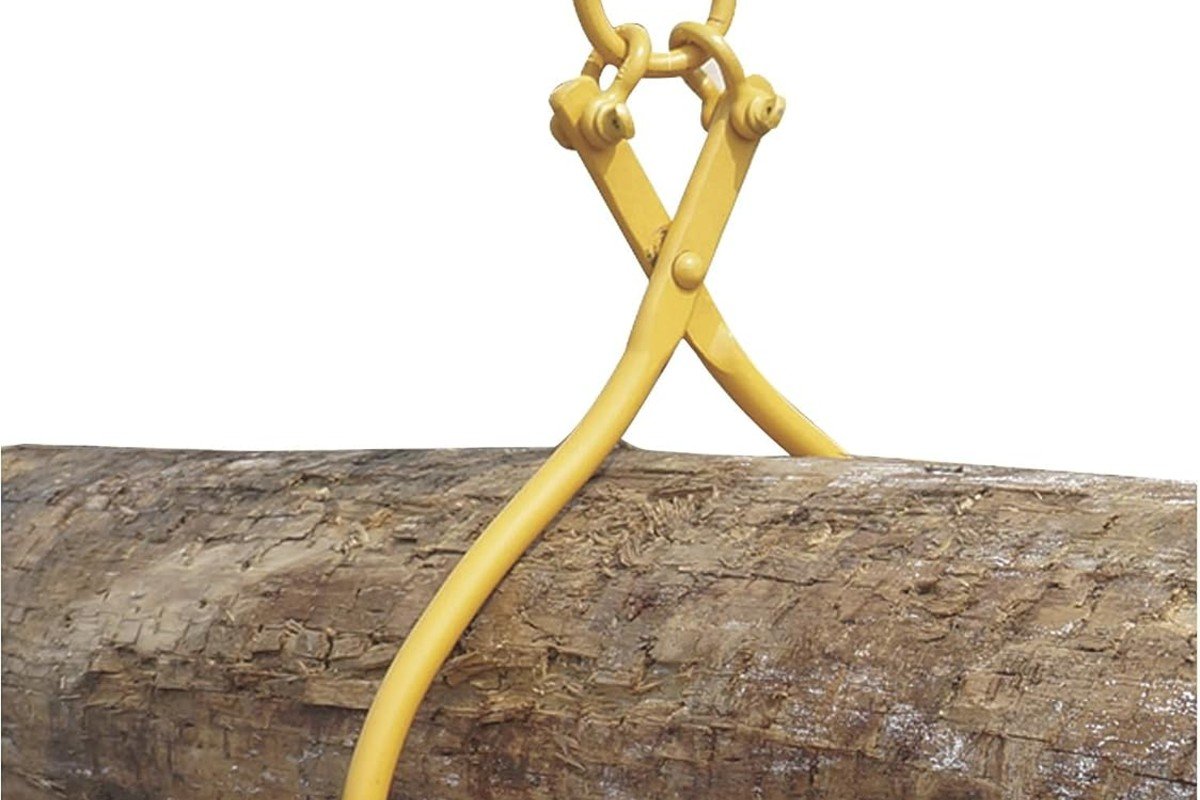
A pair of log tongs is two curved steel arms joined at a pivot point, with a pointed tooth or claw at the bottom of each arm and a ring, hook, or handle at the top. Set the jaws around a log and pull up or drag forward on the top attachment point, and the pivot geometry does the rest: the harder you pull, the tighter the teeth bite into the wood.
Let go, and the jaws fall open on their own. There is no latch, no lever, and nothing to adjust before each use, which is most of the appeal.
The teeth do the actual work. On a lifting or skidding tong, they are usually a single hardened steel point per jaw, ground to bite into bark and sapwood (the lighter, newer wood just under the bark) without needing to be driven in by hand. Some models add a rotating or swiveling tooth, which lets the point seat itself against the log's actual surface instead of forcing the log to sit flat against a fixed point. That difference matters more on irregular or partially barked rounds than on clean milled logs.
Types of Log Tongs
Three distinct tool families get called "log tongs," and they are not interchangeable.
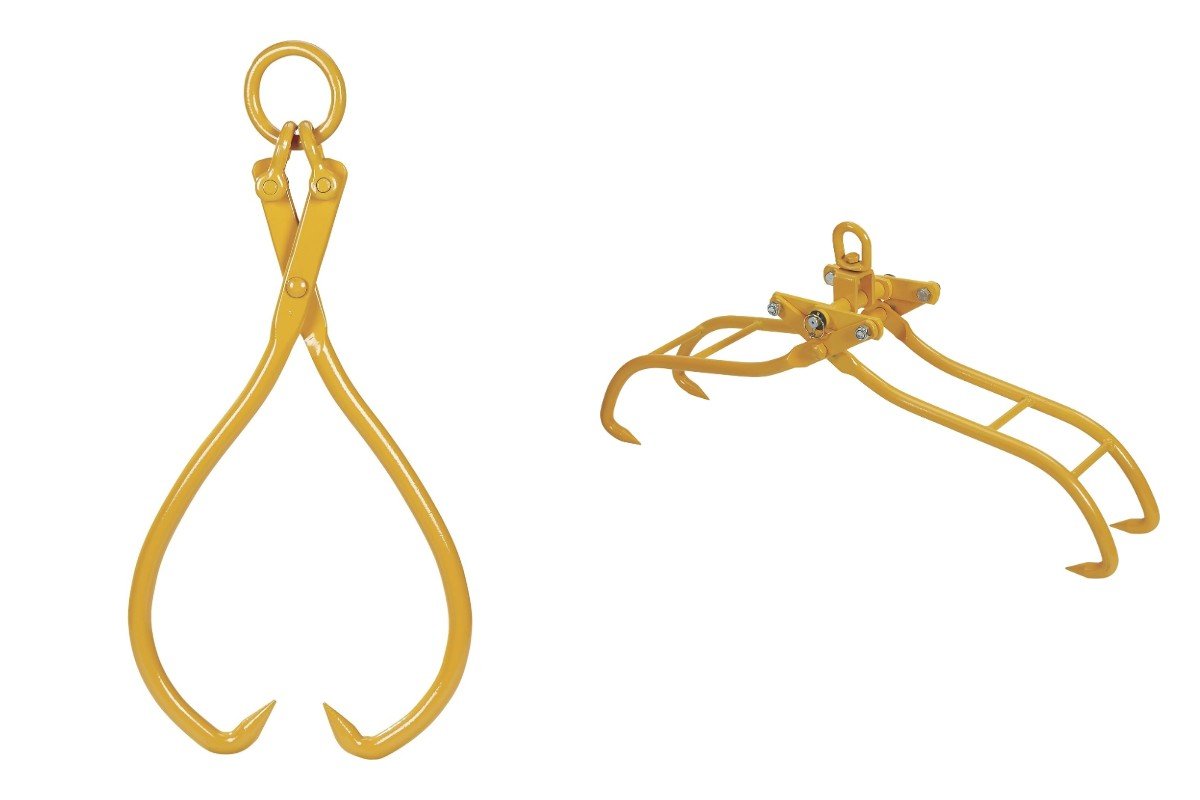
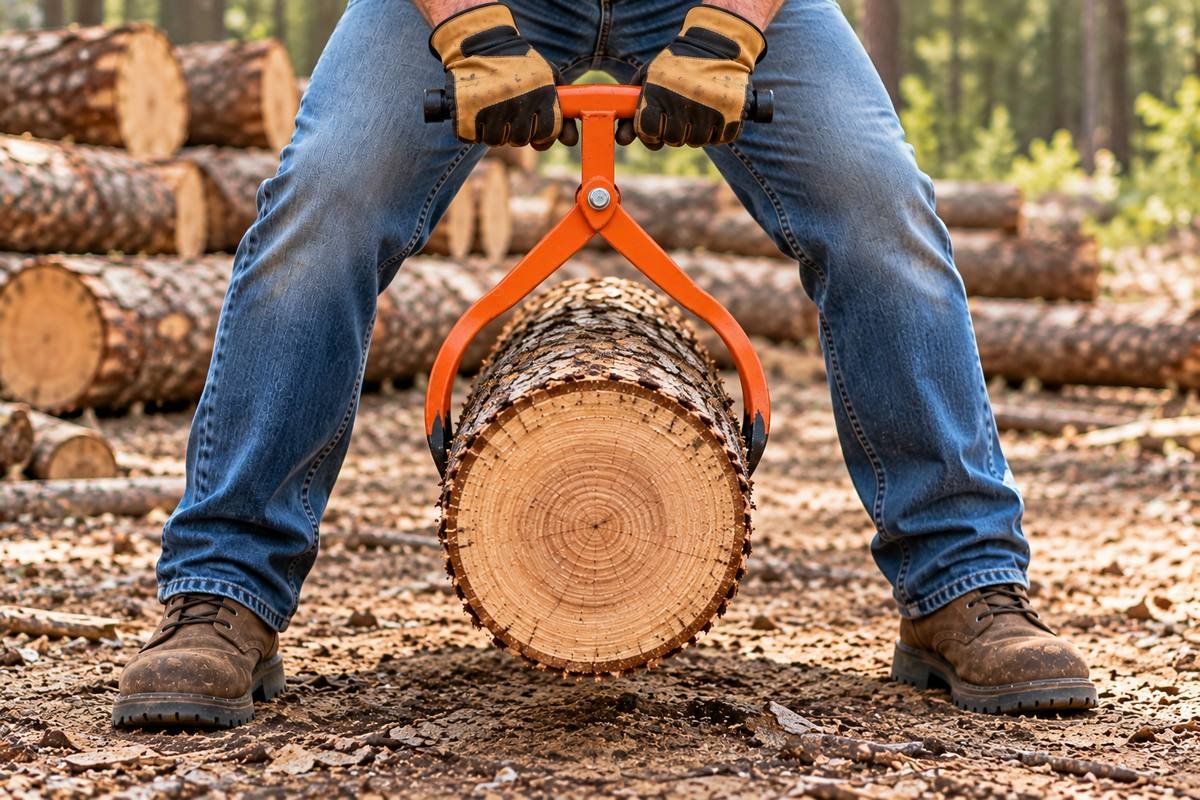
Lifting tongs are built to carry a log's full weight straight up, like a pair of ice tongs on a block of ice. You close them around the log, lift by the top ring or handle, and the log hangs below you. This is the style most people picture, and it is what you want for loading rounds into a truck bed, a wheelbarrow, or a log splitter tray.
Skidding tongs (sometimes sold as "dragging tongs" or "pulling tongs") are built to drag a log along the ground behind a chain, a tow strap, an ATV, or a tractor, rather than to lift it clear off the ground. The top attachment is usually a ring or swivel hook designed to take a chain. The jaw geometry is shaped to bite harder the more forward tension is applied, which is exactly what happens when something tows the log forward. On a long pull through the woods, hooking the tongs to a log arch lifts the front of the log so it rolls instead of plowing.
Multi-claw lifting tongs use three or four smaller claws arranged around a central point instead of two opposing jaws, closing evenly around a round from multiple directions. These are more common on larger-capacity models meant for sawlogs and bigger diameter material, since a two-jaw tong's bite can slip on a log that is close to its rated maximum opening.
What Size Log Tongs Do You Need?
Every model is rated by two numbers: jaw opening (the largest log diameter the tongs can close around) and load capacity (the safe working weight). Buying a pair rated right at the diameter of your biggest rounds is a mistake, since the jaws need room to bite rather than sitting at their fully open limit.
A rough rule that holds up across the product lines below: pick a jaw opening a few inches larger than the biggest rounds you expect to handle regularly, not the largest round you might ever cut once.
| Typical round diameter | Jaw opening to look for | Common use case |
|---|---|---|
| Up to 12 inches | 16 inches | Split firewood rounds, general yard cleanup |
| 12 to 20 inches | 25 inches | Unsplit firewood rounds, small sawlogs |
| 20 to 28 inches | 32 to 36 inches | Sawmill logs, larger hardwood rounds |
| 28 inches and up | 36 inches or a multi-claw model | Full sawlogs at a portable sawmill |
Load capacity matters just as much as jaw size, and it is easy to underestimate. A green hardwood round can weigh well over a thousand pounds even at a modest diameter (the lumber weight calculator is worth running on a log before assuming a lighter-duty tong will hold it). Buying above your expected weight, not right at it, is the safer habit, since a tong operating near its rated limit is also the one most likely to slip.
Log Tongs vs. a Cant Hook or Peavey
Log tongs and a cant hook solve different problems, and most people who work with logs regularly end up owning both. Tongs grip a log and let you lift or drag it in a straight line. A cant hook (or a peavey, which is a cant hook with a spike on the end for extra bite on bark) is built to roll and rotate a log in place. That is what you need when you are turning a log on a sawmill bed to get the next face up, or rolling a round over to split the other side.
Reach for tongs when you need to move a log from one place to another. Reach for a cant hook when you need to turn a log that is not going anywhere.
Log Tongs Worth Buying
These are current, real products, chosen to cover a range of sizes and use cases rather than one "best overall" pick, since the right tong depends on the log diameter you are handling.
Roughneck 16-inch Log Tongs (Model 2504Q046)
A 16-inch jaw opening rated for 750 pounds, sized for split or unsplit firewood rounds and general yard-cleanup logs. This is the size to start with if most of what you are moving is stove-length firewood rather than full sawlogs.
- 16 inch opening and 750 pound rating are right-sized for stove-length firewood and general yard cleanup
- Compact size is easy to store and handle one-handed
- Lower cost entry point than the larger lifting sizes
- 750 pound rating and 16 inch opening are too small for full sawlogs
- Not built for the dragging or skidding duty the ring-and-chain models handle
Roughneck 25-inch Lifting Log Tongs (Model 2504Q048)
A 25-inch jaw opening rated for 1,500 pounds, a comfortable step up for unsplit rounds and smaller sawlogs. This size shows up often in forum recommendations as the practical middle ground between firewood-only and full sawmill duty.
- 1,500 pound rating and 25 inch opening comfortably step up to unsplit rounds and smaller sawlogs
- Frequently recommended in forums as the practical middle-ground size
- Same Roughneck lifting-tong design as the 16 inch model, so the learning curve carries over
- Still short of the 36 inch model's capacity for full-size sawlogs
- A lifting-only tong, not built for dragging like the ring-and-chain skidding tongs
Roughneck High Carbon Steel Skidding Tongs, 32-inch
Built specifically for dragging rather than lifting, with a 32-inch jaw opening in high-carbon steel. The ring-and-chain attachment style is what you want if you plan to tow logs behind a tractor or ATV instead of carrying them.
- Purpose-built for dragging, with a ring-and-chain attachment suited to towing behind a tractor or ATV
- High-carbon steel construction holds up to skidding wear
- 32 inch jaw opening handles larger logs than the lifting-only models
- Not designed for lifting, so it doesn't cover the same use case as the Roughneck lifting tongs
- No stated weight rating in the product info, making it harder to compare directly against the VEVOR or 4-claw options
VEVOR 32-inch 2-Claw Rotating Skidding Tongs
A 32-inch opening rated to 1,543 pounds (700 kg), with rotating teeth that seat against an irregular or partially barked log surface instead of forcing the log flat against a fixed point. Worth a look if most of what you handle still has bark on it.
- Rotating teeth seat against irregular or bark-covered logs instead of forcing them flat
- 1,543 pound rating matches or exceeds the Roughneck 32 inch skidding tongs
- Same 32 inch opening as the Roughneck skidding option, giving a direct alternative
- Rotating-teeth design adds moving parts that a simple fixed-jaw tong doesn't have
- The rotating advantage matters most on bark-on logs, less so on already-debarked wood
Roughneck Specialty Log Tongs, 36-inch
A 36-inch jaw opening rated for 3,000 pounds, built for full-size sawlogs and the largest hardwood rounds a portable sawmill is likely to see. This is the size to buy once, rather than upgrading later, if you are milling anything close to the top end of what most portable sawmills accept.
- 3,000 pound rating and 36 inch opening are the highest capacity in the lineup, built for full-size sawlogs
- A buy-once option if milling near the top end of what most portable sawmills accept
- Avoids the need to upgrade later as log size grows
- Size and weight rating are more than you need for firewood rounds or general yard cleanup
- Larger jaw opening is bulkier to store and handle than the smaller models
Roughneck 4-Claw Log Lifting Tongs, 28-inch
A four-claw design rated for 2,200 pounds at a 28-inch diameter, closing evenly around the log from four points rather than two opposing jaws. The extra contact points help on rounds near the tool's rated capacity, where a standard two-jaw tong's bite is more prone to slipping.
- Four-claw design closes evenly around the log from four points instead of two opposing jaws
- Extra contact points reduce slipping on rounds near the tool's rated capacity
- 2,200 pound rating covers most sawlogs without stepping up to the 36 inch model
- More moving parts than a standard two-jaw tong, meaning more to maintain
- 28 inch opening is smaller than the 32 and 36 inch options for the largest logs
LogRite 16-inch Ring Skidding Tongs
An American-made option from a brand that specializes in aluminum-handled logging tools, sized for smaller-diameter dragging work. LogRite's tools carry a reputation on forestry and arborist forums as a step up in build quality over most import options, at a correspondingly higher cost.
- American-made build quality, a step up over most import options according to forestry and arborist forums
- Aluminum-handled construction from a brand that specializes in nothing but logging hand tools
- Ring-and-chain design suited to smaller-diameter dragging work
- Higher cost than comparable import options
- 16 inch size limits it to smaller-diameter logs, not full sawlogs
How to Use Log Tongs Safely
The OSHA logging eTool's manual operations section (OSHA is the federal workplace safety agency) covers safe log handling in detail. A few points from it apply directly to tong use. Keep your back straight and lift with your legs when guiding a load. Never position any part of your body under a suspended log. Stay clear of the path a dragged log will travel if the tow line breaks or the tongs release.
Set the jaws around the widest, most solid part of the log, not near a knot, a split end, or a section of rotten wood, since any of those can let the teeth tear out under load. Test the grip with a short, controlled lift or pull before committing to the full motion.
If a log shifts or the tongs feel like they are riding up rather than biting in, stop and reset instead of powering through. On sloped ground, keep yourself uphill and clear of the log's downhill path in case it breaks free.
Tongs rated for lifting should not be used to drag a log any significant distance, and skidding tongs are not rated the same way a lifting tong is for a straight vertical load. Matching the tool to the motion, not just the log size, is part of what the capacity rating on the box assumes.
Maintenance and Care
Log tongs are nearly maintenance-free, but a few habits keep them working as rated. Keep the pivot pin lightly oiled so the jaws swing freely and close under their own weight rather than needing to be forced.
Check the teeth periodically for cracks or excessive wear, since a rounded-off or chipped tooth is the most common reason a grip that used to hold suddenly does not. Store tongs somewhere dry between uses. Surface rust on the teeth reduces bite, and a rusted pivot is what eventually causes the jaws to stick partway open.
Log tongs are one piece of the gear that makes handling heavy rounds manageable rather than something you dread. For the tool that turns a log once it is already positioned, see our guide to chainsaw mill accessories, and for figuring out exactly how much a given round weighs before you commit to lifting it, the lumber weight calculator gives you an estimate.
Frequently Asked Questions
What size log tongs do I need for firewood?
For split or unsplit firewood rounds up to about 12 inches across, a 16-inch jaw opening rated around 750 pounds covers most stove-length firewood work. Step up to a 25-inch opening if you are regularly handling larger unsplit rounds.
Can log tongs be used to lift a log onto a sawmill bed?
Yes, a lifting-style tong rated for the log's weight is a standard way to load a log onto a sawmill bed by hand or with an overhead hoist. Match the jaw opening to the log's diameter with a few inches of room, and confirm the weight rating against the log's actual weight rather than guessing.
What is the difference between skidding tongs and lifting tongs?
Skidding tongs are built to drag a log forward along the ground, usually behind a chain pulled by a vehicle, and their jaw geometry is optimized for forward tension. Lifting tongs are built to carry the log's full weight straight up and aren't rated the same way for sustained horizontal drag.
Do log tongs work on logs with the bark still on?
Yes, and a model with a rotating or swiveling tooth generally grips a barked or irregular log more reliably than a fixed-tooth design, since the tooth can seat itself against the actual surface instead of forcing the log flat against a fixed point.
How much weight can log tongs safely lift?
It depends entirely on the model. Smaller firewood-sized tongs are commonly rated around 750 pounds, mid-size models around 1,500 pounds, and heavy-duty sawlog tongs up to 3,000 pounds or more. Always check the log's actual weight, not just its diameter, against the tool's rated capacity before lifting.
Are log tongs better than a peavey for moving logs?
They solve different problems, so neither is better overall. Tongs move a log from one location to another by lifting or dragging it. A peavey or cant hook is for rolling and rotating a log that is already where it needs to be, which tongs are not designed to do.