
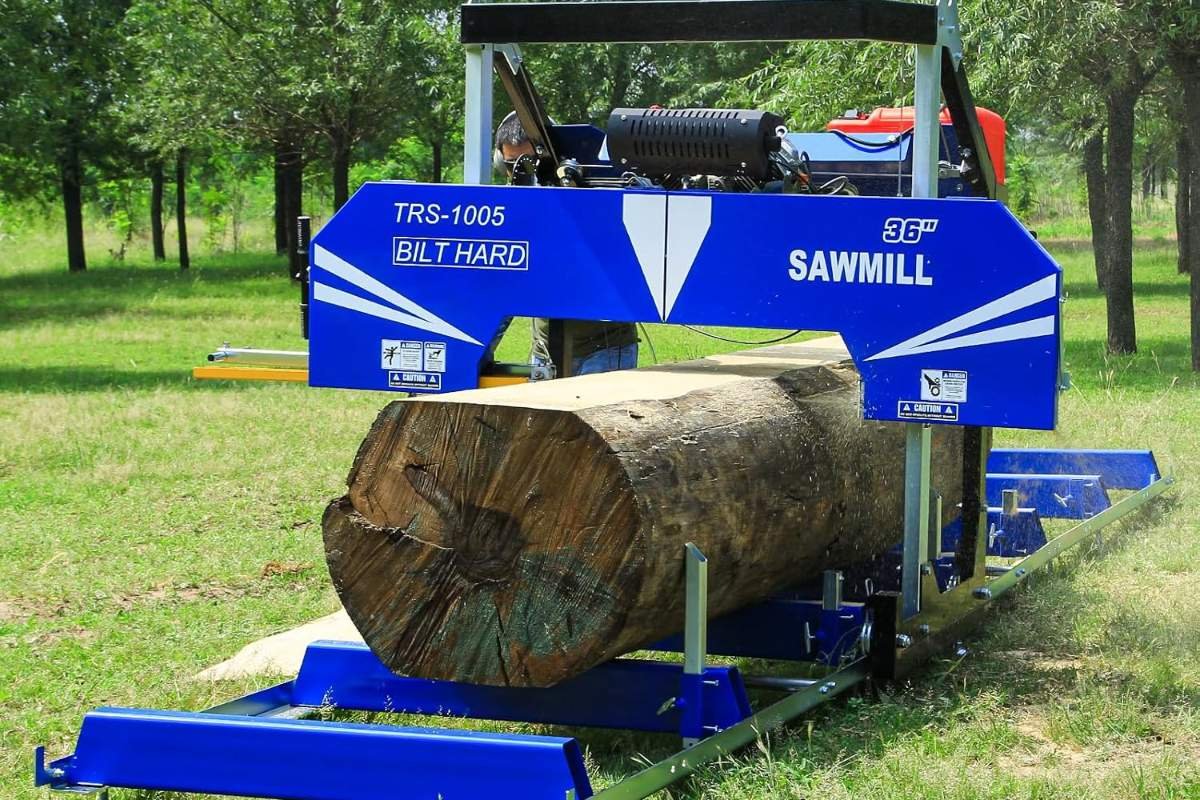
Whether you're loading a trailer with fresh-cut lumber, figuring out if your truck can handle a load of logs, or just curious how much that stack in your garage weighs, the answer depends on two things most people forget: species and moisture. A green oak log weighs far more than a kiln-dried pine board of the same size. This lumber weight calculator and log weight calculator use real U.S. Forest Products Laboratory density data, so you get a number you can plan around instead of a rough guess. Use the calculators below, then read on for the species data behind them.
Table of Contents
Lumber Weight Calculator
Pick a species, enter the board's dimensions, and this lumber weight calculator estimates weight at air-dry moisture content (about 12%), which is roughly what you'll get from kiln-dried lumber at a yard or air-dried boards that have had a season or two to dry.
Log Weight Calculator
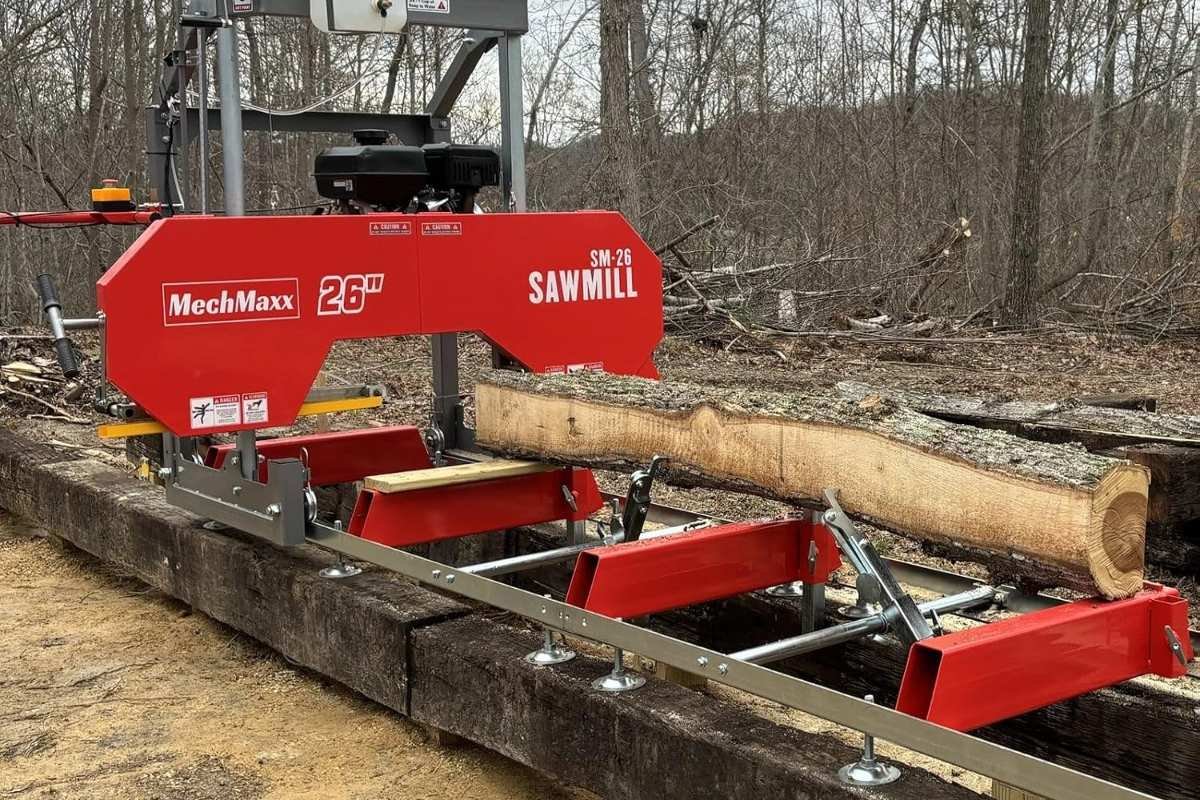
Logs weigh a lot more than the same volume of dried lumber, since the wood is still holding most of its natural moisture. Enter a species and the log's diameter and length, and this treats the log as a simple cylinder to estimate green weight.
Estimate only, treats the log as a uniform cylinder. Real logs taper, so use the average of the large-end and small-end diameters for a closer number, and expect actual weight to run a bit lower once bark and taper are accounted for.
Calculator by MillingGuide.com
Green Wood vs. Air-Dry Wood: Why the Weight Difference Is So Big
A freshly cut log is holding a lot of water. Depending on species, green wood can run anywhere from 30% to well over 100% moisture content by weight, meaning some green logs are more water than wood fiber. Air-drying or kiln-drying a board down to around 12% moisture content, the rough equilibrium point for wood stored indoors, strips out a big share of that weight without changing the wood's volume much.
That's why the log weight calculator above and the lumber weight calculator use two different sets of numbers for the same species. A green white oak log runs about 62 lb/ft³, but the same wood dried down to 12% moisture drops to roughly 48 lb/ft³, a difference of almost 25%. If you're hauling logs straight off a job site, plan around the green figure. If you're loading a trailer with lumber that's already been through a kiln, the air-dry number matters.
Wood Density by Species: Green vs. Air-Dry Weight
These are the same figures built into both calculators above, sourced from the U.S. Forest Products Laboratory's Wood Handbook, chapter 4, which covers moisture relations and density by species in detail.
| Species | Green (lb/ft³) | Air-dry, 12% MC (lb/ft³) |
|---|---|---|
| Loblolly Pine (Southern Yellow Pine) | 54 | 38 |
| Douglas-fir | 38 | 34 |
| White Oak | 62 | 48 |
| Red Oak | 63 | 44 |
| Sugar Maple | 56 | 44 |
| Black Walnut | 58 | 39 |
| Yellow Poplar | 38 | 28 |
| Eastern White Pine | 36 | 25 |
| Hickory (pignut) | 64 | 53 |
| Black Cherry | 46 | 35 |
Notice hickory and oak sit at the top of both columns, while pine and poplar sit near the bottom. That ranking holds true across almost every reference table you'll find, since it comes down to how dense the wood fiber is to begin with, not just moisture. A green hickory log and a green pine log of the same size can differ in weight by nearly 20%.
Why This Matters: Trailer and Truck Load Limits
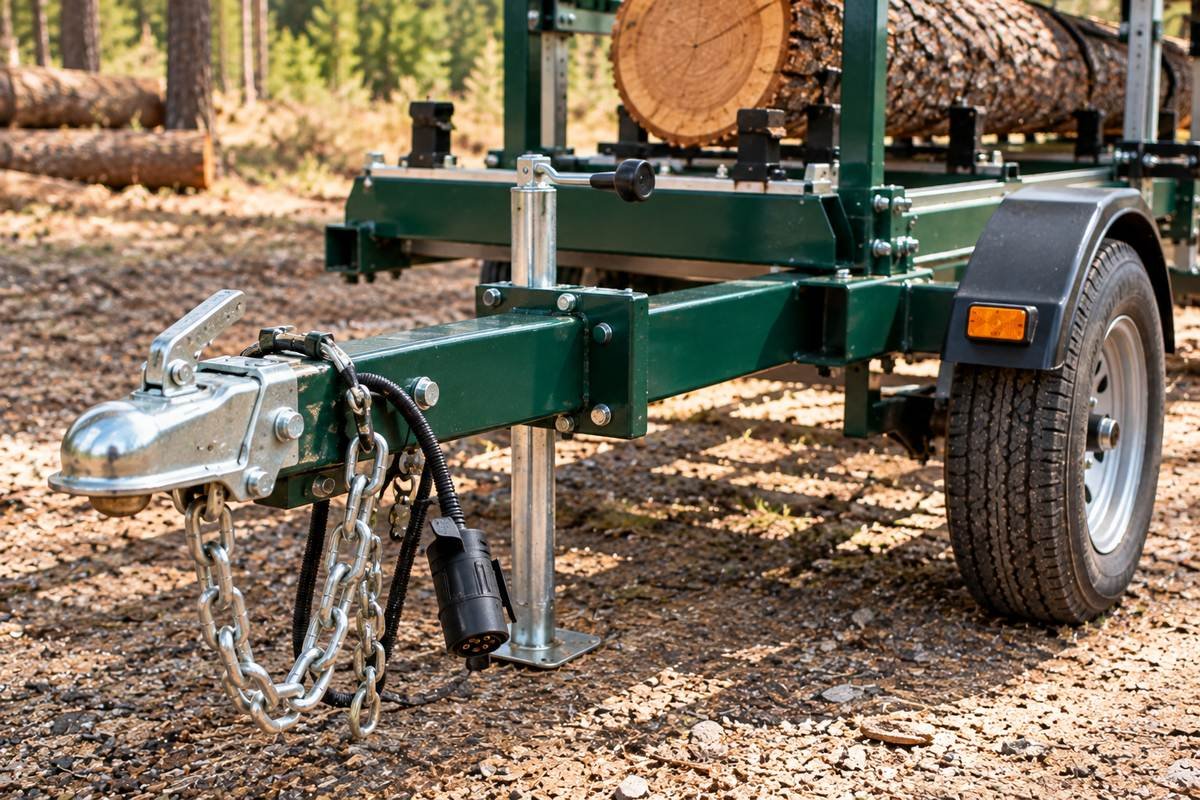
This isn't just trivia. A typical single-axle utility trailer is rated somewhere between 2,000 and 3,500 lbs of payload. A half-ton pickup's bed rating usually tops out well under that once you subtract the truck's own curb weight from its GVWR (gross vehicle weight rating, the most the truck can weigh fully loaded). Weight adds up fast: a single 16-inch-diameter, 10-foot white oak log comes out to roughly 870 lbs green using the calculator above. Three of those and you're already past what a lot of trailers are rated to carry, before you've loaded anything else.
Run the numbers before you load, not after. Overloading a trailer axle or a truck's rear suspension is how people blow tires, crack leaf springs, or worse on the highway home from a job site.
How Accurate Is This Estimate?
Close, but not exact, and that's true of any weight calculator. Wood density varies within a species depending on growing conditions, and moisture content in a "green" log can swing depending on how recently it was cut and the time of year. The log calculator's cylinder-shape assumption also ignores taper and bark, both of which affect real-world weight. Treat the numbers here as planning estimates, good enough to know whether you're within your trailer's safe load, not as a substitute for weighing a loaded truck at a certified scale if you're anywhere near a legal weight limit.
If you're deciding whether a haul of logs is worth milling into lumber in the first place rather than just hauling firewood, our board foot calculator handles the yield side of that math, and our portable sawmill price and cost guide breaks down what it costs to do the milling yourself. If you've got the logs but not the mill yet, our full sawmill buying guide is the place to start.
Bookmark this page next to the board foot calculator. Between the lumber weight calculator and the log weight calculator, you've got the volume and the weight side of milling covered without pulling out a reference book every time.
How much does a green log weigh compared to dried lumber?
A lot more. Green wood holds anywhere from 30% to over 100% moisture content by weight, while air-dried lumber settles around 12%. A white oak log runs about 62 lb/ft³ green but drops to roughly 48 lb/ft³ once dried, a difference of almost 25%.
How do you calculate the weight of a log?
Treat the log as a cylinder: find the volume in cubic feet using the average diameter and length, then multiply by the species green density in pounds per cubic foot. The lumber weight calculator above handles dried boards the same way, just with thickness, width, and length instead.
Why do lumber and log calculators use different density numbers for the same species?
Because moisture content changes the weight dramatically without changing the wood's volume much. Log calculators use green (freshly cut) density, while lumber calculators use air-dry density at about 12% moisture content.
How many logs can my trailer safely haul?
Check your trailer's rated payload capacity, usually 2,000 to 3,500 lbs for a single-axle utility trailer, then use the log weight calculator to add up your load before you haul. A single 16-inch, 10-foot white oak log alone runs close to 900 lbs green.