
At a glance, a cant hook and a peavey look close enough that most first-time buyers assume they are the same thing with two names. They are not, and the difference is a single detail at the working end that decides which one does its job well.
This guide covers where the two tools came from, what that one detail changes, which one fits a sawmill setup versus woods work, real sizing by log diameter, a few current products worth buying, and how to use either one without getting hurt.
Table of Contents
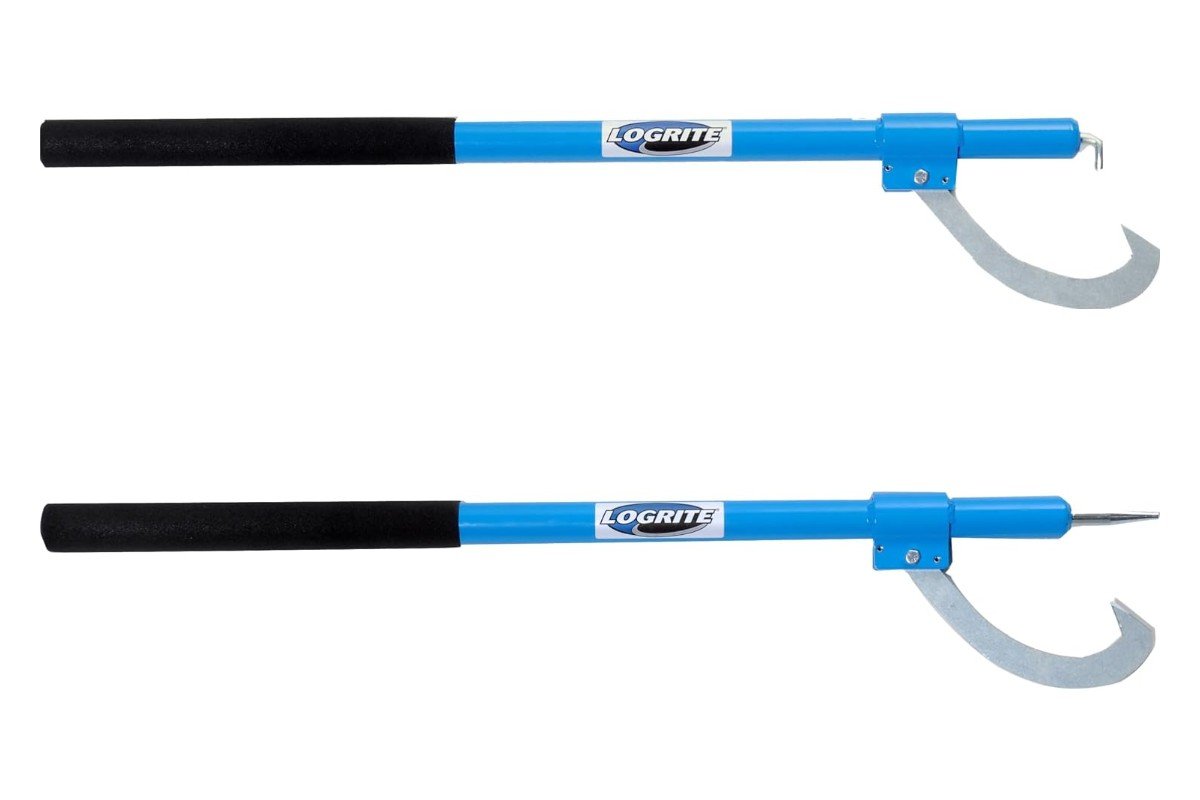
What a Cant Hook and a Peavey Are
Both tools are a long handle with a swinging hook mounted near the bottom end, and both work the same basic way. You set the hook against the far side of a log, pull down and toward yourself on the handle. The hook bites in and gives you enough leverage to roll, turn, or drag a log that would be impossible to move by hand. The handle does the lever work. The hook does the gripping.
The cant hook came first. Early versions were a simple swiveling hook on a pole with nothing holding it in a fixed position, a design loggers called a swing dingle.
In 1857, Joseph Peavey, a blacksmith in Stillwater, Maine, improved it by adding a rigid clasp that let the hook move up and down but not sideways. That made the tool far more controllable, and by adding a spiked tip to the working end. That modified tool took his name. Peavey Manufacturing Co., the company built on his design, still operates in Maine today.
The Real Difference: What's at the Tip
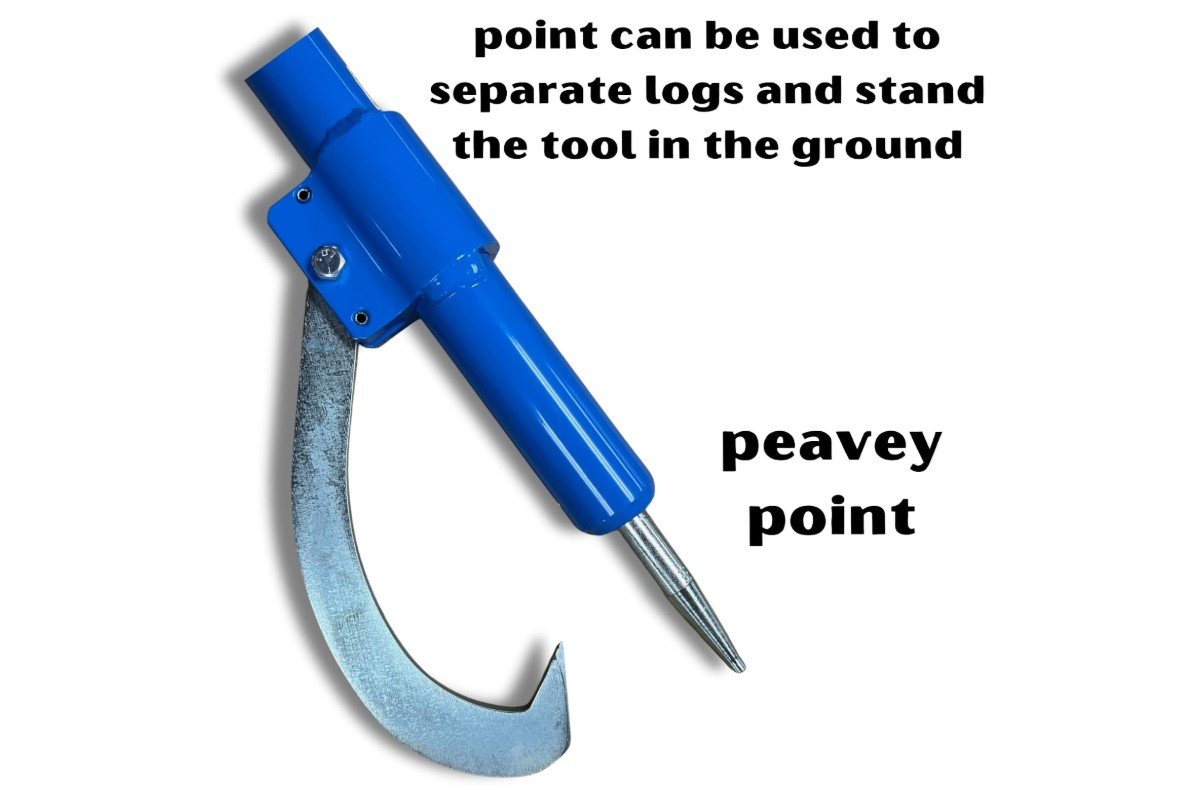
A cant hook ends in a blunt foot, usually with a toe hook or small teeth that give it a second biting edge against the log. A peavey ends in a pointed spike instead. That is the main difference, and it changes where each tool works best.
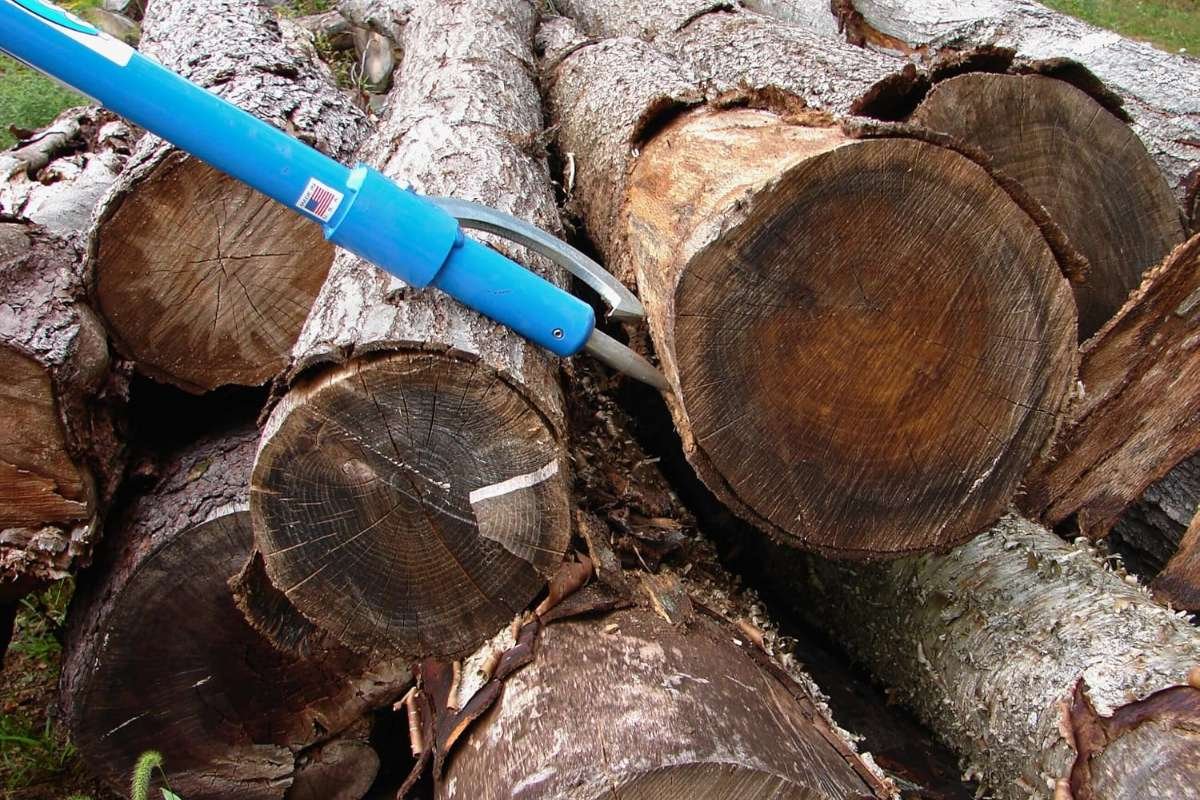
The cant hook's flat, toothed foot needs solid ground or a flat surface to brace against, which a sawmill bed, a mill yard, or a stack of cut rounds provides. The peavey's spike is built to dig into a second log, jam into soft or uneven ground, or bite into a log floating or partially submerged in water, none of which a cant hook's blunt foot can do reliably.
That's the practical core of the cant hook vs peavey decision: sawmill and yard work favors the cant hook, while woods work on rough terrain, or separating logs that are jammed against each other, favors the peavey.
Cant Hook vs Peavey: Which One Should You Buy?
If your work happens mostly on a sawmill bed, a driveway, or any other flat, solid surface, a cant hook is the better first buy. The toe hook gives it a more secure bite on ground that a peavey's point cannot use to its advantage.
If you are working in the woods, on a slope, around a pile of logs that need separating, or anywhere the tool needs to jam into something other than flat ground, the peavey's spike is worth having. Most people who handle logs regularly, whether at a portable sawmill or felling and skidding their own timber, end up owning one of each rather than trying to make a single tool do both jobs. For getting those logs out of the woods to the mill, a log arch does the heavy lifting.
Sizing: Handle Length by Log Diameter
Handle length is not just about reach, and it is the main thing to get right when sizing either tool. A longer handle gives more leverage on a bigger, heavier log, and an undersized handle on a large log means fighting the tool instead of the log.
| Typical log diameter | Handle length to look for |
|---|---|
| 6 to 12 inches | 28 to 36 inches |
| 8 to 18 inches | 42 to 48 inches |
| 12 to 24 inches and up | 55 to 60 inches |
A shorter handle in the 28 to 36 inch range also has a place beyond small logs. It is easier to swing in tight quarters, like maneuvering rounds already loaded onto a trailer or a sawmill bed where a 60-inch handle has nowhere to travel. Buying a second, shorter tool for that job is common practice among people who already own a full-length peavey or cant hook. For figuring out how much a log this size weighs before committing to moving it, the lumber weight calculator gives you an estimate.
Cant Hooks and Peaveys Worth Buying
These are current, real products spanning traditional wood-handle construction, modern aluminum, and a lower-cost steel option, covering both tools.
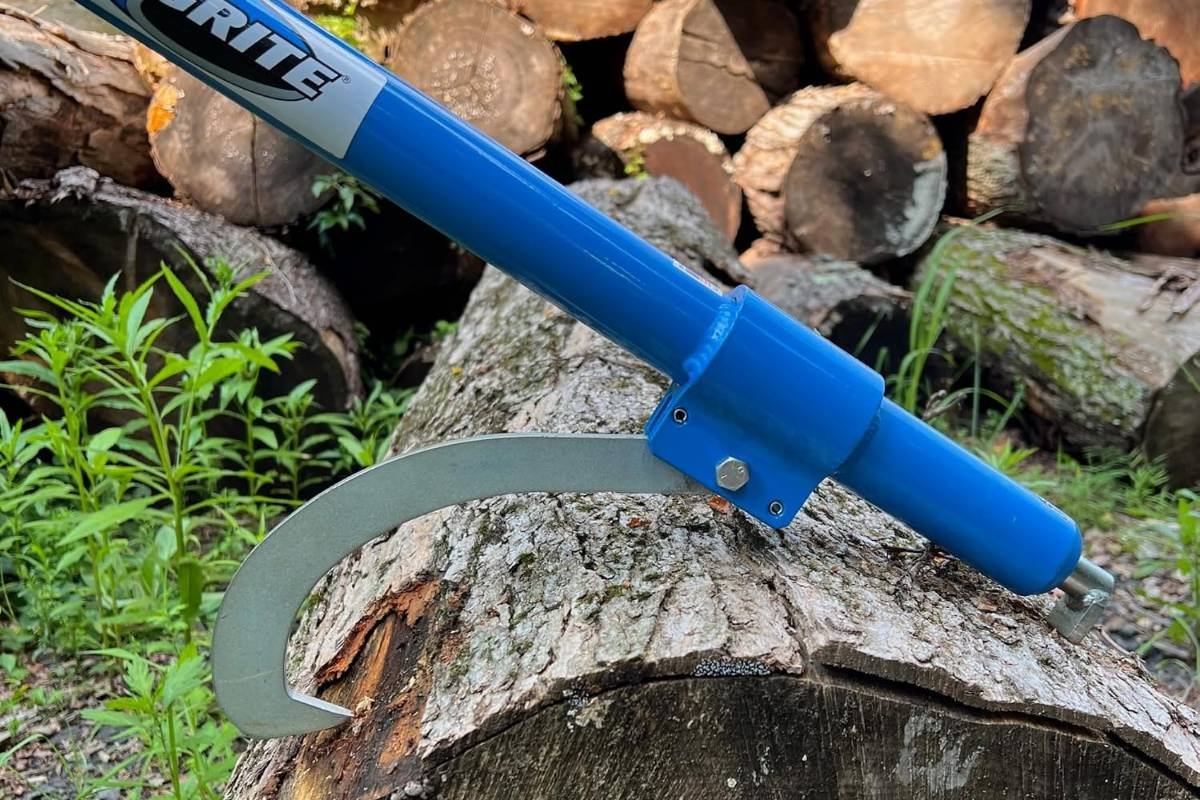
LogRite 42-inch Aluminum Handle Cant Hook
An aluminum-handled cant hook sized for mid-diameter logs, from a brand that specializes in nothing but logging hand tools. Aluminum handles do not split the way wood eventually does, and LogRite's tools carry a strong reputation on forestry and arborist forums for exactly that reason.
- Aluminum handle resists the splitting that eventually happens to wood handles
- From a brand that builds nothing but logging hand tools, with a strong reputation on forestry and arborist forums
- 42 inch length suits mid-diameter logs without the bulk of a longer peavey
- 42 inch length runs short once logs move into full sawlog diameters
- Aluminum handle costs more than a comparable wood-handled tool
LogRite 48-inch Peavey
The 48-inch length is LogRite's own best-selling size, a practical middle ground between the shorter 42-inch and the largest 60-inch options, suited to logs in the 8 to 18 inch range.
- LogRite's own best-selling size, a proven middle ground between the 42 and 60 inch options
- Suited to the 8 to 18 inch diameter range that covers most everyday logs
- Same split-resistant aluminum handle as the rest of the LogRite line
- Not long enough for logs at the larger end of the sawlog range
- A peavey's spike tip rather than a cant hook's blunt tip, so it's a different tool than the 42 inch pick above
LogRite 60-inch Peavey
Rated for logs from 10 to 36 inches in diameter, this is the size to reach for once logs reach full sawlog size, where the extra handle length translates directly into leverage you would not have with a shorter tool.
- Rated for logs 10 to 36 inches in diameter, the widest range in the LogRite lineup
- Extra handle length adds real leverage on large sawlogs a shorter tool can't match
- Same split-resistant aluminum handle as the rest of the LogRite line
- Length and reach that make it harder to maneuver on smaller logs
- Longer aluminum handle costs more than the 42 or 48 inch sizes
Peavey Manufacturing Co. 4.5-foot Wooden Handle Cant Hook
A traditional hickory-handled cant hook from the company built on Joseph Peavey's 1857 design, still operating a few miles from where the tool was invented. Worth considering for anyone who prefers a wood handle's feel and the direct connection to where this entire tool category started.
- Traditional hickory handle offers the classic feel some users prefer over aluminum
- Comes from the company built on the original 1857 design, the direct lineage of the entire tool category
- Wood handles are typically less expensive upfront than aluminum
- Wood handles can eventually split or wear with heavy use, unlike aluminum
- No stated diameter range in the product info, making it harder to size against the sizing table
FORESTER Heavy Duty Log Peavey, 55-inch
A forged-steel peavey at a lower price point than the aluminum options above, for anyone who wants a full-length tool without the aluminum premium. Steel adds weight compared to aluminum, which some owners prefer for the added heft on stubborn logs and others find tiring over a long day.
- Lower price point than the aluminum options above
- Forged-steel construction adds durability and heft for stubborn, hard-to-turn logs
- 55 inch length lands between the 48 and 60 inch LogRite sizes
- Steel adds noticeable weight compared to aluminum, which can tire out the user over a long day
- Extra weight makes it less nimble than an aluminum tool of similar length
How to Use a Cant Hook or Peavey Safely
The OSHA logging eTool's manual operations section (OSHA is the federal workplace safety agency) covers general safe log handling, and a few points apply directly to rolling and turning logs with either tool. Never stand in the log's path of travel. A log that starts rolling under leverage does not stop cleanly. Standing where it can reach you if it keeps going, rather than to the side where you control the roll, is one of the most common ways people get hurt with these tools.
Set the hook fully before applying weight, and test with a short pull before committing your full body weight to the handle. If the hook is not biting solidly, a hard pull can make it slip free suddenly, which throws your own weight off balance right at the moment you are leaning into the log. Keep your footing solid and clear of debris, since most of the leverage these tools provide comes from your legs and body weight, not your arms.
Maintenance and Care
A wood handle should be checked periodically for splitting or splintering, especially near the hook's clasp, and replaced rather than used once a crack appears, since a handle that fails under load has nothing to catch you.
An aluminum handle avoids that failure mode entirely, but you should still inspect it for dents or bends that could weaken it. On either type, keep the hook's pivot point lubricated so it swings freely. Check that the clasp still holds the hook in its up-and-down track without excessive side-to-side play. That is the specific improvement Joseph Peavey's original design added over the old swing dingle.
The cant hook vs peavey question comes down to tip shape, not overall design. Both are among the few tools on a milling setup that haven't changed much in over 150 years, because the basic lever-and-hook mechanism hasn't needed to. For the tool that grips a log to lift or drag it rather than roll it, see our guide to log tongs.
Frequently Asked Questions
What is the main difference in the cant hook vs peavey comparison?
A cant hook ends in a blunt foot with a toe hook or small teeth for a second grip point. A peavey ends in a pointed spike instead. That tip shape is the entire distinction between the two tools.
Do I need both a cant hook and a peavey?
Not necessarily, but most people who handle logs regularly end up with both. A cant hook works best on flat, solid ground like a sawmill bed or yard. A peavey's spike works better in the woods, on uneven ground, or for separating logs jammed against each other.
What size cant hook or peavey do I need?
Match the handle length to your typical log diameter: 28 to 36 inches for logs up to about 12 inches, 42 to 48 inches for 8 to 18 inch logs, and 55 to 60 inches for logs 12 inches and up. A longer handle gives more leverage on bigger, heavier logs.
Who invented the peavey?
Joseph Peavey, a blacksmith in Stillwater, Maine, invented it in 1857 by adding a rigid clasp and a pointed spike to the existing cant hook design. Peavey Manufacturing Co., the company built on his invention, still makes logging tools in Maine today.
Can a peavey be used on a sawmill bed?
It can, but a cant hook is generally the better tool there. The peavey's pointed spike does not grip a flat, solid surface as reliably as a cant hook's blunt, toothed foot does, which is exactly the surface a sawmill bed provides.
Are aluminum or wood handles better?
Aluminum handles resist the splitting and splintering that eventually happens to wood handles under repeated hard use, and several forestry-tool brands build their entire line around aluminum for that reason. Some users still prefer wood handles for feel and tradition, but you should inspect them regularly for cracks near the hook.