
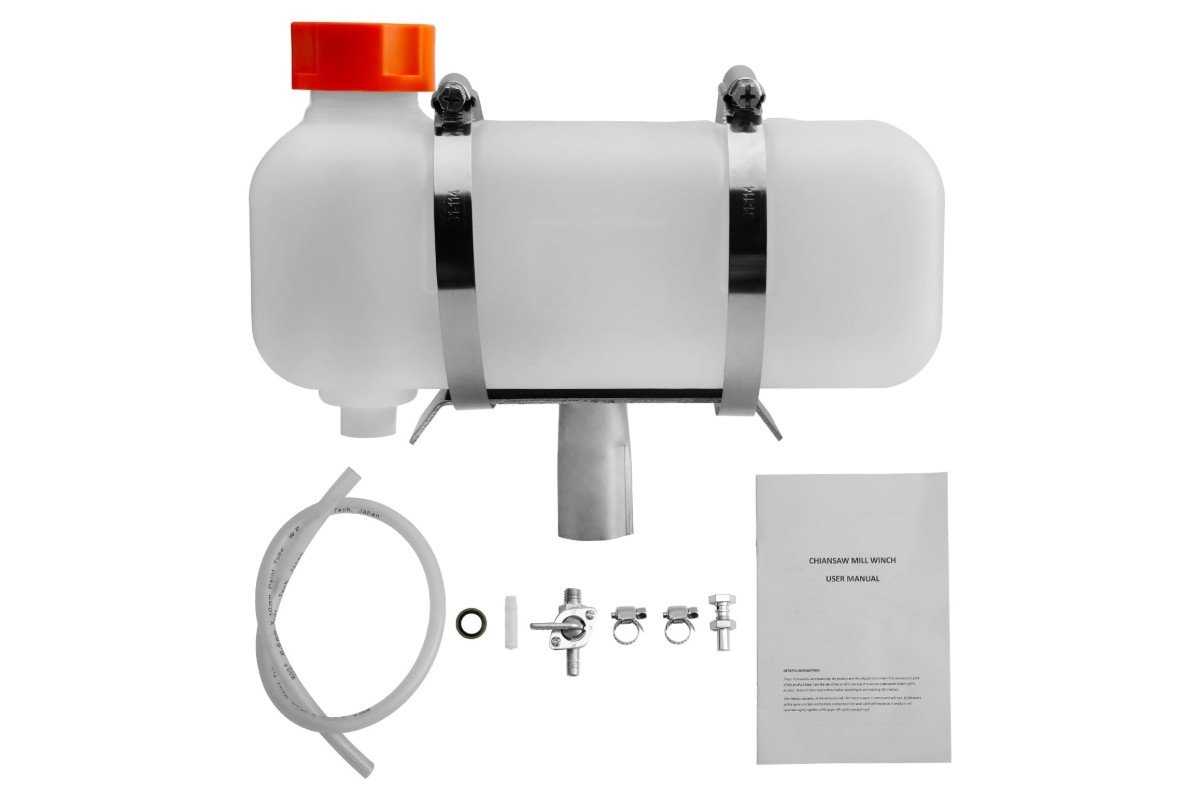
Chainsaw mill accessories fall into two categories: the ones that fix a real problem you'll run into, and the ones that just look good in a kit photo. Three accessories come up again and again (an oiler kit, felling wedges, and a dedicated guide bar), and each one solves a specific mechanical issue that milling causes and normal chainsaw use doesn't. Here's what each one does, and when you need it versus when you don't.
Table of Contents
Auxiliary oiler kit: solves oil starvation on long bars
A chainsaw's stock oiler is built around normal cutting: short bursts, the bar moving quickly through the wood, oil reaching the tip in the time it takes to finish a cut. Milling is the opposite: long, slow, sustained passes where the bar stays under load for minutes at a time. On a long bar especially, the stock oiler often can't keep enough oil reaching the working end of the bar through an entire pass, and the chain runs partly dry right where it's cutting hardest.
An auxiliary oiler kit adds a second oil line with its own reservoir and a valve you control, feeding oil directly into the bar groove at the working end instead of relying on the saw's internal pump alone. Granberg, which makes the oiler kits sold for its own Alaskan Mill line, markets its auxiliary kit specifically for bars over 42 inches or any setup that needs extra lubrication. The benefit isn't just avoiding a dry chain, it's cooler running and less bar wear over the life of the equipment.
What this means for you: if you're milling with an 18 to 24 inch bar occasionally (see our chainsaw sizing guide if you haven't settled on a bar length yet), your stock oiler is probably fine and an auxiliary kit is a nice-to-have at best. Past 30 inches, or if you're milling regularly rather than occasionally, it stops being optional: a chain running dry on a long, hot pass is how you damage a bar faster than any amount of normal cutting would.
Felling wedges: prevent kerf pinch, and material matters
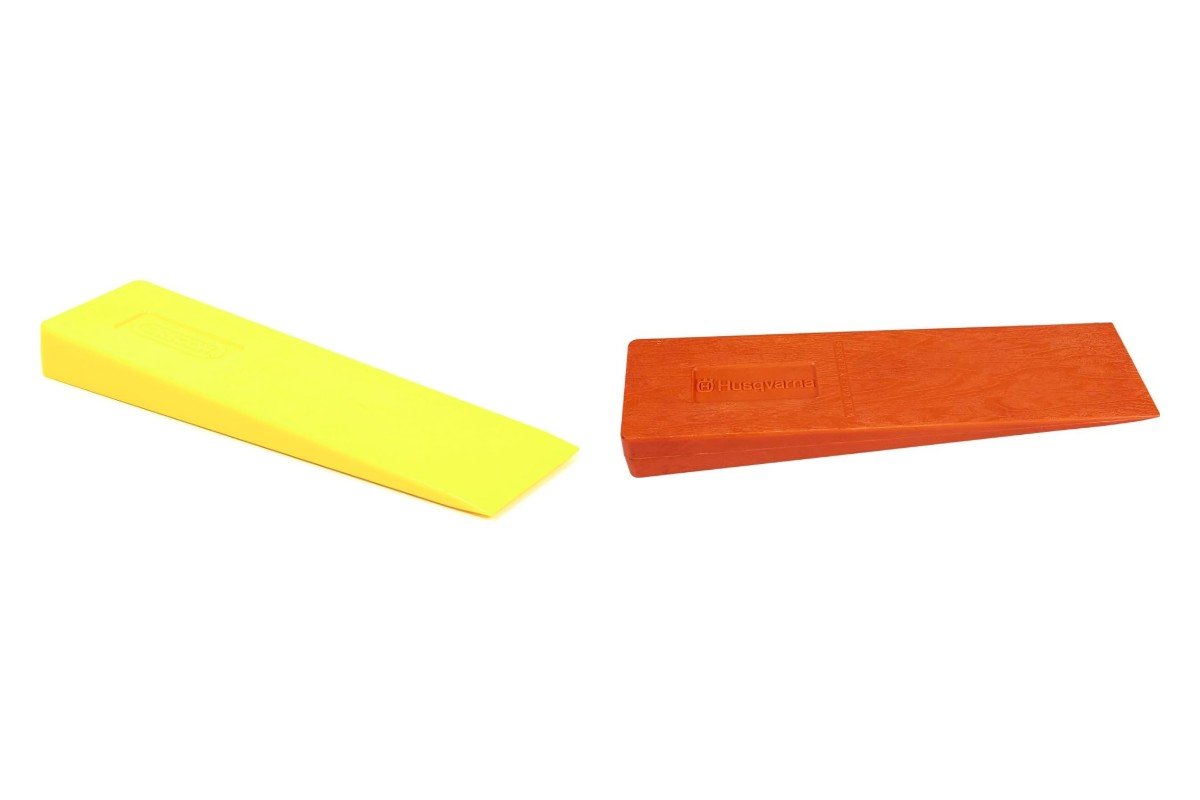
We cover the technique, inserting a wedge into the kerf (the slot a blade or chain cuts) every 2 to 3 feet to keep the log's weight from pinching the cut shut, in our setup and first-cut guide. What's worth adding here is what the wedges themselves should be made of, because it's not a minor detail: they need to be plastic or aluminum, never steel. A steel wedge that the chain contacts even briefly can damage the chain immediately, where a plastic or aluminum wedge just gets a scuff. Look for wedges with a textured or cross-grooved surface, too: a smooth wedge can pop back out of a wet kerf under load, right when you need it holding the gap open.
You don't need one wedge. You need a range of sizes. A single log can need a small wedge to start the gap and a larger one to keep it open as the kerf widens. Having only one size on hand means improvising with whatever's nearby when the kerf needs holding: not the moment to be searching the truck bed. A basic 3-to-6-piece set covers this without much expense, and it's the cheapest accessory on this list by a wide margin.
Replacement or dedicated guide bar: milling stresses a bar differently than cutting does
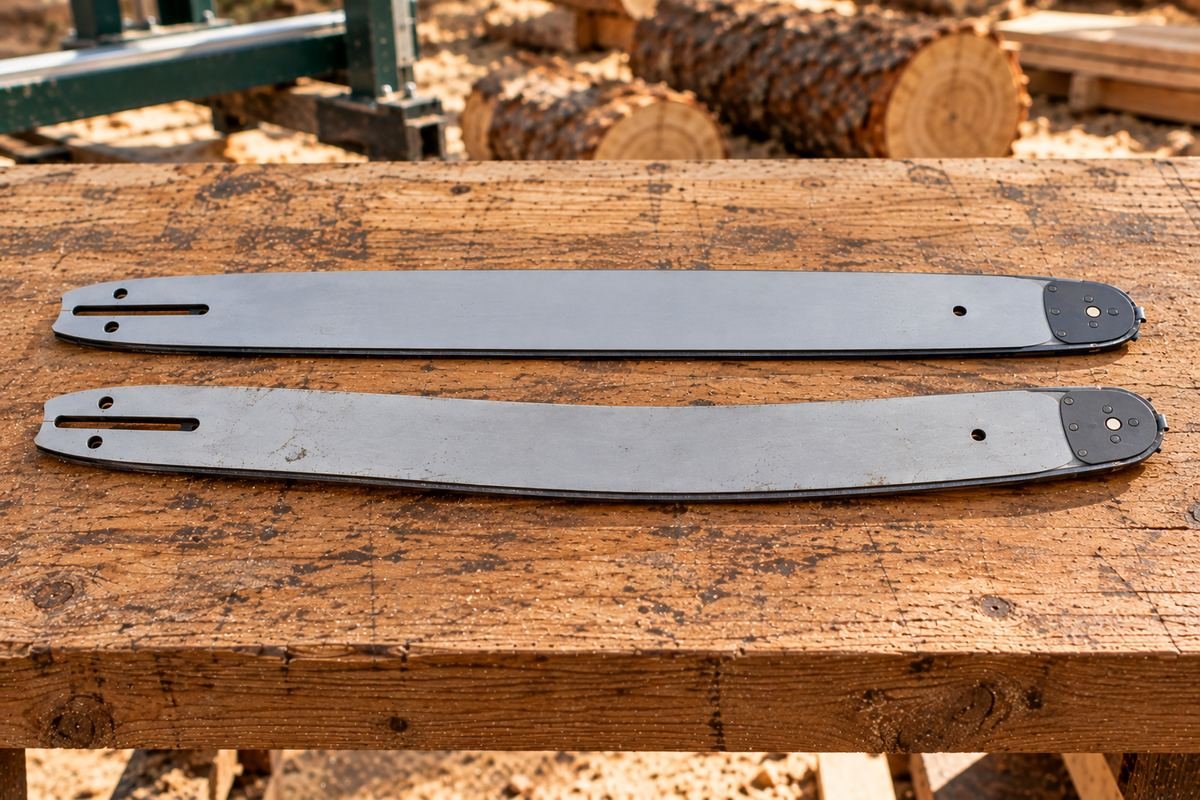
This is the one people skip until a bar bends, and by then it's an expensive lesson. A standard chainsaw bar is a laminated design: light, fine for normal bucking and limbing, but not built for the specific stress milling puts on it. Two things happen during milling that don't happen during regular cutting. First, the mill attachment itself clamps onto the bar, which can pinch it under pressure. Second, a long rip cut puts sustained side-load on the bar for the length of the entire pass instead of the brief contact of a normal cut. A laminated bar can bend under that combination in a way it never would felling or bucking.
The fix isn't complicated: either accept that whatever bar is mounted to your mill becomes a dedicated milling bar you don't swap back to general use, or buy a solid-steel bar built specifically for milling. Solid-steel bars cost more than a standard laminated replacement, but they're built for exactly the clamping and side-load stress a mill puts on them, and a bent bar mid-project is a far more expensive problem than the price difference.
What this means for you: if you're milling the occasional log with a bar you already own, keep an eye on it for any visible bend or wobble and treat a dedicated bar as a future upgrade rather than a day-one requirement. If you're milling regularly, especially at the 90cc+ end of our sizing guide, a solid-steel milling bar moves from nice-to-have to the accessory most likely to save you money over a season.
What order to buy chainsaw mill accessories in
If you're buying accessories from scratch, buy in this order: felling wedges first, because they're cheap and you need them on your very first cut regardless of bar length. A dedicated or solid-steel guide bar second, once you know you're milling regularly rather than as a one-off project. An auxiliary oiler kit last, and only once you're running a bar long enough or often enough that oil starvation becomes an actual problem you've noticed, not one you're preventing in theory.
What people get wrong about chainsaw mill accessories
The most common mistake is buying all three on day one, before you know which problems your specific setup will run into. Someone milling the occasional 18-inch log with a 60cc saw doesn't need an auxiliary oiler kit. It solves a problem that setup doesn't have. The second mistake is the opposite: skipping the guide bar consideration entirely because it feels like the accessory you can always add later. You can, but only until the day your stock bar bends mid-cut, at which point you're buying it anyway, just with a ruined slab and a delayed project on top of the cost.
Which ones to buy
Three chainsaw mill accessories are worth knowing about, not automatically worth buying immediately. The first is an auxiliary oiler kit for long or frequent milling where stock lubrication falls short. The second is a range of plastic or aluminum felling wedges you need from your very first cut. The third is a dedicated or solid-steel guide bar once milling becomes a regular habit rather than an occasional project. Buy for the problem you have, not the one a product page implies you might.
Quick answers
Do I need an auxiliary oiler kit for chainsaw milling?
Not for occasional milling with a bar under 30 inches: your stock oiler is usually enough. Past that, or once you're milling regularly, an auxiliary kit prevents the chain from running dry during long, slow passes.
What material should felling wedges be made of?
Plastic or aluminum, never steel. A steel wedge can damage the chain if it's contacted during the cut. Plastic and aluminum wedges just get scuffed.
Do I need a special guide bar for milling?
Not on day one. But milling puts unusual clamping and side-load stress on a bar that a standard laminated bar isn't built for, so a dedicated or solid-steel bar is worth buying once you're milling regularly rather than occasionally.
What accessory should I buy first?
Felling wedges. They're inexpensive and you need them for your very first cut, regardless of what saw or bar length you're running.