
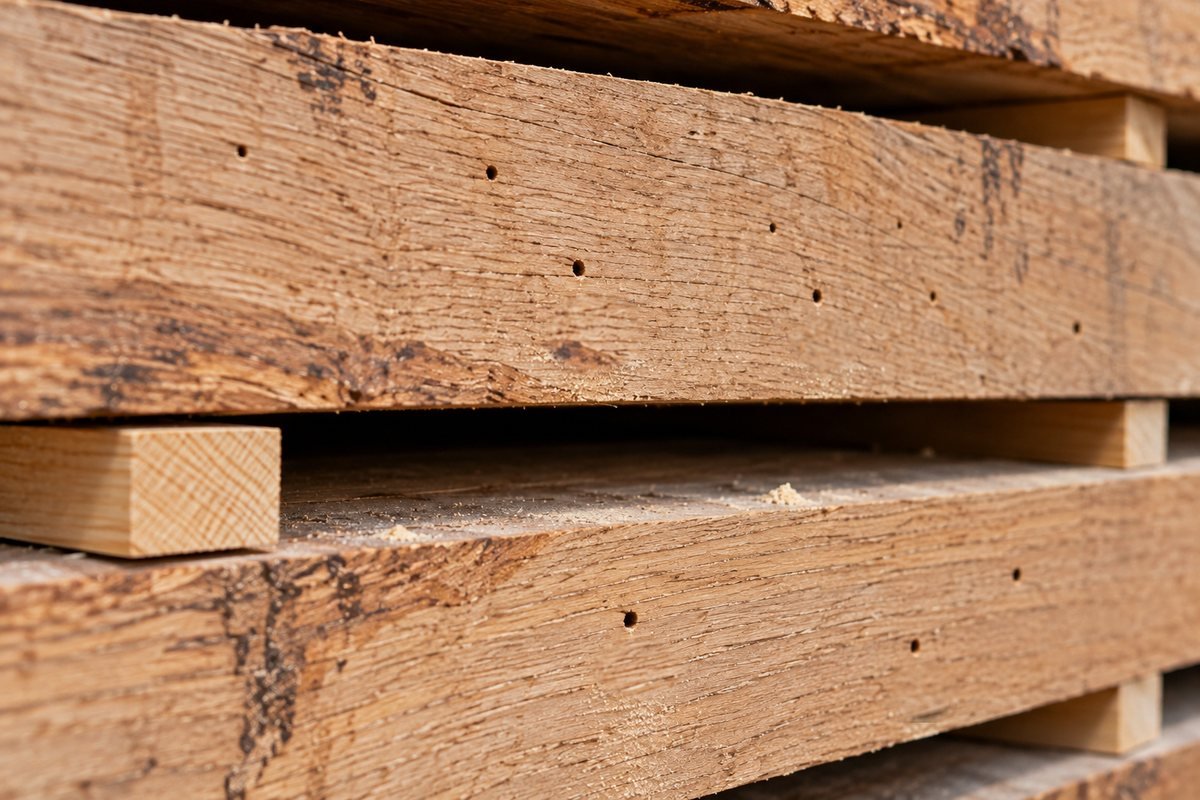
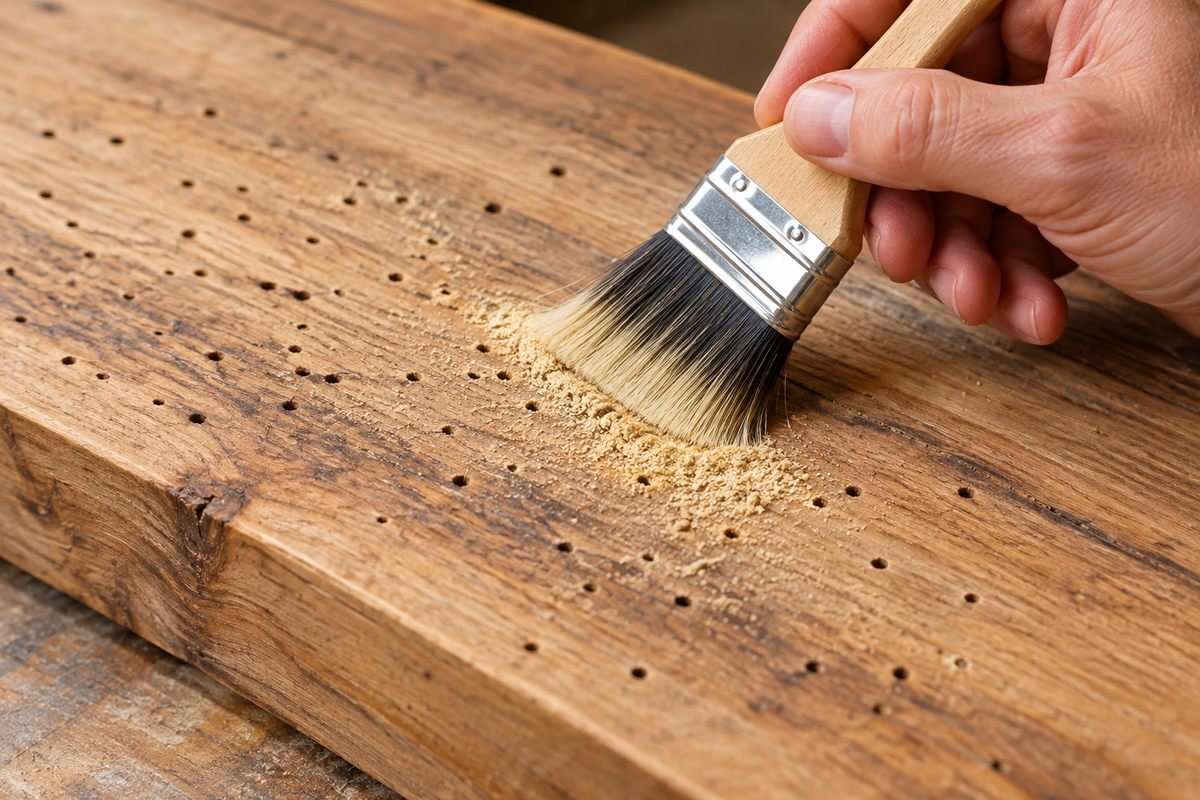
Powder post beetles in lumber usually show up the same way: you walk out to a stack of oak you sawed last spring and find little piles of flour-fine dust on the boards below. Each pile sits under a hole about the size of a pencil lead. The larvae have been eating the sapwood from the inside for months. The dust is the first thing you see.
Fresh-sawn hardwood drying in the open is close to ideal food for them, so anyone running a sawmill will meet them sooner or later. Powder post beetles are easy to kill with heat, easy to keep out of a stack with a little housekeeping, and only a real problem when nobody notices for a year or two. This guide covers how to spot them, which boards they go after, how to kill them, and how to keep an air-drying stack clean.
Table of Contents
Which powder post beetles attack lumber
"Powder post beetle" (also spelled powderpost beetle) covers three families of small wood-boring beetles. Adults lay eggs in the pores or cracks of bare wood, the larvae tunnel through it for months or years, and the new adults chew their way out and leave the exit holes you find. The families look alike from the outside, but the holes and the dust tell them apart. Figures below are from Iowa State University Extension and the University of Florida IFAS (its Institute of Food and Agricultural Sciences).
| Family | Exit hole | Frass (dust) | Wood it attacks |
|---|---|---|---|
| Lyctid (true powder post beetles) | 1/32 to 1/16 inch | Very fine, like talcum powder, sifts out easily | Sapwood of hardwoods, mainly oak, ash, hickory, maple |
| Anobiid (furniture beetles) | 1/16 to 1/8 inch | Powdery but gritty, with small pellets | Sapwood of softwoods and hardwoods, such as pine, maple, beech, poplar |
| Bostrichid (false powder post beetles) | 3/32 to 9/32 inch | Meal-like, packed in the tunnels, rarely sifts out | Sapwood of hardwoods, sometimes softwoods |
For a sawyer, lyctids matter most. They go after hardwood lumber as it dries, and they can finish a generation in as little as three months, according to NC State Extension. Anobiids are slower (two years or more) and turn up more in old structures and softwood framing than in a drying stack.
Which lumber is most at risk
Lyctid powder post beetles live on the starch in hardwood sapwood, and the females lay eggs in open pores. That makes ring-porous hardwoods with plenty of sapwood the usual targets: red oak, ash and hickory top the list, with maple close behind. Gene Wengert, a wood-drying specialist who answers questions for Woodworking Network, notes that fine-pored wood such as soft maple is much less attractive, because the females have nowhere to lay eggs.
Heartwood is far less at risk, since it holds little starch. Lyctids don't attack softwood lumber at all, although anobiids will take pine. Age matters too. Lyctids rarely infest wood older than five years, because the starch is gone by then.
Moisture is the part that surprises people. Lyctid larvae do best in wood around 7 to 15 percent moisture content (how much water is in the wood, as a percent of its dry weight), per Wengert, which means your lumber gets more attractive as it dries, not less. A stack that was never touched while it was green can pick up beetles in its second summer, right when the boards reach the range you were waiting for. Anobiids prefer damper wood, around 13 to 30 percent.
How to tell if your lumber stack has powder post beetles
- Round exit holes. Lyctid holes run 1/32 to 1/16 inch across, scattered over the face and edges, usually in the sapwood band. They're exit holes, not entry holes, so by the time you see them, one generation has already finished.
- Fine dust on the boards below. Lyctid frass feels like talcum powder. Look on the tops of boards and stickers (thin spacer strips laid between boards so air can flow) under the holes, and on the ground under the stack.
- Timing. Peak emergence runs from May through August, so check stacks in early summer.
- Soft, crumbly sapwood. Press a screwdriver into the sapwood edge. A heavy infestation leaves it riddled with tunnels packed with dust.
Holes alone don't prove the beetles are still there. Old frass turns yellow and cakes together, while fresh frass is bright and loose. The simple test: brush the boards clean, then look again in a few weeks. New dust piles mean an active infestation. For a slower but surer check, plug the holes and watch for new ones over the next 6 to 12 months.
How to kill powder post beetles in lumber
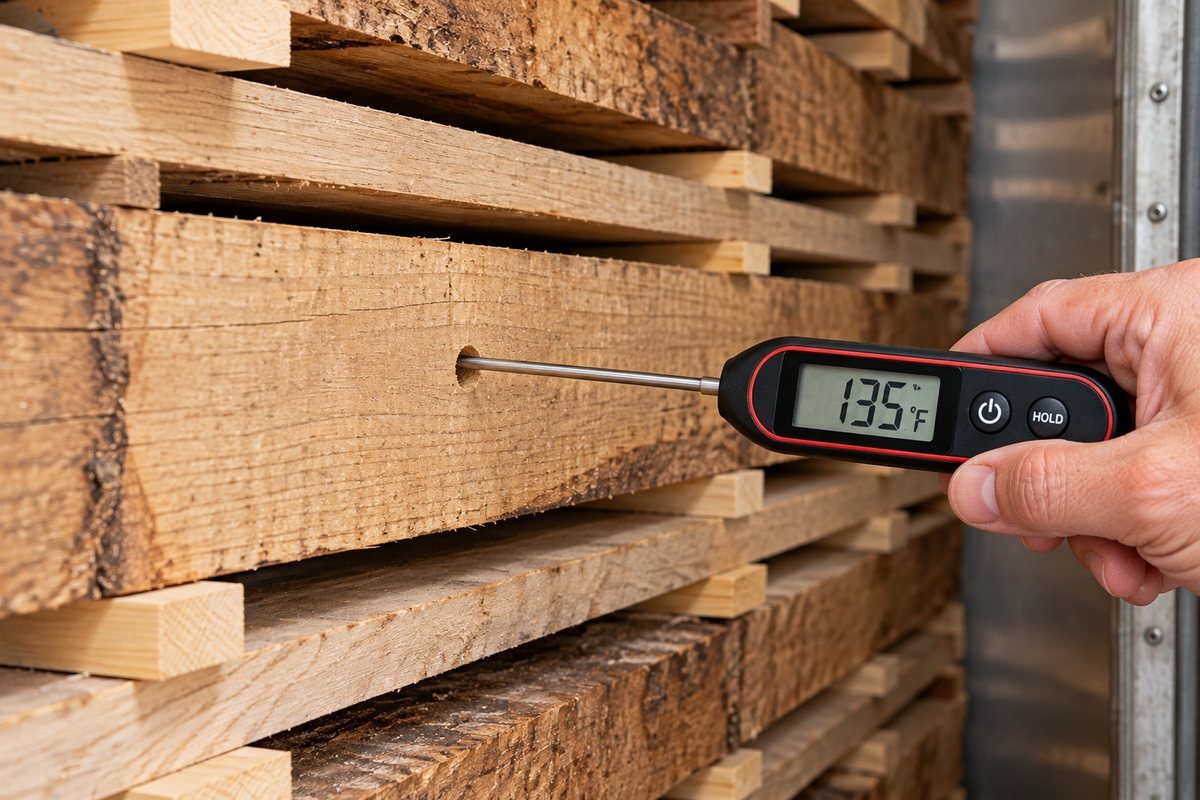
Heat is the sawyer's best tool, because it kills every stage, eggs included, and leaves nothing behind in the wood. Iowa State Extension lists 133 to 150 degrees F for 30 minutes to 4 hours as the kiln or heat treatment range. Wengert notes that 133 degrees F throughout the wood was the old standard, and that the USDA now requires 160 degrees F throughout for its sterilization rules, so 160 is the safer target if you can reach it.
Everything hinges on the word throughout. The air in the kiln needs to run about 20 degrees hotter than the target, and the thickest board has to reach temperature in its core, not just on the surface. A probe thermometer pushed into the middle of the thickest board in the load is the only way to know. Once the core hits the target, hold it for the full time before cooling down.
A small solar or dehumidification kiln can do this job. Our DIY lumber kiln guide covers the heat cycle, including why you should unplug a home dehumidifier during the hot phase. After sterilizing, move the lumber straight to clean, closed storage. Heat treatment leaves no protection behind, so boards set back beside an infested pile can be re-infested.
Borate treatment for green lumber
Borates (the active ingredient is usually disodium octaborate tetrahydrate, sold as products such as Bora-Care and Tim-bor) are the standard chemical defense against powder post beetles. They're labeled for bare, unfinished wood, and they give lasting protection that heat doesn't.
Borates need water to soak into wood, which determines when to use them. Spraying dry lumber is usually ineffective because the solution has to stay wet on every surface long enough to diffuse in. That points to treating green lumber, right off the saw and before stacking, when the wood is wet. Some sawyers who cut a lot of high-starch hardwood dip boards in a borate solution as they sticker them for exactly this reason. Mix and apply borates strictly by the label, and wear the protective gear it lists.
A borate won't penetrate a painted, varnished, or oiled surface. Any finish helps on its own, though, since beetles are less likely to infest wood that is painted, varnished, or waxed.
How to keep powder post beetles out of an air-drying stack
Most infestations start from a source close by. A few habits keep a clean stack clean:
- Keep old wood away. Firewood, scrap, slabs, and any infested lumber are breeding grounds. Keep infested wood at least 30 to 50 feet from good lumber.
- Watch your stickers. Stickers and bolsters get reused for years and can carry beetles from one stack to the next. Wengert's advice is to heat them before every use. At minimum, don't reuse stickers from a pile that had holes.
- Clean up the yard and shed. Sweep or vacuum sawdust and debris out of storage areas, and keep offcuts off the floor.
- Saw and stack fast. Get logs sawn, stickered and under cover promptly, and follow the stacking basics in our air drying lumber guide.
- Move dry lumber to clean storage. Once the boards reach your target moisture (check with a moisture meter), move them indoors to a clean lumber storage rack or kiln-sterilize them first.
- Rip off heavy sapwood. If you only need the heartwood, sawing off sapwood edges before drying removes most of the food.
- Check before it comes inside. Look over every board from an outdoor stack before it goes into the shop or the house. One infested board can seed a whole shop.
What to do with boards that already have holes
Finding holes doesn't mean the lumber is ruined. If the tunnels are only in the sapwood, the heartwood is usually sound. Heat-treat the whole batch first, then decide board by board: rip away riddled sapwood, and keep boards with a few old holes for rustic work or projects where the holes won't matter.
Don't carry untreated boards with fresh frass into a shop full of good lumber, or bring them into a house with hardwood floors and furniture. Treat first, then store.
Treatments that don't work well
- Orange oil. It is ineffective against powder post beetles.
- Diatomaceous earth. The larvae are inside the wood, where a surface powder can't reach them. Wengert doubts it helps.
- Carbaryl sprays. Wengert warns against them because of health hazards and the residue left in wood you'll later handle and machine.
- Waiting it out. Lyctids can run a new generation every few months to a year, so a small problem this summer can be a big one next summer.
Frequently asked questions
Does kiln drying kill powder post beetles?
Yes, if the whole board reaches temperature. Iowa State Extension lists 133 to 150 degrees F for 30 minutes to 4 hours. The USDA now uses 160 degrees F throughout the wood for sterilization, so that is the safer target. Measure the core of the thickest board.
Can powder post beetles infest green lumber?
Lyctid powder post beetles prefer drying hardwood around 7 to 15 percent moisture content, so fresh green boards are less attractive than lumber in its second summer of air drying. Anobiid beetles prefer damper wood, around 13 to 30 percent.
Which woods do powder post beetles attack?
Lyctids attack the sapwood of hardwoods, mainly red oak, ash, hickory, and maple. Heartwood holds little starch and is much less at risk. Softwoods are safe from lyctids, though anobiid beetles will attack pine and other softwoods.
How do I know if powder post beetles are still active?
Brush the boards clean and check again in a few weeks. New piles of fine, bright dust mean the beetles are active. Old frass looks yellow and caked. Peak emergence runs May through August.
Can powder post beetles spread from lumber to my house?
They can reach unfinished hardwood in a house, such as floors and trim, which is why infested boards should be heat-treated before they come indoors. Finished, sealed wood is much less likely to be attacked.
Summary
Powder post beetles are a sapwood problem, a hardwood problem, and a housekeeping problem. Keep old wood away from your stacks, heat your stickers, treat green high-starch lumber with a borate if you cut a lot of it, and heat-treat anything that shows fresh dust before it goes indoors. Do those things and powder post beetles become a minor chore instead of a lost load of lumber.