
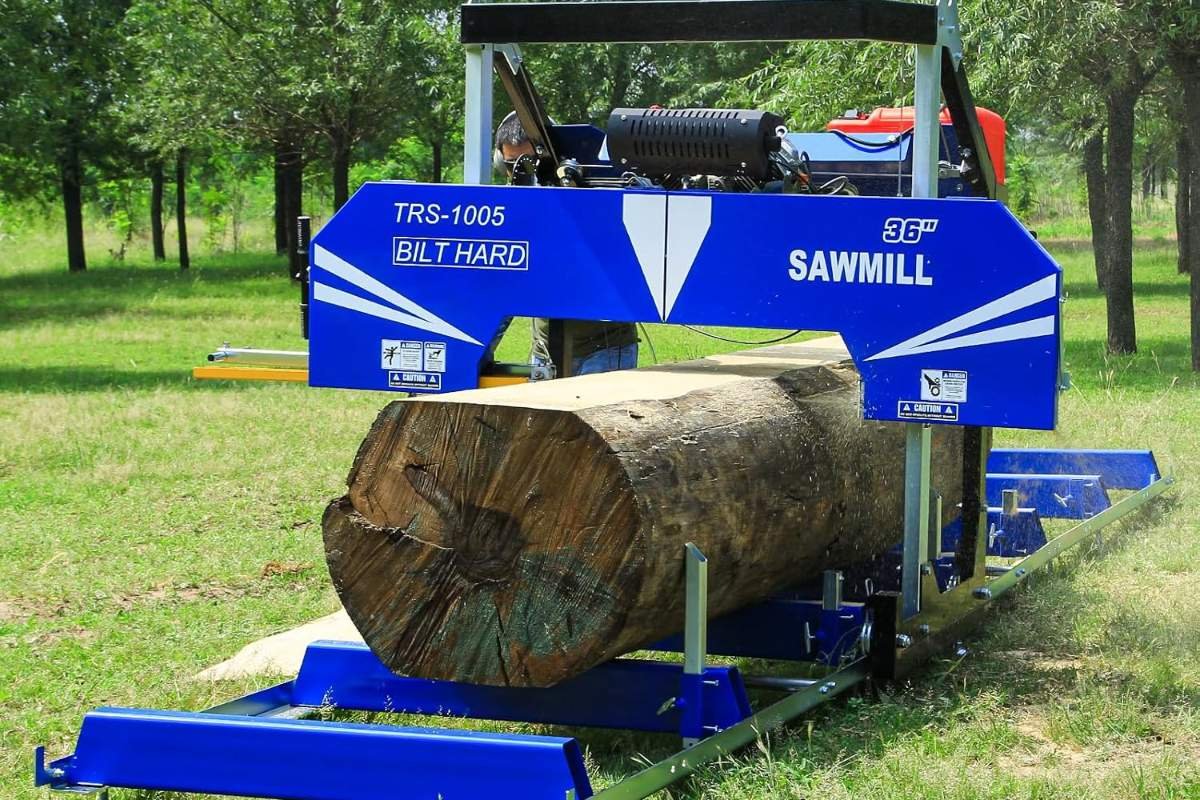
Finding the best portable sawmill for commercial use starts with one point. Milling to sell lumber is a different job than milling for your own projects, and the mill that's right for a weekend hobbyist usually isn't the mill you want once you're doing this for money. If you're cutting logs into boards you plan to sell, or you're running a milling side business and billing by the board foot, you need more engine, a wider track, and a machine built to run all day without special care. Here's what changes at the commercial end of this category, and the mill we'd point a working sawyer to.
Table of Contents
What changes once you're milling to sell, not just for yourself
A hobbyist mill sits idle most of the year and gets asked to cut a few logs at a time. A commercial mill gets asked to run for hours, day after day, and every minute it's not cutting is money you're not making. That changes what matters when you're shopping for the best portable sawmill for commercial use.
Throughput is the real number. A bigger engine doesn't just cut faster, it keeps cutting speed consistent through a hard knot or a dense section of oak instead of bogging down and forcing you to slow the feed rate. Wider board capacity means fewer passes per log. A longer track means fewer setups per day, since you're not repositioning a short mill halfway through a long sawlog. None of that matters much if you're milling twice a year. All of it matters if you're billing hours or selling finished lumber.
Blade wear is also a real cost at this volume in a way it isn't for a hobbyist. A commercial operation burns through blades fast enough that blade cost per board foot becomes a line item worth tracking, not an afterthought.
What separates a commercial-tier mill from a hobby one
Finding the best portable sawmill for commercial use isn't about one spec. It's four working together.
Engine power. Hobbyist and beginner mills in this category typically run 8 to 15 horsepower. Commercial-tier mills jump to 25 horsepower or more, usually on a dual-cylinder or V-twin engine rather than a single cylinder. That's the difference between a mill that struggles in dense hardwood and one that holds its feed rate through it.
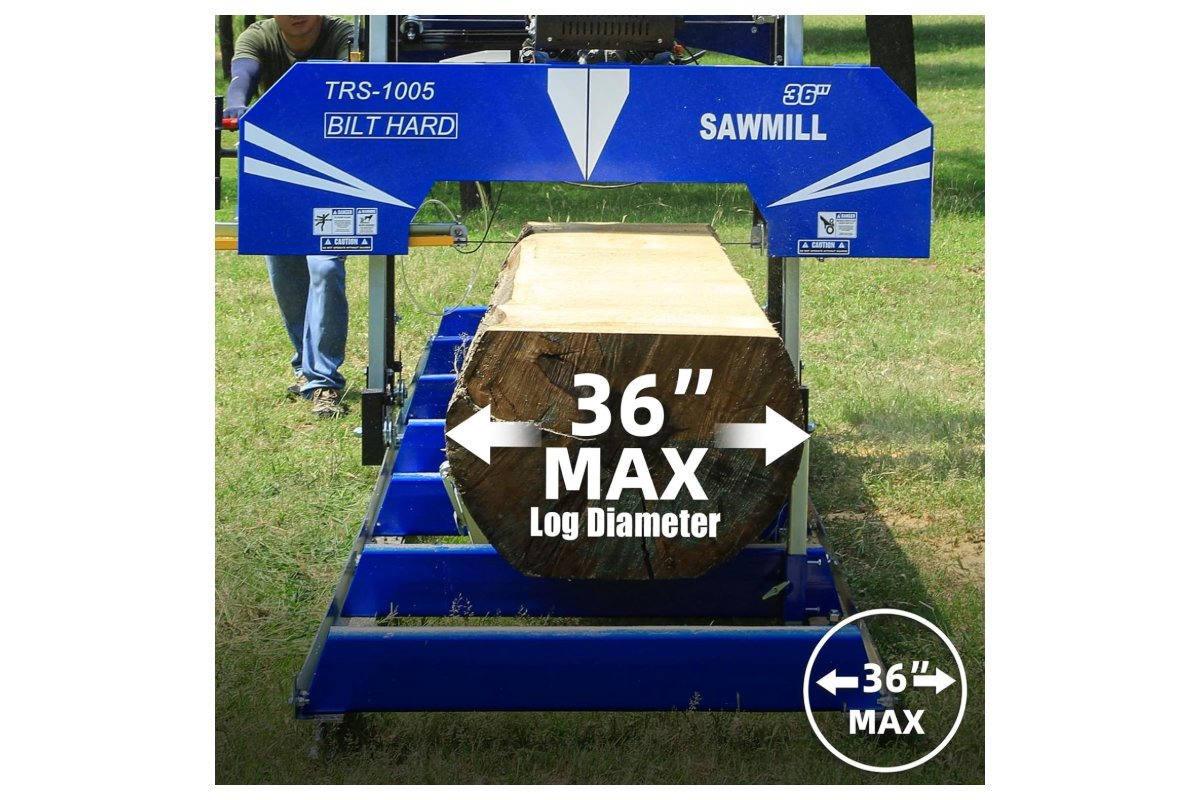
Board width and log diameter. A hobby mill tops out around 22 to 26 inches. Commercial mills in this tier handle up to 36 inches, which matters directly for revenue. A 36-inch log yields dramatically more board feet (a lumber volume unit: 12 by 12 by 1 inch) than a 22-inch one. A mill that can't take the bigger log means turning away the job entirely.
Track length and load rating. Longer track means longer logs without repositioning. A track rated for real load-bearing, not just the mill's own weight, matters once you're running it daily instead of occasionally.
Build weight and stability. Commercial mills in this tier run 900 to 1,100+ pounds, versus 700 pounds or less for a hobby model. That extra weight isn't wasted. It's what keeps the track from flexing under a full day of cutting instead of a Saturday afternoon.
Our Pick for the Best Portable Sawmill for Commercial Use: BILT HARD 36"
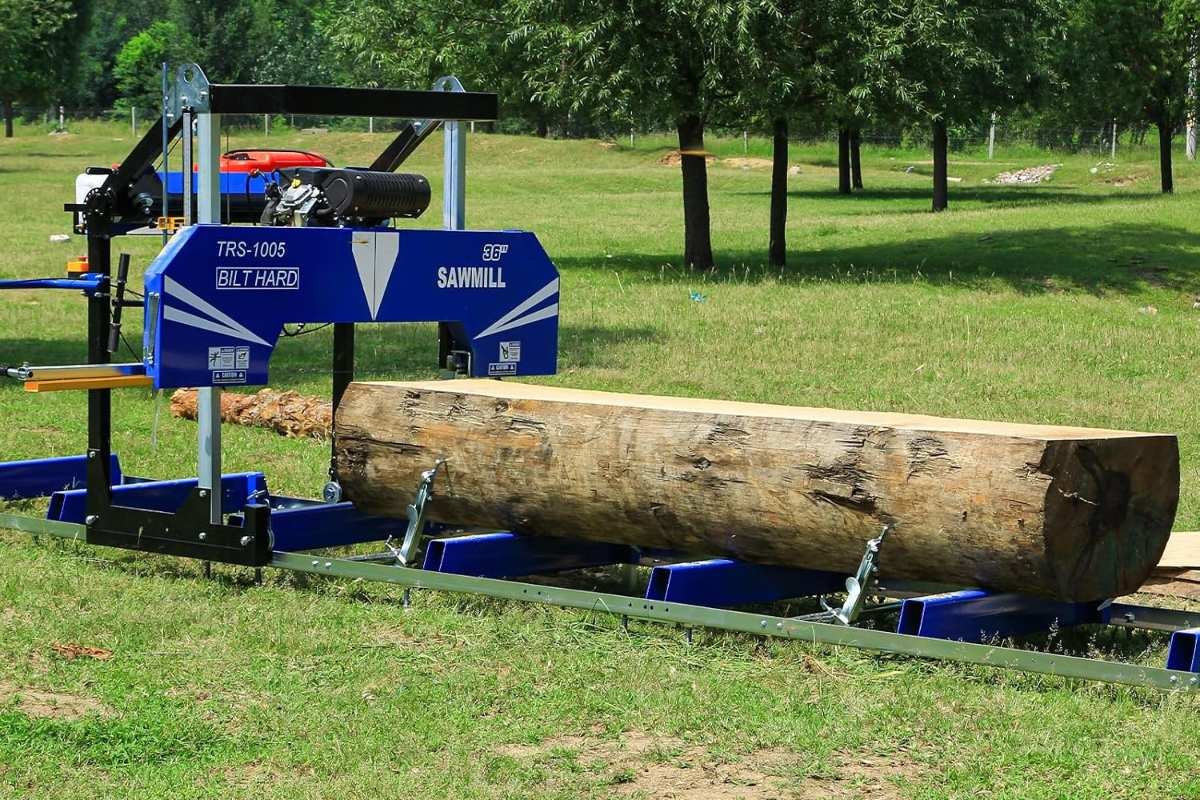
We looked at every commercial-scale bandsaw mill currently buyable on Amazon rather than the manufacturer-direct brands (Wood-Mizer, Norwood, Woodland Mills) that don't sell there at all. The BILT HARD 36" is the clearest step up from the hobby and mid-range tiers. It has a 760cc, 25 horsepower dual-cylinder engine with electric start, 36 inch board width, and a 26 foot track (19.2 feet standard plus a 6.4 foot extension included) that handles logs up to 200-plus inches long.
The rest of the spec sheet backs up the "built to run" positioning, not just the headline numbers. A 45.3-inch track width for stability under a full-width log, a 4-gallon blade lubrication tank (double the size of the smaller BILT HARD models, since a commercial mill burns through lube faster), and a centrifugal clutch blade engagement system. It ships with 10 blades included, which at commercial cutting volume isn't a nice extra. It's close to a necessity from day one.
One note on the reviews: this specific 36-inch, 26-foot track listing has only 9 ratings, all five stars, which is a thin sample to lean on heavily. What we can say is the reviews that exist are about this machine rather than generic template filler. One buyer who'd already processed over 75 logs calling it well built and easy to operate. Another described the log clamping system as secure and the whole setup as stable under hardwood. BILT HARD's other sawmill sizes carry a combined 50 ratings at 4.4 stars across the brand's shared product listing, which is a reasonable trust signal for the brand generally, even though it isn't specific to this exact configuration.
It carries a real premium over our overall pick, and the extra money buys real capability: 10 more horsepower, 10 more inches of board width, and 6 to 13 more feet of track, depending on which overall-pick configuration you're comparing against. Check current price on Amazon.
What a commercial mill still needs beyond the mill itself
Owning the mill is only half the equation. Budget for blades as an ongoing cost, not a one-time cost. At this cutting volume, you'll go through the included 10 blades faster than a hobbyist goes through their first one, and running a dull blade doesn't just cut worse. It heats up and risks warping the band entirely.
Plan for log handling separately from the mill. A 36-inch hardwood log is heavy, heavier than one or two people can safely position by hand, and a commercial operation needs a tractor, skid steer, or log arch to get logs onto the track in the first place. The mill doesn't solve that problem. It assumes you've already solved it.
A dedicated, level milling area matters more for commercial milling than it does for occasional milling. Setting up and breaking down a 26-foot track repeatedly eats into the productive hours you're trying to protect. A semi-permanent or fully permanent setup pays for itself faster at this volume than it would for a hobby mill used a few weekends a year.
When the big manufacturer brands are worth the extra cost instead
Wood-Mizer, Norwood, and Woodland Mills all sell mills at this tier and above, with hydraulic log loading, dealer networks, and factory support that an Amazon-sold import mill doesn't offer. None of them sell through Amazon, so buying one means going direct to the manufacturer or a dealer, at a meaningfully higher price. If you're running this as a full-time business rather than a serious side operation, that dealer relationship and hydraulic handling can be worth the extra cost. If you're scaling up from hobby milling into real production without committing to that price jump yet, the BILT HARD is a real middle ground.
Which one to buy
Commercial-scale milling asks more of a machine than a first sawmill does, and trying to run a production schedule on a hobby-tier mill shows up fast in slower cuts, more setups, and a machine that wasn't built for the hours you're putting on it. The BILT HARD 36" delivers the horsepower, board width, and track length that volume requires, at a price that's still well under what the manufacturer-direct brands charge for comparable capacity.
Quick answers
What makes a sawmill suitable for commercial or professional milling?
A commercial-tier sawmill needs more horsepower (25 or more, usually dual-cylinder), wider board capacity (up to 36 inches), a longer track for handling full-length logs without repositioning, and enough overall weight and track load rating to stay stable through a full day of cutting rather than occasional use.
How much horsepower do you need for professional sawmilling?
Hobbyist and beginner mills typically run 8 to 15 horsepower. Commercial-tier mills run 25 horsepower or more, usually on a dual-cylinder or V-twin engine, which holds a consistent cutting speed through dense hardwood instead of bogging down.
Do Wood-Mizer and Norwood sell on Amazon?
No. Wood-Mizer, Norwood, and Woodland Mills sell direct or through dealer networks, not through Amazon. Buyers looking for a commercial-tier mill on Amazon are choosing between import brands like BILT HARD and MechMaxx instead.
How many board feet can a commercial portable sawmill produce?
Output depends on log size and operator experience more than a single spec, but a 36 inch commercial-tier mill with a 25 horsepower engine can process significantly more board feet per hour than a hobby-tier mill under 15 horsepower. That is because of faster, more consistent cutting speed and because it takes larger logs in fewer passes.