
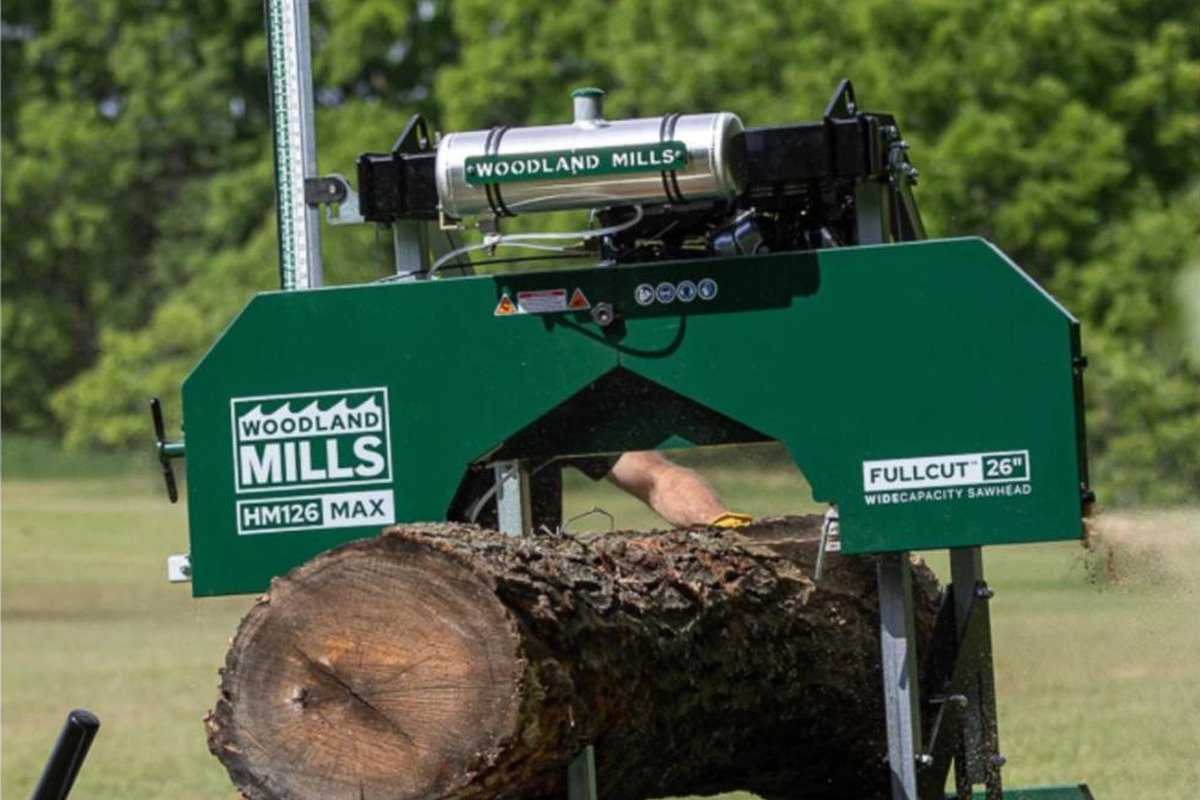
This Woodland Mills HM122 vs HM126 vs HM130Max comparison starts with the size ladder Woodland Mills sells: bigger log capacity at each step, bigger price tag to match. That's true as far as it goes, but it misses the actual line that separates these mills. The question that matters isn't how big a log each one can take. It's whether the board coming off the mill is as wide as the log going onto it.
Table of Contents
The real difference isn't size. It's whether the cut matches the log
Woodland Mills builds the HM122 and HM126 with a sawhead that can accept a log up to their rated diameter, but can't cut all the way across it. For example, the HM126 takes a 26-inch log but only cuts a 24-inch board. Those outer two inches of the log are there. They just never become usable width on that pass.
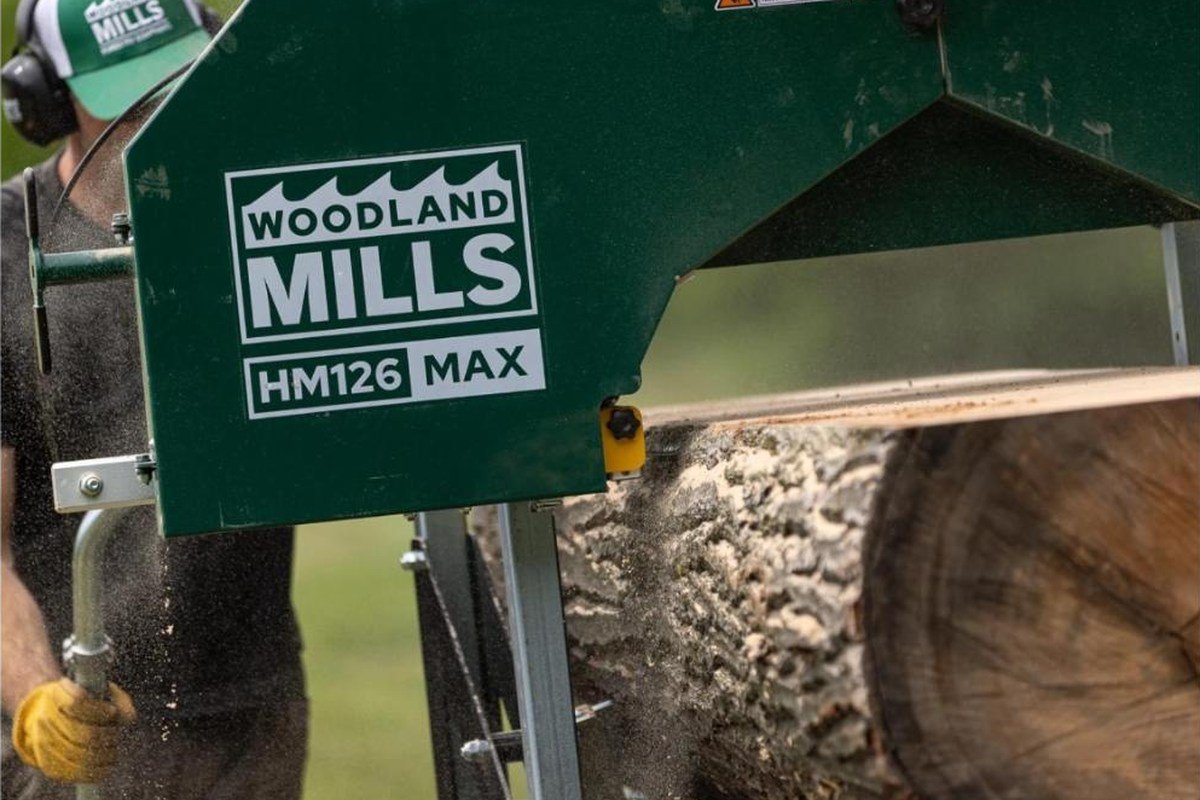
Woodland Mills fixed this with a redesigned sawhead it calls FULLCUT, and it only ships on the models carrying the MAX name. The company's own announcement of the HM126MAX put it plainly: for the first time, the mill's maximum cut width matches its maximum log diameter, 26 inches to 26 inches. The HM130Max carries the same FULLCUT sawhead, which is why its 30-inch log capacity and 30-inch board width line up too. MAX isn't a marketing suffix here. It's the name for a specific carriage redesign that closes a real gap in the non-MAX models.
That gap matters most if you're after wide slabs, live-edge table tops, or anything where the full width of a big log is the point. It matters much less if most of what you cut is dimensional lumber well under the mill's rated diameter anyway, since you were never going to use the outer two inches on those logs regardless.
Woodland Mills HM122 vs HM126 vs HM130Max: The Size Ladder
| Model | Engine | Max log diameter | Max board width | Full-width cut? | Current price |
|---|---|---|---|---|---|
| HM122 | 7-9.5 HP Kohler | 22" | 20" | No | Check price |
| HM126 | 9.5 HP Kohler | 26" | 24" | No | Check price |
| HM130Max | 14 HP Kohler | 30" | 30" | Yes (FULLCUT) | Check price |
The HM122 is Woodland Mills' entry point, and it's a real, US-built bandsaw mill for less than many people expect to pay for the brand. The 7 HP engine is the base option. Stepping up to 9.5 HP costs more but keeps the engine from bogging down in dense hardwood. For someone milling logs off their own property, mostly firewood-diameter trees and the occasional larger trunk, the 2-inch gap between log and board rarely costs you anything you'd have used.
The HM126 sits in an odd spot. It costs meaningfully more than the HM122 for 4 more inches of log diameter, but it still can't cut full width, so a chunk of that upgrade goes toward capacity you can't fully use on the biggest logs it accepts. It's a real step up if 22 inches is too small for what you're cutting, but it's worth knowing the HM126MAX exists before paying for the non-MAX version.
The model that splits the difference: HM126MAX
Woodland Mills sells a fourth configuration that doesn't fit neatly into a three-model ladder: the HM126MAX. It keeps the HM126's 26-inch log capacity and compact footprint, but swaps in the FULLCUT sawhead and steps up to a 14 HP engine, so the board width matches the 26-inch log. It also offers an electric start option that the standard HM126 doesn't have.
If full-width slabs matter to you but the HM130Max's 30-inch capacity is more than you need, the HM126MAX is the model built for that use case, not the plain HM126. Paying less to get a mill that structurally can't use part of what it's rated for is a worse trade than paying more for a smaller mill that uses all of it.
What doesn't change across the lineup?
Every HM model, MAX or not, shares the same core mechanicals. All of them use Woodland Mills' RapidChange blade system, a tool-less way to swap blades without a wrench. All of them run the patented Gas and Go auto-lube system, which automatically engages blade lubrication through the same throttle handle that starts the cut.
All of them sit on a reinforced 4-post carriage rather than a lighter frame, and all of them run Kohler engines backed by Kohler's own 3-year commercial warranty. None of that changes as you move up the lineup, so a HM122 and a HM130Max leave the same quality of cut, just at very different capacities and speeds.
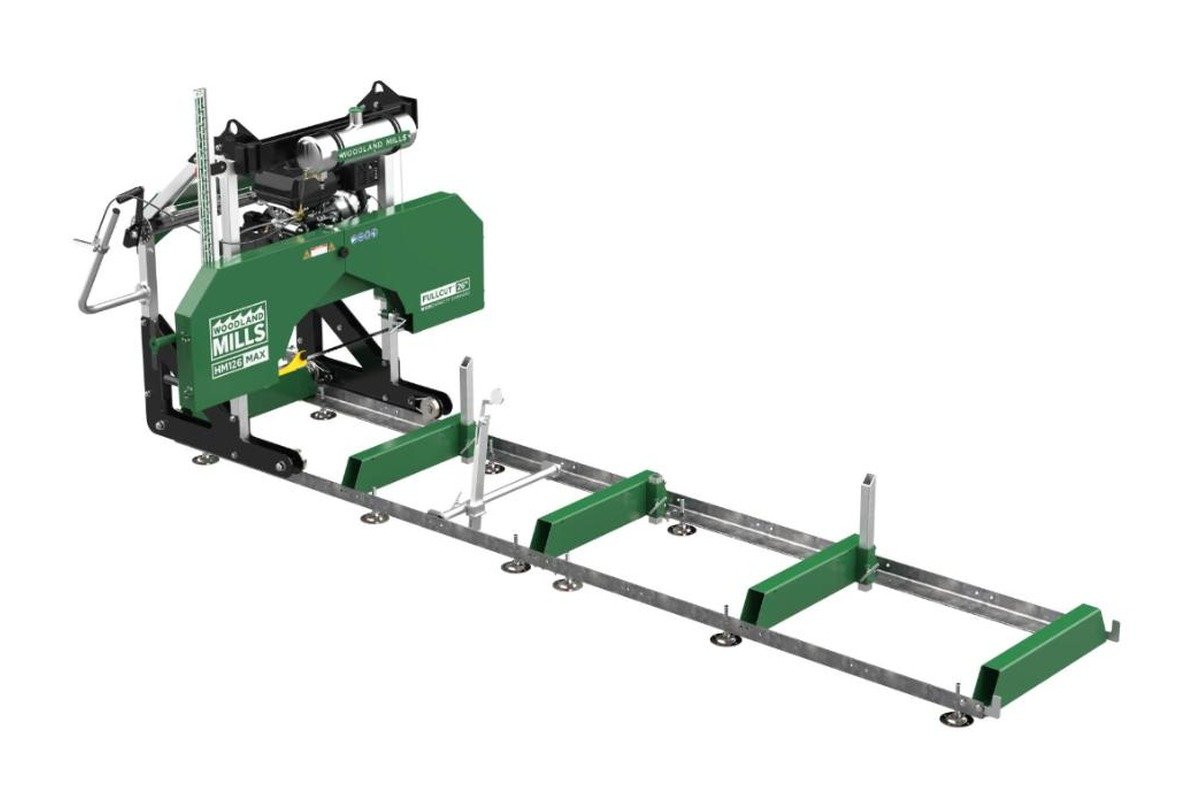
For scale, Woodland Mills also sells a HM136Max above the HM130Max, at 21 HP with a 36 inch log diameter and 36 inch board width, the same FULLCUT design carried up another size class. Pricing on that model wasn't published at the time of writing, which suggests who it's built for: buyers already past the price-comparison stage.
Which one should you buy?
Buy the HM122 if you're milling your own land at a hobbyist pace and your logs mostly run under 20 inches anyway. The 2-inch gap between capacity and cut width won't cost you real usable lumber, and the HM122 is a real entry point into a brand with a real parts and warranty network behind it.
Buy the HM126MAX, not the plain HM126, if you regularly get logs in the 22 to 26 inch range and want to use all of that width, especially for live-edge slabs or wide dimensional boards. The extra cost over the base HM126 buys you the sawhead that delivers the capacity you're paying for.
Buy the HM130Max if 26 inches isn't enough, whether that's because you're milling larger hardwoods regularly or building a small side business where wider slabs command a real price premium. It's not an impulse buy, but it's the model in this lineup built to use every inch it's rated for.
None of these is the place to start if you're not sure you'll stick with milling. Woodland Mills' cheapest model is still a real investment before shipping and blades. If you want to find that out first, our overall pick and budget pick ship from Amazon for a fraction of that. They are a real way to test whether you'll use a mill before committing to a Woodland Mills mill and its full price tag.
If you're after true full-width cutting, the MAX naming convention exists outside Woodland Mills too. The MechMaxx SM-36MAX ships from Amazon with a 25 HP V-twin engine and a 36-inch board width that matches its 36-inch log capacity, real full-width capacity. It carries a different brand and dealer network than Woodland Mills, but it offers the same matched-width capability and ships from Amazon rather than through a dealer order.
On the entry end, the MechMaxx SM-22 offers roughly the same 22-inch log capacity as the HM122 for far less and ships from Amazon. Either way, the choice comes down to matching board width to your actual logs, not just picking the biggest number on the spec sheet.
Quick answers
What's the actual difference between the HM122, HM126, and HM130Max?
Log diameter and board width both grow as you move up the lineup, but the HM122 and standard HM126 can't cut a board as wide as the log they accept. Only the HM130Max (and the separate HM126MAX) use the FULLCUT sawhead that makes board width match log diameter.
What does MAX mean in Woodland Mills model names?
MAX marks models built with Woodland Mills' FULLCUT sawhead, which lets the mill cut a board as wide as the log's full diameter. Non-MAX models accept the same size log but leave a couple of inches of width uncut on the widest logs they handle.
Is the HM126MAX worth it over the standard HM126?
If you regularly mill logs near the HM126's 26-inch rated diameter, or want full-width live-edge slabs, yes. The HM126MAX costs more but cuts the full 26 inches the log capacity promises, whereas the standard HM126 tops out at a 24-inch board.
What's the cheapest real Woodland Mills sawmill?
The HM122 is the lowest price point in Woodland Mills' current lineup, before shipping and blades. Buyers who want to try milling for less can find full bandsaw mills for a fraction of that on Amazon.