
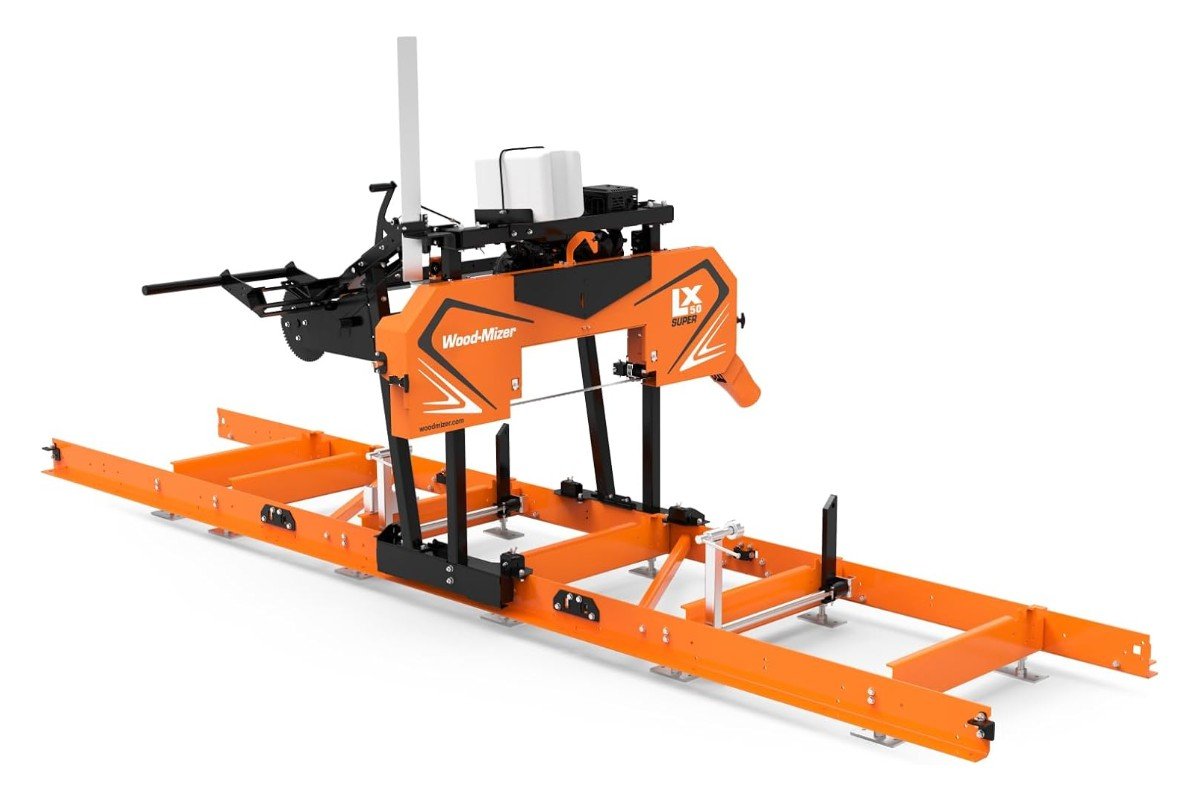
This Wood-Mizer LX vs LT comparison starts with the split Wood-Mizer builds into two separate product lines, and it isn't about size, as most buyers assume. The LX series is a twin-rail machine built to sit in one spot. The LT series is a monorail machine built to move. That single design choice decides almost everything else on this page: what ground you can put the mill on, whether you can ever add hydraulic log handling, and how much you'll spend once you know what you need.
Table of Contents
Wood-Mizer LX vs LT: The Real Difference Is the Frame
Wood-Mizer's own engineering explains why the two lines exist. The LX series uses a rigid xFRAME sawhead tower that rides on twin parallel hardened steel bars. That's a strong, precise system, but it's also a low, segmented bed, and a low segmented bed has nowhere to mount hydraulic log-loading arms. Every LX model on the market today is a manual-load machine. You're feeding logs onto it by hand or with a forklift, permanently, no matter how much you spend on the model itself.
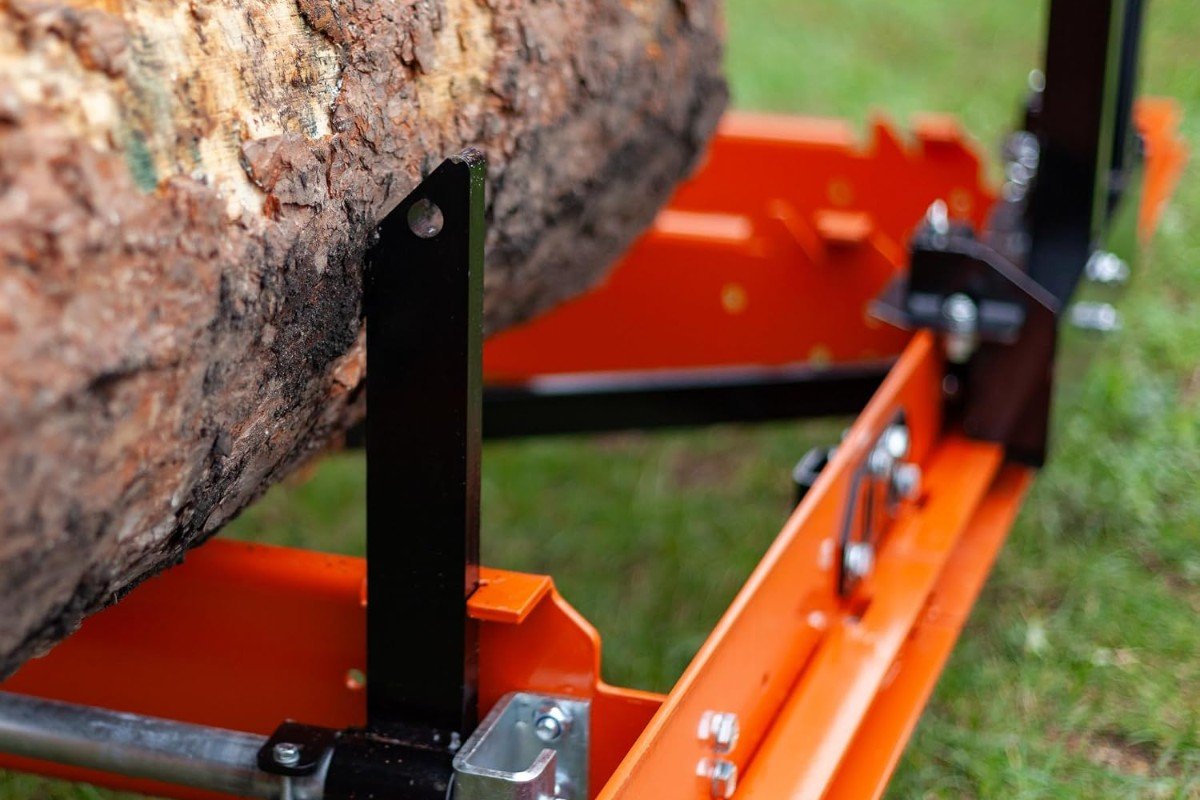
The LT series solves that differently. Its saw head moves along a single straight monorail, with the cantilever side of the head left open. That open cantilever design is what lets a log sit slightly crooked, or the ground sit slightly uneven, and still come off the mill as a straight, smooth board. It's also what leaves room underneath the bed for hydraulic log clamps, turners, and loaders, which is why the hydraulic-upgrade path only exists on LT models.
So the real Wood-Mizer LX vs LT question isn't "how big a log do I need to cut?" It's whether you'll ever want the mill to do the lifting for you. If the answer is no, the LX line will save you real money. If the answer is maybe someday, buying LX now means starting over later.
LX series: five models, all manual, all stationary
| Model | Engine | Max log diameter | Max board width | Price |
|---|---|---|---|---|
| LX30 | 9.5 HP gas | 22" | 21.5" | Check price |
| LX50START | 9.5 HP gas | 26" | 23.5" | Check price |
| LX50SUPER | 14 HP gas | 26" | 23.5" | Check price |
| LX150 | 25 HP gas | 36" | 35.5" | Check price |
| LX250 | 38 HP gas | 55" | 54.5" | Check price |
The LX30 and both LX50 variants are the entry point into the entire Wood-Mizer brand, and they're priced like it. Even the cheapest buys a real American-made bandsaw mill with a name that dealers, insurers, and lumber buyers already trust, and for a hobbyist milling on their own property, the twin-rail bed's stationary nature usually isn't a real limitation. You pick a spot, you level it once, and you're done.
The jump from LX50SUPER to LX150 is enormous, both in capability and in price. There's a big gap between the LX50SUPER and the LX150, which tells you who the LX150 and LX250 are built for. They are not a step up for a hobbyist, but a stationary production mill for someone slabbing large-diameter logs who has already decided they don't need the machine to move.
LT series: eleven configurations, from homestead to production line
| Model | Engine | Max log diameter | Max board width | Type | Price |
|---|---|---|---|---|---|
| LT15START | 14 HP gas | 28-32" | 26-30" | Manual | Check price |
| LT15 | 25 HP gas | 28-32" | 26-30" | Manual | Check price |
| LT15WIDE | 25 HP gas | 36-41" | 35-39" | Manual | Check price |
| LT28 | 25 HP gas | 32" | 30" | Manual | Check price |
| LT35 | 25 HP gas | 32" | 30" | Manual | Check price |
| LT35 Hydraulic | 25 HP gas | 32" | 30" | Hydraulic | Check price |
| LT40WIDE Hydraulic | 38 HP gas | 41" | 34.5" | Hydraulic | Check price |
| LT40WIDE Super Hydraulic | 38 HP gas | 41" | 34.5" | Hydraulic | Check price |
| LT50WIDE Hydraulic | 38 HP gas | 41" | 34.5" | Hydraulic | Check price |
| LT70WIDE Super Hydraulic | 55 HP gas | 41" | 34.5" | Hydraulic | Check price |
The LT15 is the model Wood-Mizer itself calls its most popular design, and the spec sheet explains why: 25 horsepower, a 32-inch log capacity, and a manual bed that can still take a crank-feed or power-feed upgrade later without buying a new mill. It's also available with electric or diesel power options beyond the gas engine listed above, which the LX line doesn't offer. For someone building a small sawmill business, or a homestead operation that might sell lumber someday, that upgrade path matters more than the sticker price.
Past the LT35, every model is hydraulic, and the price climbs fast from a hydraulic LT35 up to the LT70WIDE Super Hydraulic. These aren't hobbyist purchases. They're built for an operation cutting enough board footage that paying someone to hand-load every log would cost more than the hydraulics.
What the price buys, tier by tier
Group the models by what they're built for, and the lineup makes more sense than a flat list of numbers:
Entry tier (LX30, LX50START, LX50SUPER): entry-level, stationary, manual load. This tier is where someone buys their first real bandsaw mill to cut timber from their own property.
Workhorse tier (LT15START through LT35 manual): portable, upgradeable, and the price point where a serious hobbyist becomes a part-time sawyer.
Large-capacity tier (LX150, LX250): large-capacity stationary mills, built for slabbing wide logs rather than moving between sites.
Production tier (LT35 Hydraulic through LT70WIDE): production sawmilling. If you're reading this range, you likely already know your board footage targets, and the machine is a business decision, not a hobby one.
What doesn't change between the two lines?
It's easy to assume LX is the cheap option and LT is the real one, but the two lines share more than the price gap suggests. Both are built in Wood-Mizer's own Indiana factory, both carry the same warranty structure, and both run on the same dealer and parts network, so a service call or a blade order doesn't get harder just because you bought the smaller line.
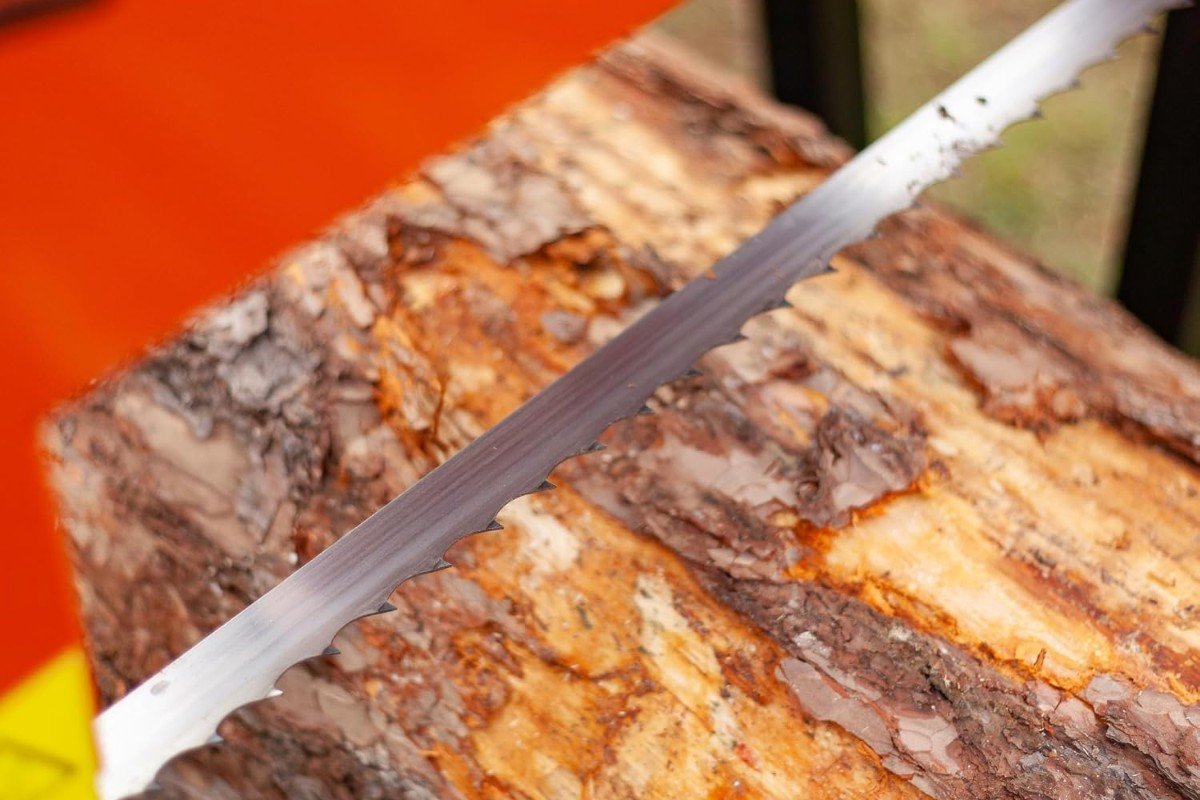
Cut quality is the same story: the blade, not the frame, does the actual cutting, and Wood-Mizer sells the same silvertip blade stock across every model in this article. An LX30 and an LT70WIDE will leave the same surface finish on a board, just at very different speeds and volumes.
Resale is where the Wood-Mizer LX vs LT gap shows up again. LT models hold value better on the used market. That is largely because a used LT can still be moved to a buyer's property and set up on uneven ground, while a used LX is only worth what it's worth to someone willing to build a permanent site around it. That's worth weighing against the lower price if you think there's any chance you'll sell the mill in a few years rather than run it for a decade.
Which one should you buy?
If you're milling your own land, a friend's property, or a small side business without daily production quotas, buy LT, not LX, even though it costs more up front. The LT15START gives you a portable machine that handles uneven ground and leaves the hydraulic door open. That flexibility is worth the extra few thousand dollars over an LX50SUPER if there's any real chance you'll want to move the mill or grow the business later.
Buy LX only when you already know two things for certain: the mill is staying in one place permanently, and you'll never need hydraulic loading. That's a narrower set of buyers than the price tag suggests, mostly hobbyists cutting on their own property who have already picked the spot and don't plan to change it.
Neither series is a beginner's first sawmill in the way most people mean that phrase. Wood-Mizer's cheapest model is still a real investment before shipping, blades, or the concrete pad most models want under them.
If you're deciding whether to spend that much before you've milled a single log, it's worth knowing that real, buyable bandsaw mills exist well under that floor. Our overall pick and budget pick both cost a fraction of that and ship from Amazon, which is a real way to find out whether milling is something you'll stick with before committing to a brand-name mill and its full price tag.
If you want the LT line's hydraulic-ready, full-width capability, a Wood-Mizer dealer isn't the only way to get it. The MechMaxx SM-36MAX ships from Amazon with a 25 HP V-twin engine and a 36-inch board width that matches its 36-inch log capacity, true full-width cutting. It will not carry Wood-Mizer's resale value or dealer network, but it is a real way to get that same full-width capability from Amazon instead of ordering through a dealer.
On the entry end, the MechMaxx SM-22 covers roughly the same 22-inch log capacity as the LX30 for far less, also shipped from Amazon. Either way, this Wood-Mizer LX vs LT decision comes down to the frame, not the sticker price.
Quick answers
What's the actual difference between Wood-Mizer's LX and LT series?
The LX series uses a twin-rail xFRAME design that stays in one place and can never be upgraded to hydraulic log loading. The LT series uses a monorail cantilever design that handles uneven ground and can later be upgraded to hydraulic log handling.
Which Wood-Mizer model is the most popular?
The LT15 is the model Wood-Mizer itself describes as its most popular design, thanks to its 32-inch log capacity, multiple power options, and upgrade path to power feed.
Can you upgrade an LX sawmill to hydraulic log loading later?
No. The LX series' low, segmented twin-rail bed has no room to mount hydraulic loading arms, so every LX model stays a manual-load machine for its entire life. Only LT models can add hydraulics.
What's the cheapest real Wood-Mizer sawmill?
The LX30 is the lowest price point in Wood-Mizer's current lineup, though that's before shipping and accessories. Buyers who want to try milling for less can find full bandsaw mills for a fraction of that on Amazon.