
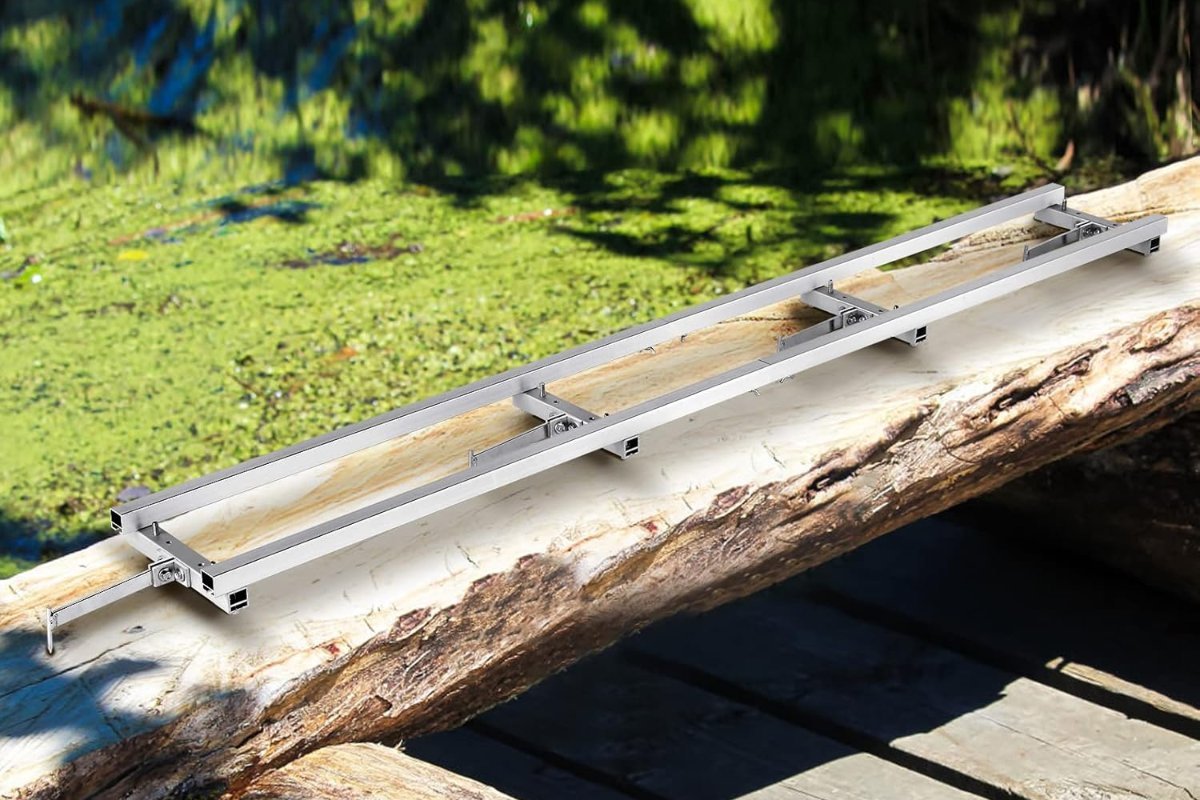
Every chainsaw mill guide rail has a fixed length, and sooner or later a log shows up that's longer than it. A 5-foot or 9-foot rail handles most firewood-length rounds, but a straight, knot-free log worth milling into full boards is often 10, 12, or 16 feet long. A chainsaw mill rail extension is how owners of an Alaskan-style chainsaw mill keep cutting boards that long without buying an entirely new, oversized mill setup.
This guide covers why rail extension exists as its own category rather than just "buy a longer rail," how connector kits and DIY extensions work, and how to size an extension to the logs you cut. It also covers a few real products worth buying, and the setup habits that keep a long rail run straight instead of sagging. For general background on how chainsaw milling itself works, see Popular Woodworking's overview of milling lumber with a chainsaw mill.
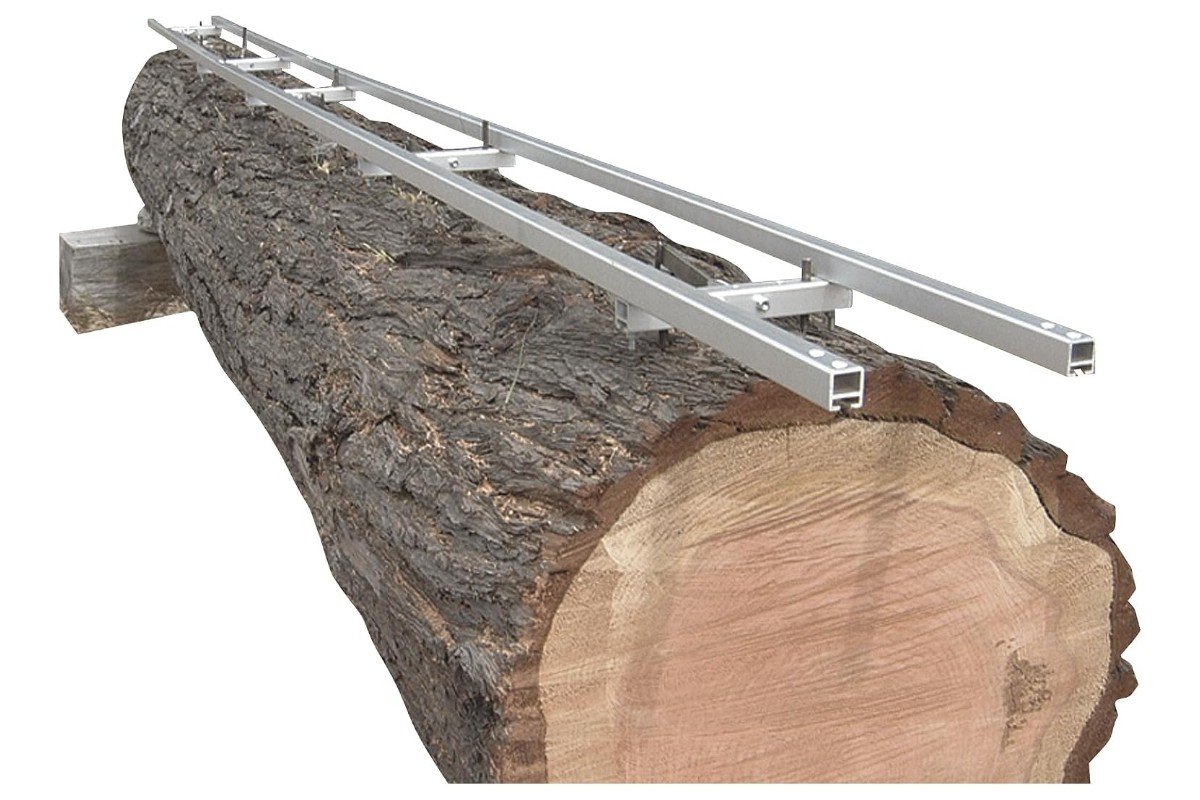
Table of Contents
Why Rail Extension Is Its Own Topic
A chainsaw mill's guide rail is what the mill's carriage rides along, and it sets the maximum length of a single straight cut. Most stock rail systems ship in 5 to 10 foot lengths because that covers the majority of milling jobs and keeps the rail manageable to transport and store. Once a log runs longer than the rail, the carriage simply runs out of track before the cut is finished.
Buying a second, longer rail system outright works, but it duplicates hardware you already own. A rail extension costs less. Manufacturers like Granberg sell dedicated connector kits specifically so two shorter rail sections can be joined end to end into one continuous run. That is the more common and more affordable path for anyone who only occasionally mills a long log.
How Rail Extension Works
A chainsaw mill rail extension built from a connector kit joins two compatible rail sections with a bracket or coupling piece that bolts across the seam. It holds both sections in the same plane so the mill's carriage rolls across the joint without a step or gap. Granberg's EZ Rail system, for example, sells 5-foot sections that combine into a 10-foot run using its own connector kit. That lets an owner carry two manageable sections and assemble them into a longer rail only when a job calls for it.
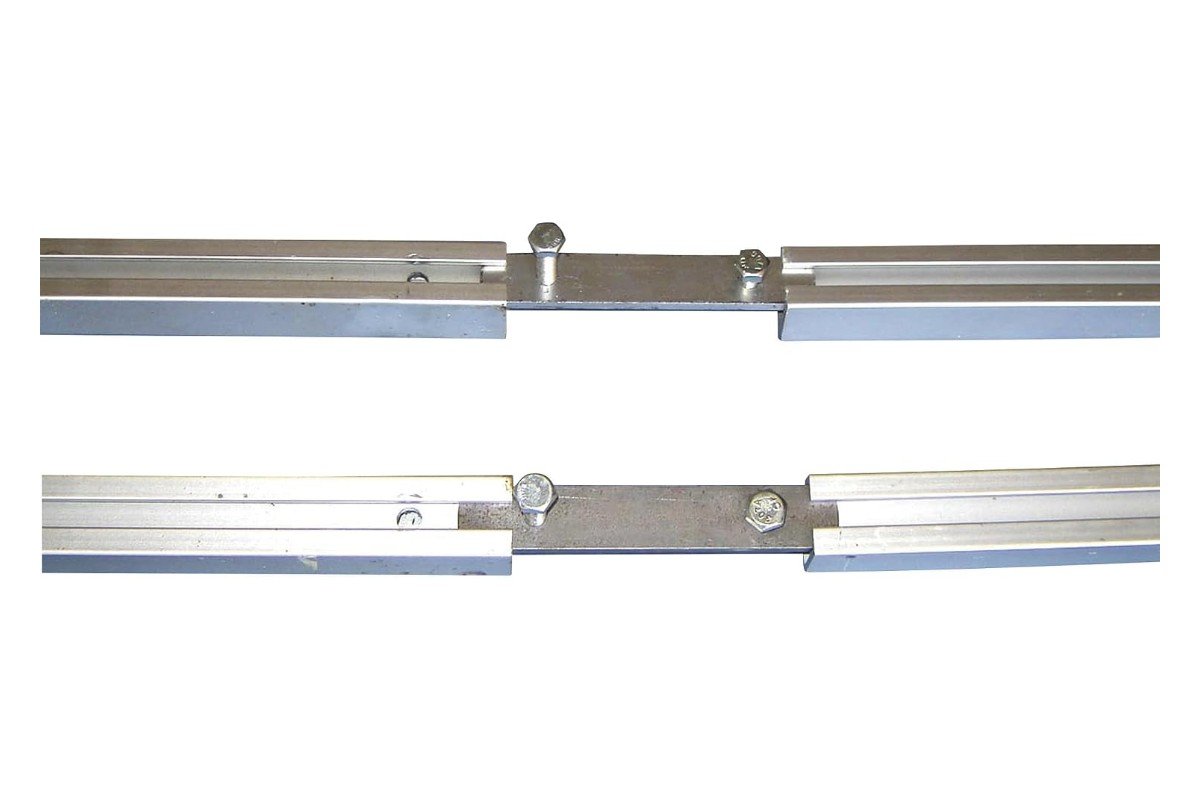
DIY extensions follow the same basic idea using off-the-shelf aluminum extrusion, most commonly the 80/20-style T-slot rail sold by industrial suppliers, cut to length and bolted to the existing rail with brackets. This route takes more setup work and requires matching bolt spacing and slot width to the mill's existing hardware, but it scales to whatever length a builder needs and typically costs less per foot than a manufacturer's packaged extension.
DIY Extension vs. a Manufacturer Kit
A manufacturer connector kit is the simpler choice: it's designed to match the rail it extends, bolts on without modification, and keeps the whole system compatible with other accessories sold for that mill. The tradeoff is that it only extends a rail to the lengths the manufacturer offers, and buying multiple kits to reach an unusual length can add up.
A DIY extension built from aluminum extrusion has no length ceiling and can be sized to a specific job, which matters for anyone routinely milling logs longer than any packaged rail system goes. It demands more fitting work up front, from squaring the joint to matching bolt holes, and forum builders commonly report needing to file slots or swap in smaller carriage bolts when a substitute rail doesn't perfectly match the original hardware.
Sizing a Chainsaw Mill Rail Extension to Your Logs
The sizing rule is simple. The rail needs to be at least as long as the longest log being milled, with a little extra so the carriage has room to travel the full length of the cut without running off either end. Measuring your largest log candidates before buying an extension, rather than guessing, avoids paying for length that never gets used.
| Typical log length | Rail length needed | Notes |
|---|---|---|
| Up to 8 feet | 9 to 10 feet | Covers most stock rail systems without any extension |
| 8 to 12 feet | 12 to 14 feet | Typically one connector kit or a single DIY extension section |
| 12 feet and up | 15 feet or more | Usually requires a DIY extrusion run or multiple connector kits |
Longer rails also need more support along their length to stay straight under their own weight, which is a separate consideration from the connector hardware itself and is covered in the setup section below.
Rail Extension Products Worth Buying
These are current products covering both the packaged-kit route and the components a DIY extension is typically built from.
Granberg G1090 EZ Rail Connector Kit
Granberg's own connector kit, built to bolt two compatible EZ Rail sections together into one continuous run instead of two separate 5-foot pieces. It's the bracket that turns a pair of 5-foot sections into the same 10-foot system Granberg sells pre-assembled, at lower cost and with the option to keep the sections separate for transport when you don't need the full length.
- Bolts on without any fitting, filing, or modification since it's made to match Granberg's own rail hardware exactly
- Keeps the whole setup compatible with other EZ Rail accessories and add-ons
- Lets you buy one 5-foot section now and extend later instead of committing to the full 10-foot system upfront
- Only works with Granberg's own EZ Rail sections, not other brands' rails
- Adds one more bolted joint that needs checking and tightening before every cut
Granberg G1085 5-Foot EZ Rail System
A single 5-foot EZ Rail section that works two ways: on its own for shorter logs, or as one half of a 10-foot run once you add a second section and the G1090 connector kit. Recent versions use a single-piece dog hinge plate that makes assembly and breakdown quicker than older EZ Rail hardware.
- Compact enough to store and carry easily on its own
- Doubles as one half of a longer run later, so it's not a dead end if your needs grow
- Single-piece dog hinge plate speeds up assembly compared to older versions
- Needs a second section plus the G1090 connector to reach 10 feet, which adds cost and parts to track
- 5 feet on its own caps you to shorter logs until you extend it
Granberg G1010 10-Foot EZ Rail System
The packaged 10-foot system pairs two 5-foot EZ Rail sections with the connector kit included, so it arrives ready to assemble into the full run without buying the pieces separately. A practical choice for anyone who already knows they'll need the full 10 feet on a regular basis rather than occasionally.
- Everything needed for the full 10-foot run comes in one package, connector included
- No guessing whether a separately bought connector will fit, since it's matched from the factory
- Stays fully compatible with Granberg's other Alaskan Mill accessories
- Bulkier to transport and store as a set than a single 5-foot section
- Costs more upfront than starting with one 5-foot section and adding a second only when you need the length
VEVOR 9-Foot Rail Mill Guide System
A 9-foot aluminum rail system that ships with multiple crossbar kits included, so it's ready to mount and use without sourcing separate hardware. Sized for logs in the 7 to 8 foot range without needing any extra extension, and the aluminum construction keeps total weight down compared to a steel DIY build of the same length.
- Multiple crossbar kits included, so there's no separate hardware to track down before first use
- Lightweight aluminum construction compared to steel of the same length
- One package covers the whole 7 to 8 foot range without extension parts
- 9 feet is a hard limit. Logs longer than that need a different system, since VEVOR doesn't sell a matching connector kit the way Granberg does
- Not cross-compatible with Granberg or other brands' rail hardware
VEVOR 15-Foot Rail Mill Guide System
VEVOR's longer packaged rail option, built for owners who consistently mill logs longer than 9 feet and would rather buy one long rail outright than assemble a DIY extension on every job. It includes six crossbar kits for support along the full run, which matters more at 15 feet than it does on a shorter rail.
- One packaged rail covers long logs without any DIY extension work or extra connector joints to maintain
- Six included crossbar kits give support along the full 15-foot span
- Aluminum construction keeps it lighter than an equivalent steel build
- Significant length to store and transport as a single unit
- Unnecessary bulk and cost for anyone who only occasionally mills a log longer than 9 feet
Setup Tips for Long Rail Runs
A long rail sags more than a short one under its own weight and the weight of the mill riding on it, and any sag translates directly into a wavy first cut. Support the rail at multiple points along its length, not just at the ends, using blocks, sawhorses, or stakes driven into the ground beneath the log.
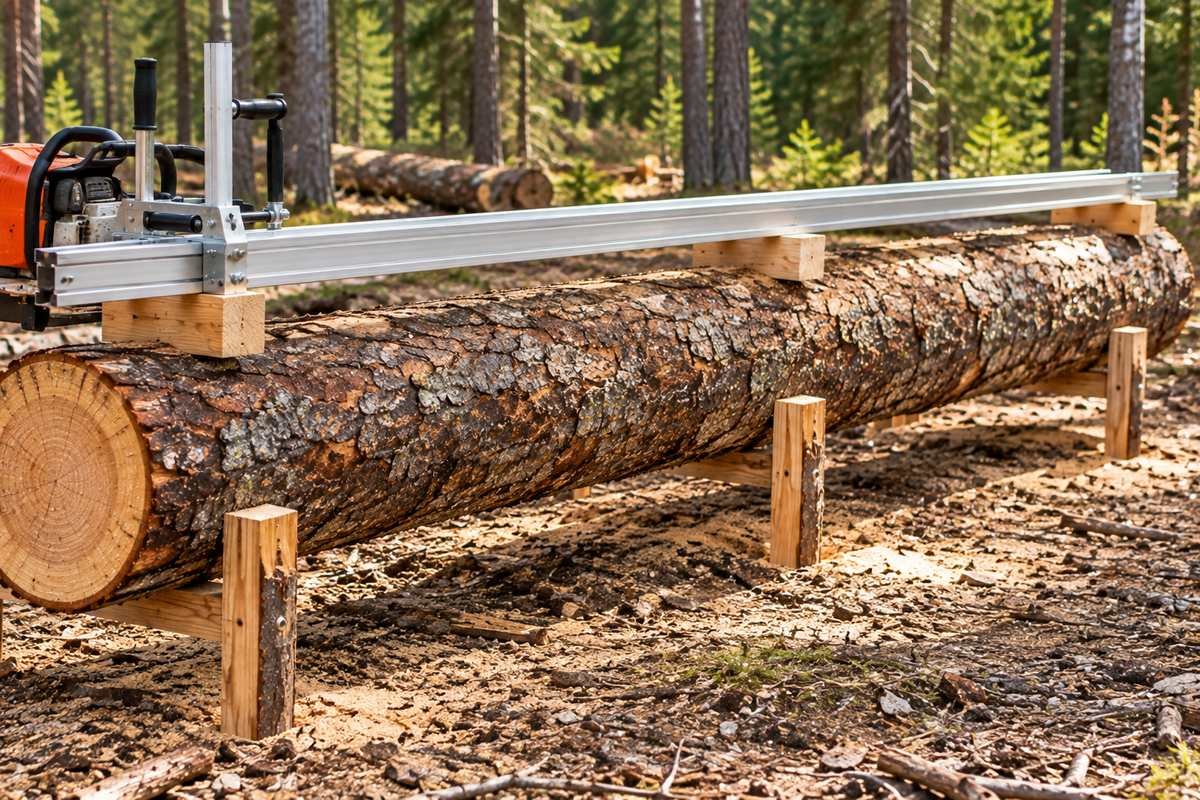
Level and align the rail before cutting. A spirit level checks that the rail sits level along its run, and measuring the distance between rails at several points along the length confirms they stay parallel. A rail that's slightly out of parallel at one end compounds into a noticeably tapered board by the far end of a long cut.
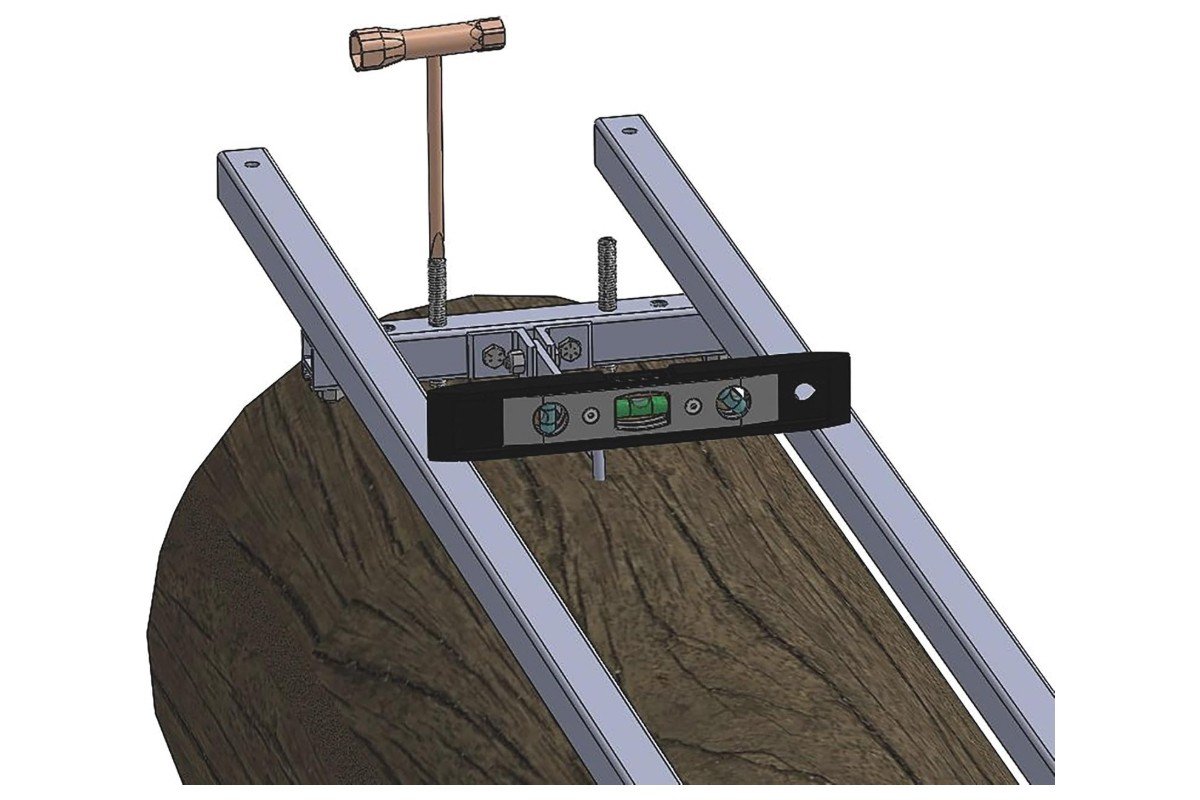
Double-check the connector joint itself before the first cut of the day. A loose or misaligned connection at the seam between two rail sections is the single most common point of failure on an extended rail, since it's the one place where the carriage crosses from one section's hardware onto another's.
The first cut on a long rail matters more than on a short one, since it establishes the reference face for every board that follows and there's more length for any early wobble to show up in. Take the first pass slower than usual and confirm the rail hasn't shifted before committing to the full run.
Maintenance and Care
Check connector hardware for looseness after every few uses, since the vibration of a running chainsaw works bolts loose over time, especially at a joint that sees repeated stress from the carriage crossing it. A rail extension that stays tight at the seam will keep cutting straight far longer than one that's allowed to work loose.
Clean sawdust and debris out of the rail's track or slot after each use, since packed sawdust can bind the carriage or throw off its alignment on the next cut. Store rail sections somewhere flat and supported along their length rather than leaning them against a wall, which can introduce a permanent bow over time in aluminum extrusion.
Frequently Asked Questions
Do I need a rail extension for every chainsaw mill?
No. A rail extension only matters once you're milling logs longer than your current rail system. Many owners never need one if most of their logs fall within their stock rail's length.
Is a DIY rail extension as accurate as a manufacturer kit?
It can be, but it takes more careful setup. A manufacturer connector kit is engineered to match its own rail system, while a DIY extension depends on how precisely the builder squares and aligns the joint and supports the rail along its length.
How long can I extend a chainsaw mill rail?
There's no fixed limit with a DIY aluminum extrusion build, but every extra foot adds more sag risk and needs more support points. Packaged systems top out at whatever length the manufacturer sells, commonly 15 feet or so.
What causes a wavy cut on a long rail?
Sag along the rail's length, a rail that isn't level, rails that aren't parallel to each other, or a loose connector joint are the most common causes. Supporting the rail at multiple points and double-checking alignment before cutting prevents most of these.
Can I mix rail brands when extending?
It's possible but adds extra work, since bolt spacing and slot width often differ between brands. Forum builders report needing to file slots or use smaller carriage bolts to make a mismatched rail fit, so sticking with one brand's connector system is the simpler path.
A chainsaw mill rail extension is a low-cost way to get real extra cutting length out of a mill you already own, whether that means a purpose-built connector kit or a DIY run of aluminum extrusion. For the wedges that keep a felling cut open before you ever get a log to the mill, see our guide to felling wedges, and for moving that log once it's on the ground, see our guide to log tongs.