
Cut a log and the clock starts. End grain loses moisture many times faster than the rest of the log, and within hours that uneven drying begins pulling the wood apart from the outside in. An end grain sealer for logs slows that moisture loss at the cut ends so the whole log dries at closer to the same rate, instead of checking (small cracks that open as wood dries) and splitting before it ever reaches the mill.
This guide covers why log ends check in the first place, what separates one sealer from another, whether the cheaper DIY shortcuts hold up, three real products worth buying, and how to apply any of them so they work. If your lumber is already milled and stacked, our guide on how to air dry lumber after milling covers the next step.
Table of Contents
Why Log Ends Check Before the Rest of the Log Does
Wood loses moisture through its end grain at roughly ten to fifteen times the rate it loses moisture through the side grain, because the end grain exposes the open ends of the wood's own moisture-conducting cells directly to the air.
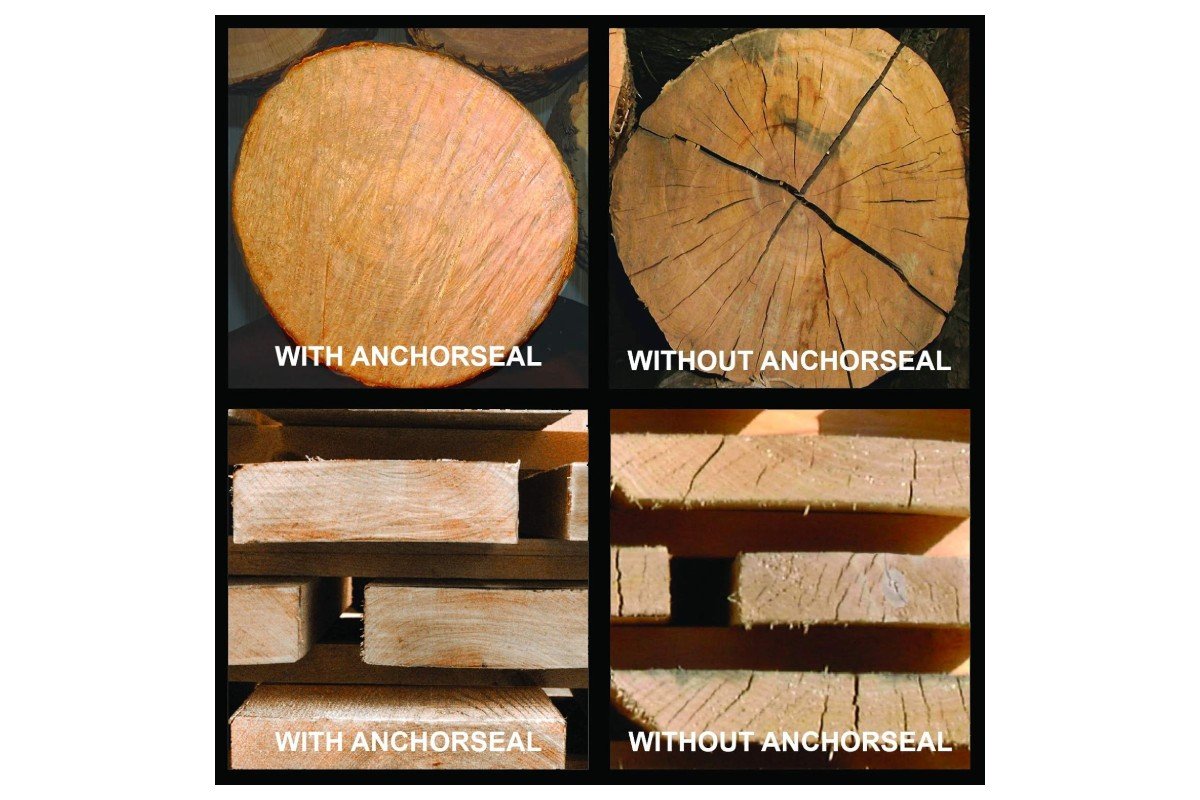
The outer inch or two of a cut end can drop to a much lower moisture content (how much water is in the wood, as a percent of its dry weight) than the wood just behind it in a matter of days. That uneven shrinkage creates internal stress the wood resolves by cracking along the grain. On a freshly felled log, checking can start within hours of the first cut, not weeks later, which is why timing matters as much as the sealer itself.
A sealer does not stop moisture loss. It slows it down at the end grain specifically, so the end and the rest of the log dry at closer to the same rate. That is the entire mechanism: even drying prevents the stress that causes checking, and a sealer that is not applied soon enough or thick enough simply cannot slow that first critical window. For the full technical picture on how moisture moves through wood, the USDA Forest Products Laboratory's Wood Handbook covers the mechanics of this moisture gradient in detail.
How to Choose an End Sealer
Every sealer on this page works on the same principle, a wax-based coating that forms a semi-permeable barrier over the cut end. Past that, a handful of real differences decide which one is worth buying for your situation.
Wax Emulsion Formula
The industry standard is a water-based wax emulsion, not a solvent-based coating or a straight paint. A true wax emulsion sinks into the open end grain and dries to a flexible, semi-permeable film that slows moisture loss without sealing it off completely, which matters because wood still needs to dry, just slowly and evenly. Newer hybrid formulas blend in polymer along with the wax, which several manufacturers advertise as sticking better and dripping less during application than the original wax-only mix.
Water-Based Means Easy Cleanup
Every sealer here cleans up with soap and water while wet. That is not a minor convenience on a day when you are sealing dozens of log ends back to back, since a brush or roller that dries stiff with product on it is a brush you are replacing. None of these require a respirator or ventilation the way a solvent-based coating would.
Coverage and How Far a Gallon Goes
Manufacturer coverage figures for end grain use run around 25 to 30 square feet per gallon with one to two coats, though real-world use on irregular, bark-covered log ends tends to run lower than a manufacturer's flat-board test figure. For someone sealing a handful of logs after a weekend of felling, a quart stretches a long way. For a sawyer processing logs regularly, the per-ounce cost drops sharply at the gallon and five-gallon sizes. So buying small to try it and buying big once you know you will keep using it both make sense depending on where you are.
Clear Versus Tinted
Most end grain sealers go on milky white and dry to a clear or slightly translucent waxy finish, which lets you still read the wood species, grain, and any markings you wrote on the end before sealing. A handful of reviewers note a faint yellowish tint can show up under a clear finish applied later. If you plan to stain or varnish that same end grain, seal a test piece first and let it sit the recommended time before judging the color.
Does DIY Work? Paint, Glue, and Other Shortcuts
Ask around any sawmill forum and someone will tell you latex paint, PVA (ordinary white or yellow) wood glue thinned with water, or even melted candle wax works as well as a real end sealer. All three can slow moisture loss to some degree, and none of them are useless. They are just less consistent than a dedicated end sealer.
Latex paint forms a harder, less flexible film than a wax emulsion. It can hold up fine on a small, dry piece, but on a larger green log it is prone to cracking or peeling away from the end grain as the wood itself shrinks underneath it. That happens right at the exact spot it is supposed to protect. One buyer who switched to a dedicated sealer after using leftover latex paint put it plainly in a product review: the paint did not stop the cracking, the sealer did.
PVA glue works reasonably well as a quick fix for a small turning blank or two, since it is already in most shops. But it is not formulated for the volume or the outdoor exposure a stack of felled logs gets. It also gets expensive fast at log-end scale compared to a sealer built for the job.
If you are sealing one or two logs as a one-time thing and already have paint or glue on the shelf, it is a reasonable stopgap. If you are milling regularly or protecting anything you care about losing to a check, a real end sealer costs little enough per log that the DIY route is not worth the risk.
End Sealers Worth Buying
All three of these are currently available sealers with real ratings and review histories. Each fits a different volume of work.
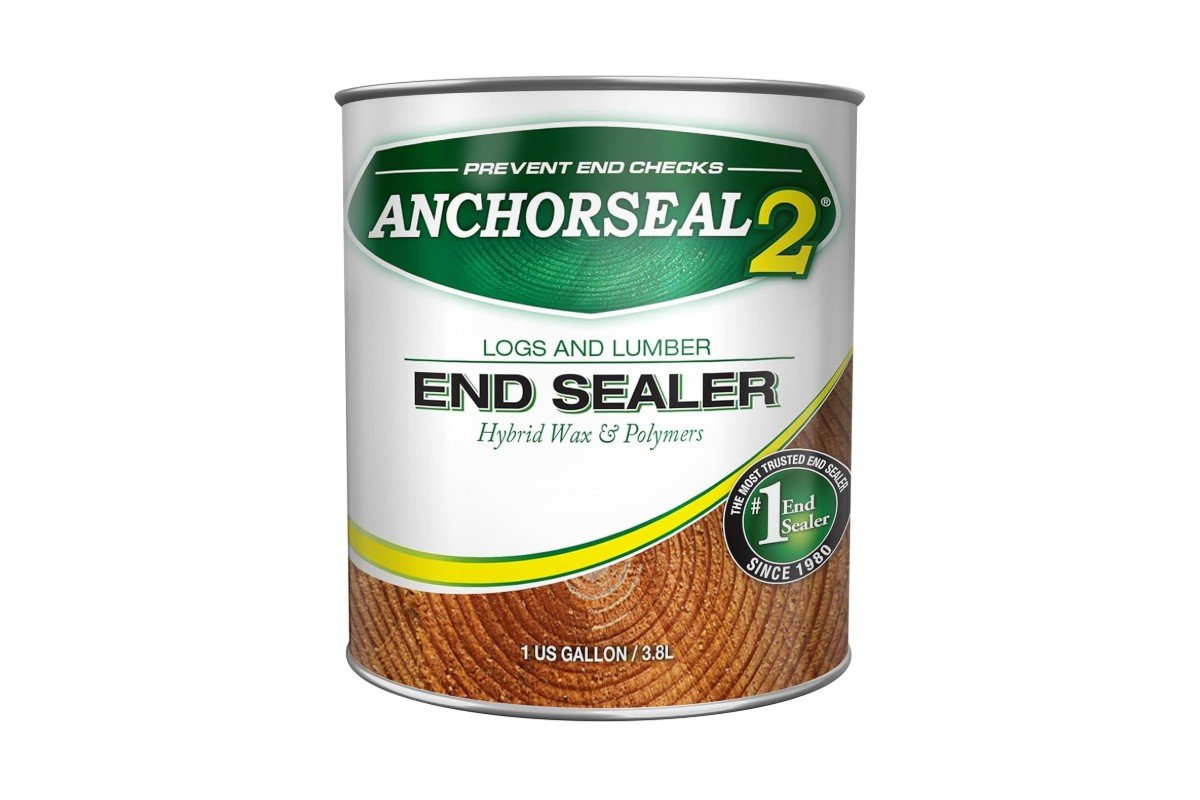
1. ANCHORSEAL 2: Best Overall
ANCHORSEAL 2 is the sealer most sawyers and bowl turners default to, and the review numbers back that up: 4.6 stars across more than 2,400 ratings, with over 500 bought in the past month alone. It is a hybrid wax and polymer formula, an update on the original Anchorseal built to drip less and stick better during application. Reviewers across both log ends and turning blanks report it holding up on green cherry, maple, and walnut, and it dries close to clear so you can still read species and grain through it. Coverage runs around 25 square feet per gallon on clean end grain.
- Highest review volume of any sealer here, 4.6 stars across 2,400-plus ratings
- Hybrid formula drips less and sticks better than the original wax-only Anchorseal
- Dries close to clear so species and grain markings stay readable
- A few reviewers note a faint yellow tint showing through finish applied later
- Costs more per ounce than buying Anchorseal Classic in the 5 gallon size
2. ANCHORSEAL Classic, 5 Gallon: Best for Large Batches
ANCHORSEAL Classic is the original wax emulsion formula, in use since 1980, and it carries the same 4.6 star rating across over 1,000 reviews. Several long-time users who switched back to Classic after years on Anchorseal 2 describe it as noticeably thicker and more effective on dense, tight-grained woods like oak and cherry, where the newer formula can struggle. Buying the 5 gallon size drops the per-ounce cost well below any of the smaller options on this page, which matters once you are sealing logs by the cord instead of by the handful.
- Lowest per-ounce cost of the three once bought at the 5 gallon size
- Thicker, longer-tested formula some reviewers prefer on tough species like oak
- Same 4.6 star rating across 1,000-plus reviews as the newer formula
- A 5 gallon pail is more than most weekend sawyers need at one time
- Needs a stir before use since the wax can settle in a pail that size
3. DeckWise Ipe Seal, 1 Quart: Best for Small Projects and Turning Blanks
DeckWise built Ipe Seal to protect ipe and other dense exotic hardwood decking. That means it is formulated to grip wood that is notoriously hard to seal, the same property that makes it work well on a few turning blanks or a handful of felled logs. At 4.6 stars across 158 reviews, it is the smallest-batch option here, sized for someone who needs a quart, not a gallon or more sitting on a shelf.
- Formulated to grip dense hardwoods that are hardest for a generic sealer to hold onto
- Quart size fits an occasional project instead of a full milling operation
- 4.6 stars across 158 reviews with no reports of it failing to adhere
- Highest per-ounce cost of the three since it only comes in smaller sizes
- Coverage is listed in square feet of decking, not log ends, so a gallon-equivalent comparison takes some math
How to Apply End Sealer the Right Way
The product matters less than the timing, and here is the process that prevents checking.
- Cut clean. A rough, torn end grain from a dull chain seals less evenly than a clean cut, since the sealer needs to bond to the exposed cell structure, not fill in tear-out.
- Seal within hours, not days. Checking can start within hours of the cut, so the sooner the sealer goes on, the more of that first critical drying window it protects.
- Stir before applying. Wax emulsions can separate slightly in the container, especially in larger pails that have sat a while.
- Apply one to two coats with a brush, roller, or sprayer, covering the entire end grain surface out to the bark edge. Let the first coat dry before adding a second on larger or more valuable logs.
- Reseal after any fresh cut. If you cut a log shorter later, or saw into a sealed end, that new surface is unprotected and needs its own coat.
- Clean up with soap and water while the sealer is still wet. Once it dries, it takes real scraping to get off a brush.
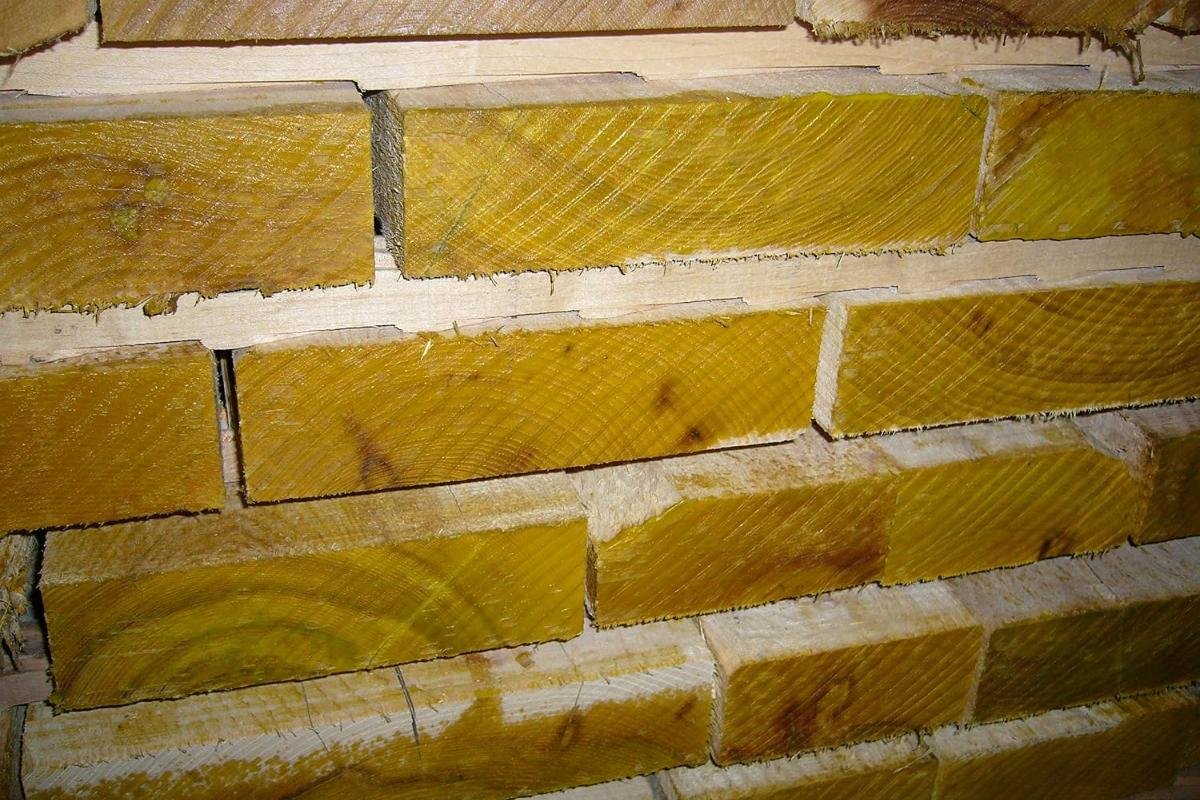
Once your logs are sealed and drying, check progress with an actual reading rather than guessing. Our best moisture meters for wood guide covers which meter to buy for tracking moisture content as logs and lumber dry down to a safe level for milling or storage.
Frequently Asked Questions
What is the best end grain sealer for logs?
ANCHORSEAL 2 is the best overall end grain sealer for logs for most people, with a 4.6 star rating across more than 2,400 reviews and a hybrid wax and polymer formula built to stick and drip less than the original. ANCHORSEAL Classic in the 5 gallon size is the better choice once you are sealing logs regularly enough for the lower per-ounce cost to matter.
How soon after cutting a log should you seal the ends?
Seal within hours of the cut, not days. Checking can begin within hours of a fresh cut as the end grain starts losing moisture many times faster than the rest of the log. So the sooner the sealer goes on, the more of that first critical window it protects.
Can you use latex paint instead of a real end sealer?
Latex paint can slow moisture loss somewhat, but it forms a harder, less flexible film than a wax emulsion sealer and tends to crack or peel away from the end grain as a green log shrinks underneath it. It works as a stopgap for a log or two if that is already on hand, but a dedicated end grain sealer performs more consistently, especially on anything you do not want to risk losing to a check.
How many coats of end sealer do you need?
One to two coats covers most logs. Apply the first coat to clean end grain, let it dry, then add a second coat on larger logs or species that are especially prone to checking, such as oak. Coverage runs around 25 square feet per gallon on clean end grain.
Does end sealer stop a log from drying?
No. End sealer slows moisture loss at the cut ends so the whole log dries at closer to the same rate as the rest of the wood. The log still dries, it just takes longer and dries more evenly, which is what prevents the internal stress that causes checking.
Which One to Buy
Checking happens in the first hours after a cut, not weeks later, so the real decision is whether you seal at all, not which brand you pick. For most people, ANCHORSEAL 2 is the right default. It has the highest review volume here, a formula built to stick and drip less than the original, and a size range that covers a quart for one log or a gallon for a season of milling.
Step up to the 5 gallon Classic once you are sealing logs regularly enough for the per-ounce savings to matter, or reach for the DeckWise quart if you only need to protect a handful of turning blanks. Skip the latex paint. It is not built for this job, and checks in your log ends will show it within a season.