
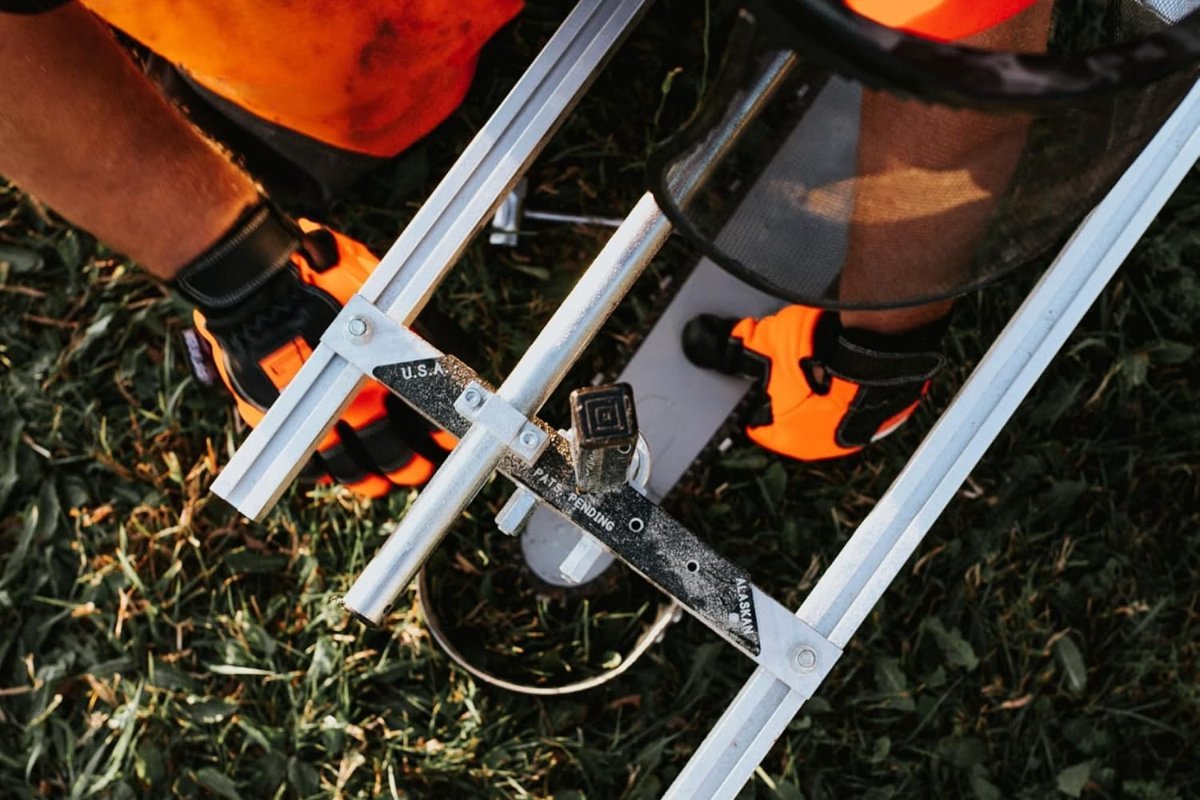
Granberg G778-36 Alaskan MKIV
The best chainsaw mill attachment overall is the Granberg Alaskan MKIV, the industry-standard rail mill every other option gets compared against.
Product SKU: B06XHLVY6Y
Product Brand: Granberg
4.7
Pros
- Industry-standard rail mill, built by Granberg for 60+ years
- The safest, most established choice of the four attachments compared
Cons
- Costs more than the budget alternatives
- Still loses 3 to 4 inches of bar length to the mount, like every attachment in this category
Table of Contents
Start with how big a log you need to cut
Picking the best chainsaw mill attachment overall starts with one number, not a spec sheet: your chainsaw's guide bar length. A chainsaw mill attachment doesn't have a "maximum log diameter" spec the way a bandsaw mill does: it's limited by your chainsaw's guide bar length instead, roughly 3 to 4 inches shorter than the bar itself once the mill is mounted. That single number decides more about which attachment fits you than price does.
Four attachments dominate this category on real sales and review volume: the Granberg G778-36 Alaskan MKIV, the Zozen chainsaw mill, VEVOR's chainsaw mill attachment, and Carmyra's chainsaw mill. They're not competing on the same terms. One is the trusted original, one is the current high-volume pick, one is the cheapest way to find out if this is for you at all, and one undercuts the high-volume pick on price at the cost of a drill-required mount.
The four attachments worth comparing
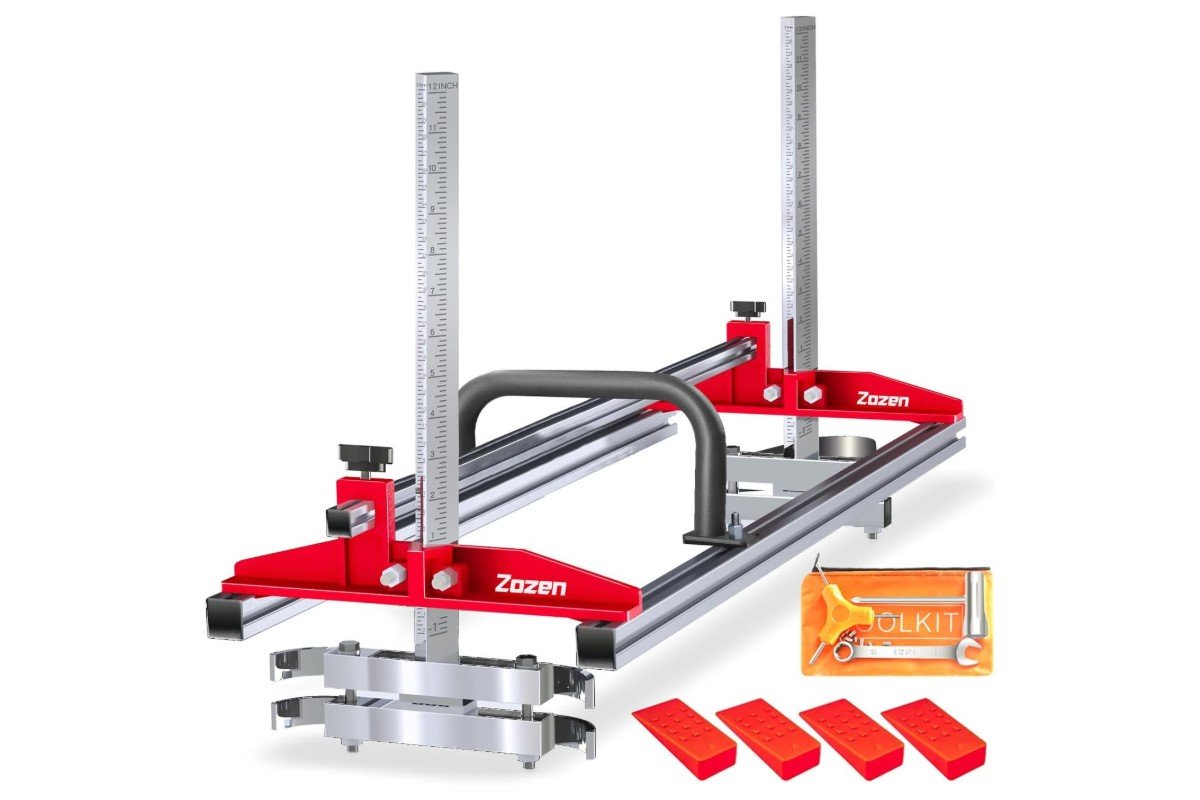
Granberg Alaskan MKIV: the name every serious buyer already trusts
Granberg invented this product category decades ago, and the MKIV is still the reference point everyone else gets compared to. As the priciest of the four, it carries the deepest track record, with a long history of owner reviews and steady sales.
Best for: buyers who want the version with the longest history and the least guesswork: if something goes wrong, there's decades of forum threads and replacement parts to fall back on.
Not ideal for: anyone trying to spend as little as possible to test the waters. That's what the cheaper options exist for.
Zozen: the current high-volume pick
Zozen sits in the middle of the price range, with a large review count and a fast recent sales pace. Amazon had it flagged as an "Overall Pick" in this category as of this writing.
Best for: buyers who want a genuine step up from the cheapest option without paying Granberg's premium.
Not ideal for: buyers specifically prioritizing brand longevity over price: Granberg has a much longer track record.
VEVOR: the low-cost way to test the idea
VEVOR's attachment is the cheapest of the group, priced to answer one question cheaply: will you use this? It carries the smallest review base of the four, in line with being the newest and cheapest option.
Best for: a first attempt at milling before committing more money: clearing a few logs from your own property, or deciding whether to upgrade to a bandsaw mill later.
Not ideal for: regular or serious use. The review count and price both signal a lighter-duty product than the others, and it's a reasonable choice specifically because it's cheap to walk away from if milling isn't for you.
Carmyra: the closest challenger to Zozen on price and volume
Carmyra undercuts Zozen on price while carrying an even larger review base: north of 3,000 ratings at a similar 4.3-star average. It uses the same basic rail-and-clamp mechanism as the other three, adjustable for bars from 14 to 36 inches, cutting up to roughly 11.8 inches thick.
The tradeoff: Carmyra's clamp is designed to be bolted through two drilled holes in your guide bar for a secure mount, where Granberg and Zozen are built to clamp without drilling. Owner reviews are split on this: some mill for years on the clamp alone, others report it slipping or crushing the bar under vibration until they drill it as the manufacturer suggests. Drilling your bar is a one-way decision, so factor that in before deciding this is simply the cheaper option.
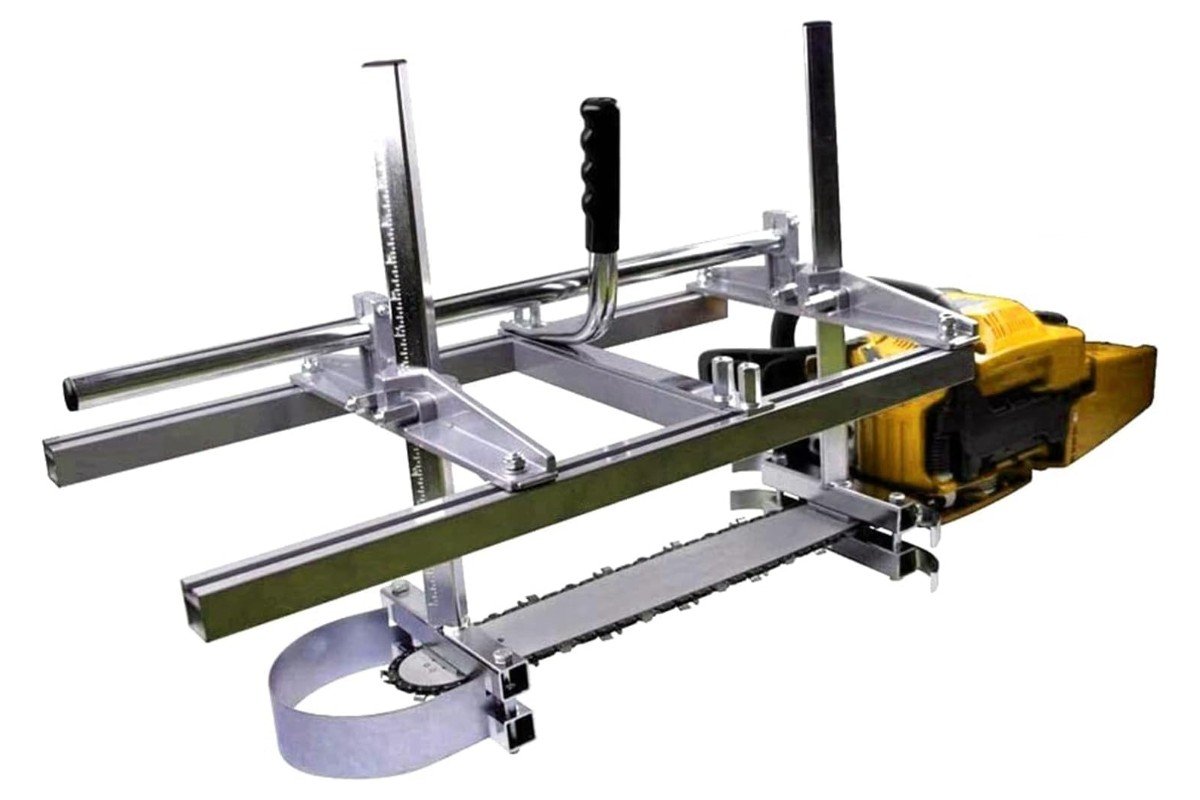
Best for: buyers comfortable modifying a bar (or using a dedicated milling bar they don't mind drilling) who want Zozen-level capability at a lower price.
Not ideal for: anyone who wants to keep their only chainsaw bar untouched: Granberg or Zozen's clamp-without-drilling design fits that need better.
Chainsaw compatibility: bar length and engine size
Before any of these attachments matter, your chainsaw has to be able to handle milling in the first place. Milling asks far more of a saw than felling or bucking does. The chain is under continuous load for the entire length of a cut, not just a few seconds. That generates heat and strain a saw built for occasional cutting was never designed to sustain.
As a rough baseline, most manufacturers and experienced millers recommend at least a 50cc engine for occasional, smaller-log milling, and 70cc or more for anything regular or wider than about 20 inches. Granberg's own listing specifically recommends 70cc or better for its MKIV. A saw below that range can still mill, but expect it to bog down in hardwood and take noticeably longer per cut.
Bar length works the same way across every attachment in this guide: whatever your bar measures, the mounting hardware takes up 3 to 4 inches of it before you make a single cut. A 20-inch bar realistically gives you 16 to 17 inches of cutting width once a mill is clamped on. If you're buying a saw specifically for milling, size the bar 3 to 4 inches longer than the widest board you plan to cut, not to the board width itself.
Cutting depth and what the spec sheet doesn't tell you
Every attachment in this guide lists a cutting-thickness range, typically somewhere between half an inch and 12 to 13 inches. What the spec sheet doesn't say is that thickness and width are two different limits, and only one of them is adjustable after you buy.
Thickness, how thick each slab comes out, is set by the mill's depth gauge and can be dialed to whatever you want within its range, on the fly, between cuts. Width, how wide a single slab can be, is fixed by your bar length once the mill is mounted, and it's the number that determines whether a given log fits your setup at all. A mill rated to cut "13 inches thick" doesn't mean it can handle a 13-inch-wide slab off a 14-inch bar. Check both figures against your bar length, not just the depth spec, before assuming a log will fit.
What the price difference is buying
Across these four, the price gap between the cheapest and priciest options isn't really about cutting quality: all four clamp onto a bar and follow the same basic mechanism. It's about build durability under repeated use, and how much community/support history exists if a part needs replacing. If you're planning to mill occasionally, that difference matters less than it looks like on a spec sheet. If you're planning to use this regularly, it starts to matter more.
Before you buy any of these
Your chainsaw's bar length and engine size set a hard ceiling on what a chainsaw mill attachment can do: see our guide on what size chainsaw you need for a chainsaw mill before choosing between these four. And if you're already fairly sure you'll be milling often enough that hand-guiding a chainsaw through every cut will wear thin, it's worth reading our chainsaw mill vs. bandsaw mill guide before spending anything.
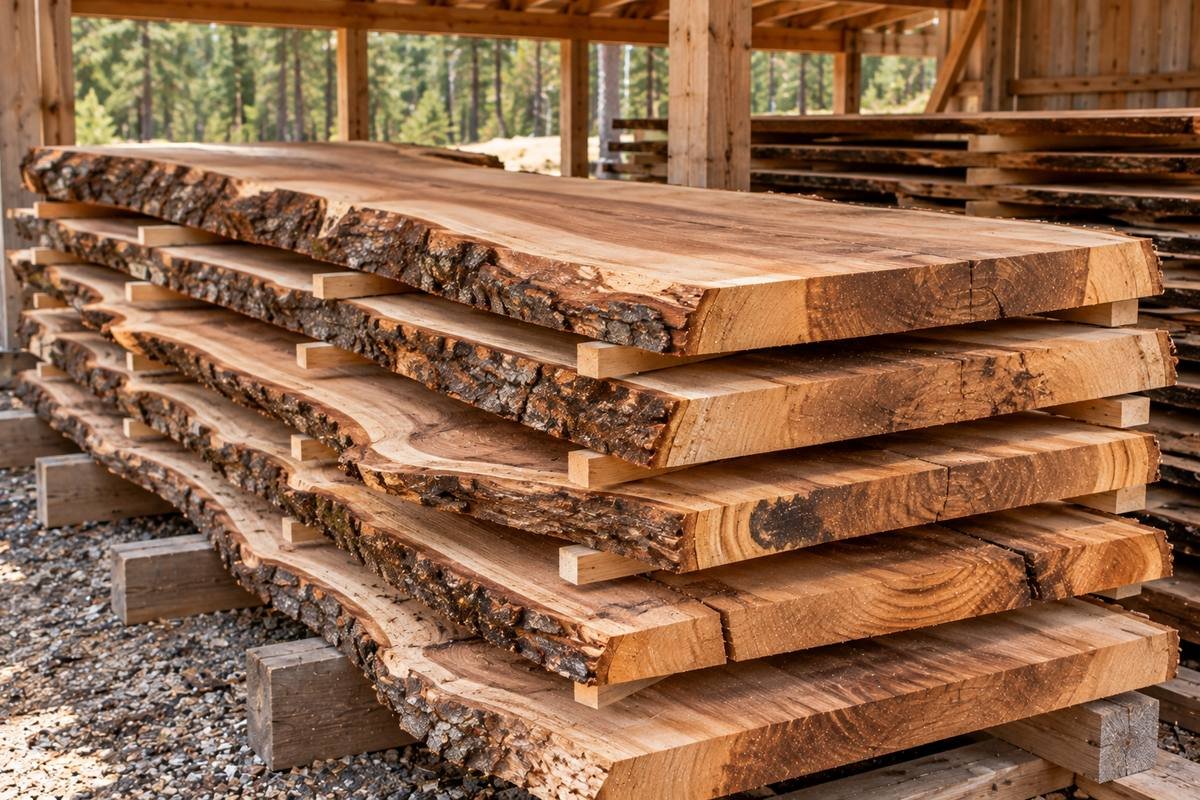
Our Pick: The Best Chainsaw Mill Attachment Overall
Here's the short answer on the best chainsaw mill attachment overall for most buyers, by priority:
- Want the safest, most established choice: Granberg Alaskan MKIV.
- Want the current best-reviewed option in the middle of the price range: Zozen.
- Want to spend as little as possible to find out if this is for you: VEVOR.
- Want Zozen-level capability at a lower price and don't mind drilling your bar: Carmyra.
Check Current Price: Granberg Alaskan MKIV
Check Current Price: Zozen
Check Current Price: VEVOR
Check Current Price: Carmyra
For a closer look at the top pick, read our full Granberg Alaskan Mill review. If your budget is at the low end of this category, our guide to the best budget chainsaw mill attachment covers the cast-iron rip bracket alternative. And if this is your first time milling, start with our guide to the best chainsaw mill attachment for beginners.
Safety basics before your first cut
A chainsaw mill attachment turns a chainsaw into a tool that's under sustained load for minutes at a time instead of seconds, and that changes the safety picture a little from ordinary cutting.
Wear the same protective gear you'd wear for any chainsaw work (chaps, eye and ear protection, and gloves), and add a face shield or mesh visor, since milling throws a steady stream of sawdust back at the operator for the length of the cut. Chock the log securely on both ends before starting. A log that shifts mid-cut with the bar buried its full length is a much bigger problem than one that shifts during a quick bucking cut.
Use a sharp, purpose-made ripping chain rather than a standard cross-cutting chain: the tooth angle is different, roughly 10 degrees on a ripping chain versus 30 degrees on a standard chain, and a standard chain will bog down and overheat under sustained milling load. And check your mounting hardware before every session, not just at setup: vibration loosens clamps and set screws over the course of a cut, and owners across every attachment in this guide report exactly that as their most common issue.
Quick answers
What size chainsaw do I need for a chainsaw mill attachment?
Most manufacturers and experienced users recommend at least 50cc for occasional, narrower milling, and 70cc or more for regular use or logs wider than about 20 inches. Below that range, a saw can still mill but will struggle and slow down noticeably in hardwood.
How much of my bar length do I lose to the mill?
Plan on losing 3 to 4 inches of usable cutting width to the mounting hardware, regardless of which of these four attachments you choose. A 20-inch bar realistically cuts 16 to 17 inches wide once mounted.
Do I need a special chain to mill with a chainsaw mill attachment?
You can start with a standard chain, but a ripping chain is the right tool for regular milling. The tooth angle is shallower, which matters because milling holds the chain in continuous contact with wood for the length of a slab instead of brief cutting bursts.
Can I use a chainsaw mill attachment to cut a full-width slab from a wide log?
Only up to your bar length minus the 3 to 4 inches the mount takes up. For anything wider than your bar can realistically handle, that's the point where a bandsaw or track mill becomes the better tool: see our chainsaw mill vs. bandsaw mill guide.