
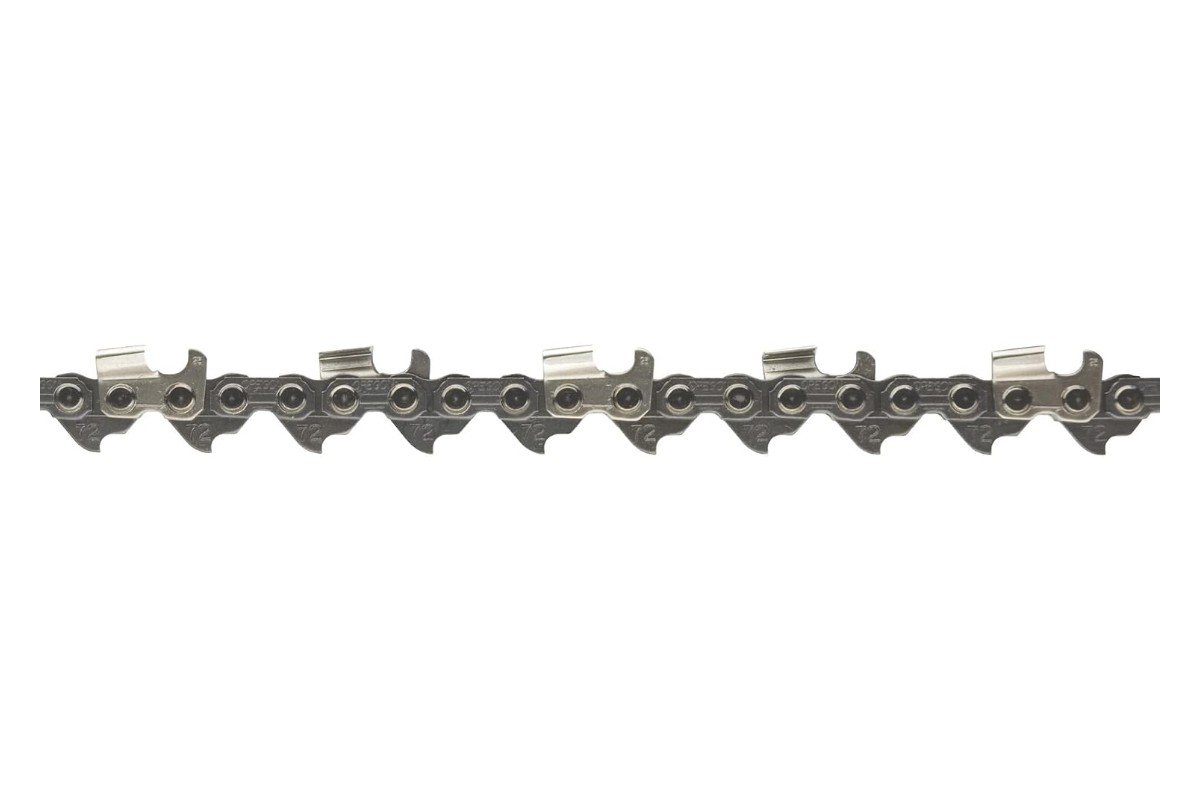
The best ripping chain for chainsaw mill work is not the chain already on your saw. Standard crosscut chain works fine for felling and bucking firewood, but drag it through a chainsaw mill, and you get a rough, slow, splintery cut that wears out your saw faster than it should. Ripping chain is ground at a completely different angle, built to cut with the grain of the wood instead of across it, and that difference is what separates a mill that struggles from one that cuts cleanly through a log.
This guide covers what a ripping chain is, how it differs from the chain you would use for felling or bucking, which brands make real ripping-specific chains for chainsaw milling, and how to figure out which one fits your particular saw. We also point to a handful of specific chains worth buying, based on research into current listings and specs rather than a lab test we did not run.
Table of Contents
What a ripping chain is, and how it differs from a regular chain
Every chainsaw chain has cutters ground at a specific angle, and that angle determines what the chain is good at. A standard crosscut chain, the kind that comes on a saw from the factory, has cutters filed to roughly 30 to 35 degrees. That angle is built for cutting across the wood grain, which is what felling a tree or bucking a log into rounds asks the chain to do. The cutters sever fibers cleanly across their width, like scissors cutting across a sheet of paper.
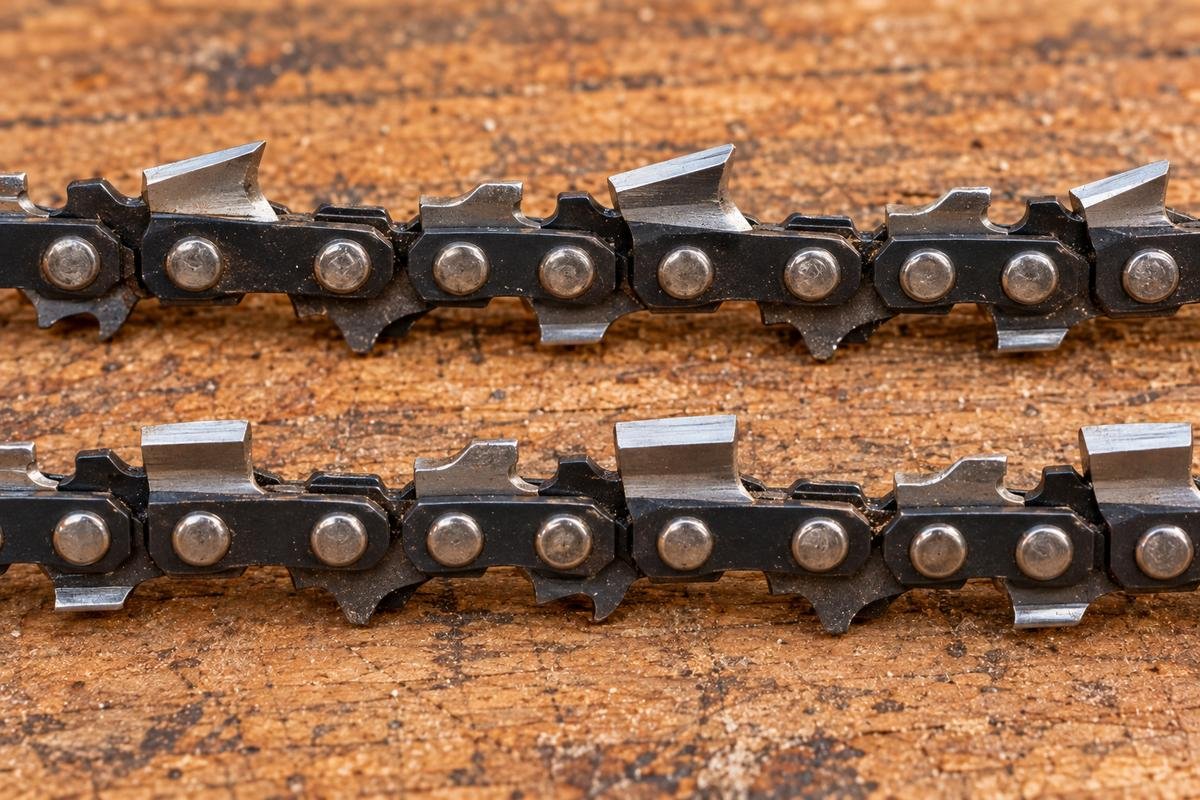
A chainsaw mill asks for something different. When you rip a log lengthwise into boards, the chain is cutting parallel to the wood grain the entire time, not across it. That is closer to what a hand plane or a rip saw blade does than what a crosscut chain is designed for. A ripping chain accounts for this by grinding the cutters at a much shallower angle, typically around 10 degrees, which is closer to a flat chisel than to scissors. That shallower angle shaves along the length of the fiber instead of trying to sever it, which is why a proper ripping chain leaves a noticeably smoother, flatter surface on a milled board.
Why the grind angle matters once you are milling
A steeper 30- to 35-degree cutter is aggressive across the grain but tends to grab and tear when dragged parallel to the fibers, which is exactly what happens inside a chainsaw mill cut. Granberg, one of the longest-running names in chainsaw milling equipment, files its ripping chains to that 10-degree angle because it reduces resistance and produces a cleaner cut when the chain moves with the grain rather than across it. The rakers, the depth gauges in front of each cutter that control how big a bite the tooth takes, also get filed down slightly further on a ripping chain. They typically go to around 0.025 to 0.030 inches, to keep the cut even without overloading the saw.
What happens if you mill with a regular chain anyway
You can technically run a chainsaw mill with whatever chain happens to be on the saw, and plenty of first-time sawyers do exactly that before they know any better. It will cut. It just will not cut well. A standard chain's steeper cutters tend to grab at the grain instead of shaving through it, producing a rougher, more torn surface on the board face and leaving visible ridges that need extra planing or sanding to clean up.
The saw also suffers. Milling is already a sustained-load task, as we cover in our chainsaw mill compatibility guide, and a chain that is fighting the grain the whole way through a cut asks the engine for more power to move the same amount of wood.
That extra resistance shows up as a slower feed rate, more heat in the bar and chain, and a saw that bogs down sooner on long rips. Over a full milling session, that adds up to more wear on the clutch, drive sprocket, and bar than a properly matched ripping chain would cause doing the same job.
Ripping chain brands worth knowing
Not every chain brand bothers making a true ripping chain, since the market is much smaller than the market for ordinary crosscut replacement chain. A handful of established names do, though, and they are worth knowing by name before you shop.
Granberg
Granberg makes the Alaskan mill, the chainsaw mill attachment most sawyers start with, and it also sells ripping chain sized to match. Granberg's ripping chain comes in most of the common pitch and gauge combinations, from .325 inch up to .404 inch pitch. It is sold as pre-cut loops or as 50- and 100-foot bulk rolls for anyone who wants to build their own loops with a chain breaker. Granberg's version also removes roughly half the width of the top plate on two out of every four cutters, which the company says takes less feed pressure and less saw power than a conventional full-width ripping chain while still clearing chips well.
- Comes in most common pitch and gauge combinations, from .325 up to .404 inch pitch
- Available as pre-cut loops or 50 and 100-foot bulk rolls for building your own loops
- Half-width top plate on alternating cutters reduces feed pressure and saw power needed while still clearing chips well
- Bulk-roll option requires a chain breaker most casual users don't own
- Reduced-cutter design is a different cutting feel than a conventional full-width ripping chain
Oregon
Oregon sells its own ripping chain line under the RipCut name, built specifically for chain-type mills rather than modified from a standard chain. Oregon's RipCut chains use the company's own OCS-01 steel and a lubrication design it calls LubriTec, aimed at keeping the chain and bar oiled under the longer, sustained cuts a mill puts a chain through. RipCut is sold in the same pitch and gauge sizes as Oregon's regular chain lineup, which makes it easy to match to a saw that already runs Oregon chain.
- RipCut is purpose-built for chain-type mills, not a modified standard chain
- Proprietary OCS-01 steel and LubriTec lubrication design aimed at long, sustained milling cuts
- Sold in the same pitch and gauge sizes as Oregon's regular lineup, easy to match if you already run Oregon chain
- Proprietary steel and lubrication tech likely carry a price premium over a generic aftermarket chain
- Locked into Oregon's own sizing conventions rather than a universal fit
Stihl
Stihl offers an RMX ripping saw chain in 3/8 inch pitch through its dealer network, aimed at Stihl saw owners who want a factory-matched chain rather than an aftermarket brand. Stihl does not sell its chains through general retail listings the way Oregon and Granberg do, so pricing and availability run through a local Stihl dealer rather than a fixed online price. If you already run a Stihl saw and prefer to stay inside the brand, this is the option to ask a dealer about by name.
- Factory-matched RMX chain for Stihl saw owners who want to stay inside the brand
- Dealer relationship means direct access to Stihl's own support and expertise
- Not sold through general retail listings, so pricing and availability depend on finding a local dealer
- No fixed online price to compare against other brands before buying
Aftermarket brands
Beyond the three chain makers above, a crowded field of aftermarket brands sells ripping chains at lower prices, often in two-packs, sized to fit common saws like the Stihl MS 271 and Husqvarna Rancher lines. These can be a reasonable way to keep a spare loop on hand without paying name-brand prices, but the quality control is more variable than what you get from Granberg, Oregon, or Stihl. Whichever brand you buy, matching the pitch, gauge, and drive link count to your saw matters far more than the logo on the packaging.
- Lower prices than the three name-brand makers, often sold in two-packs
- Convenient way to keep a spare loop on hand without paying name-brand prices
- Sized to fit common saws like the Stihl MS 271 and Husqvarna Rancher lines
- Quality control is more variable than Granberg, Oregon, or Stihl
- Buyer has to be extra careful matching pitch, gauge, and drive link count since there's no single trusted source
Chisel, chipper, and skip tooth: which style should you buy
Grind angle is not the only choice you make when buying a ripping chain. Two other distinctions matter for milling specifically.
Full chisel versus semi-chisel (chipper) teeth
Full chisel cutters have square corners and cut fast in clean, dry wood, but that sharp corner is also the first thing to chip if the chain touches dirt, bark grit, or an old nail. Semi-chisel, sometimes called chipper, teeth have a rounded corner instead. They cut a little slower but hold an edge longer and are more forgiving of the dirt and grit that show up on the outside of a log. Milling spends a lot of time near bark and soil-contaminated wood, so most ripping chains, including Granberg's, use a chipper-style tooth rather than a full chisel.
Full-comp versus skip tooth
A full-comp, or full-house, chain has a cutter on every link and produces the smoothest surface, but it also needs more power to cut because more teeth bite at once. A skip tooth chain leaves a plain drive link in place of a cutter every few links, which means fewer teeth are engaged in the wood at any moment. That takes less power, clears sawdust more easily on long rips, and runs cooler on longer bars, though it leaves a slightly rougher surface than full-comp. For bars over roughly 24 inches, or for smaller saws pushed to their limit, skip-tooth ripping chain is usually the more practical choice. For shorter bars on a saw with power to spare, full-comp ripping chain gets you the smoothest board.
How to find the right ripping chain for your saw
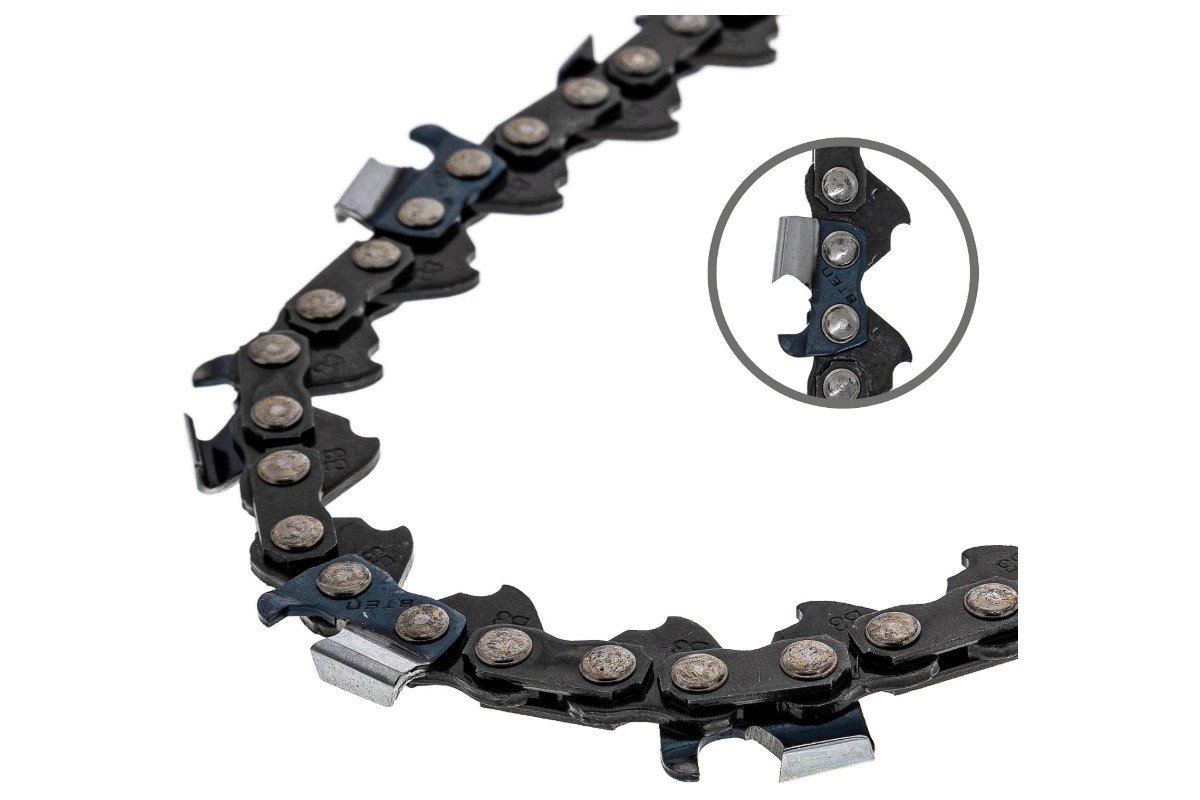
A ripping chain has to match your specific saw and bar, not just fit generally. No universal ripping chain exists, and buying the wrong size means it will not run on your bar's groove or seat correctly on the drive sprocket. Three numbers determine fit.
Pitch, gauge, and drive link count
Pitch is the distance between drive links, most commonly .325 inch, 3/8 inch, or .404 inch on saws big enough to mill with. Gauge is the thickness of the drive link where it seats in the bar groove, typically .050, .058, or .063 inch. Drive link count is simply how many links long the loop needs to be to fit your specific bar length. All three numbers are usually stamped on the bar itself near the mount, or listed in the chain that came with the saw from the factory. If the stamp has worn off, a dealer can measure the old chain or bar to confirm the size before you order a replacement.
Chain length for common mill setups
The bar length you need is not the same as the width of board you plan to cut. As we cover in our chainsaw mill compatibility guide, the mill's mounting bracket eats 3 to 4 inches of usable bar length once it is clamped on, so a 20-inch bar realistically mills logs up to around 16 inches wide. Buy your ripping chain to match the bar you are running, with a little headroom past your largest expected log, rather than sizing it to the log itself.
Our picks: ripping chains worth buying in 2026
These are picks based on our research into current specs and listings, not a lab test we ran ourselves. Confirm pitch, gauge, and drive link count against your own saw before ordering any of these. Each option below is currently listed.
Granberg ripping chain (.325, 3/8, or .404 pitch)
Granberg's ripping chain lineup covers every pitch and gauge combination a chainsaw mill is likely to need, from .325-inch chains up to .404-inch chains, priced higher for a pre-cut loop, with bulk 50- and 100-foot rolls available for larger setups. It is the natural first stop if you already run a Granberg Alaskan mill, since the sizing charts on Granberg's site are built around that exact use case.
Oregon RipCut 72RD070G (3/8 inch pitch, .050 gauge, 70 drive links)
This is Oregon's ripping chain sized for a 20-inch bar, available on Amazon. It is built around Oregon's own OCS-01 steel and LubriTec lubrication design, and it is a straightforward option for anyone already running Oregon bars and chain who wants to add a ripping loop without switching brands.
8TEN ripping chain, 2-pack (3/8 inch pitch, .063 gauge, 72 drive links)
For a lower-cost aftermarket option, 8TEN sells a 20-inch ripping chain sized for saws like the Stihl MS 271 and Husqvarna 465 Rancher, sold as a two-pack on Amazon. Having a spare loop already cut and ready cuts down on downtime if a chain dulls or breaks mid-project, which matters more on a mill than on ordinary bucking work.
Stihl RMX ripping saw chain (3/8 inch pitch)
If you run a Stihl saw and want a factory-matched chain, the RMX is sold through Stihl dealers rather than general retail, so check with a local dealer for pricing and the exact gauge and drive link count your bar needs.
Sharpening and maintaining a ripping chain
A ripping chain needs a different file angle than the chain you would use for felling and bucking. Where a standard chain gets filed at roughly 30 to 35 degrees, a ripping chain is filed to around 10 degrees, matching the shallower grind it left the factory with. Using a standard filing guide on a ripping chain will slowly turn it back into a crosscut chain, which defeats the purpose of buying one in the first place. A filing guide or grinder set specifically to 10 degrees keeps the geometry correct.
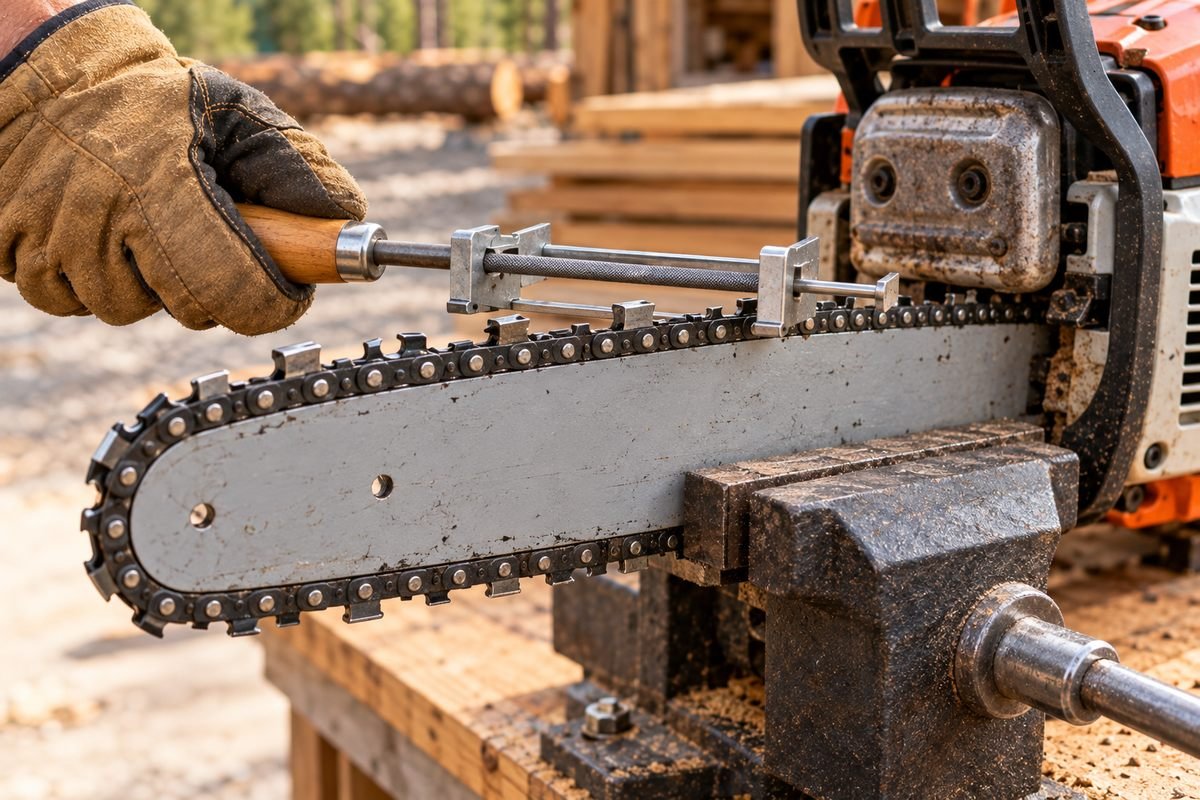
Rakers matter just as much as the cutter angle. Keeping them down around 0.025 to 0.030 inches lets each tooth take a consistent bite without overloading the saw or chattering across the cut. Because milling keeps a chain in contact with wood, bark, and whatever grit is embedded near the outside of a log for much longer stretches than ordinary bucking. Expect to touch up a ripping chain more often than you would a regular one, sometimes every log or two depending on how dirty the bark is. Our guide on how to sharpen a chainsaw mill chain covers technique and tools in more depth.
A ripping chain is one piece of a larger setup. For the rest of what goes into turning an attachment into finished lumber, see our full chainsaw mill attachments hub, along with our setup and first-cut guide and our chainsaw mill safety guide before your first cut. Get those fundamentals right first, then come back here when you are ready to choose a ripping chain.
Quick answers
Can I use a regular chain in a chainsaw mill?
Yes, it will physically cut, but a standard crosscut chain is filed for cutting across the grain, not with it. Expect a rougher, slower cut and more wear on the saw. A ripping chain, filed to roughly 10 degrees instead of 30 to 35, is built specifically for milling.
What ripping chain do I need for a 20-inch bar?
Check the pitch, gauge, and drive link count stamped on your bar, since a 20-inch bar can carry different combinations depending on the saw. Oregon's 72RD070G ripping chain, for example, is sized for a 20-inch bar with a 3/8-inch pitch, .050 gauge, and 70 drive links, but always confirm against your own bar before ordering.
How long does a ripping chain last when milling?
It varies a lot with wood type, bar length, and bark cleanliness, so there is no fixed number of logs. Expect to touch up the edge more often than you would on a chain used for ordinary bucking, since milling keeps the cutters in contact with wood and grit for much longer stretches per cut.
Do I need a different file to sharpen a ripping chain?
You can use the same round file, but you need to hold it at a shallower angle, around 10 degrees instead of the 30 to 35 degrees used on a standard chain. A filing guide marked for that angle, or a grinder set specifically to it, makes it easier to keep every cutter consistent.
Is a skip-tooth or full-chisel ripping chain better for milling?
For most chainsaw milling, a chipper-style tooth in a skip configuration is the more practical choice, since it needs less power and clears sawdust more easily on long bars. Full chisel in a full-comp pattern cuts faster and smoother in clean, dry wood, but dulls quickly on dirty bark and needs more saw power to pull through.
Does a ripping chain work for regular crosscutting too?
It will cut, but poorly. The shallow grind angle and different raker setting are built for cutting with the grain, so on a crosscut, a ripping chain feels slow and leaves a rougher cut than a standard chain. Keep a standard chain on hand for bucking and limbing, and save the ripping chain for the mill.