
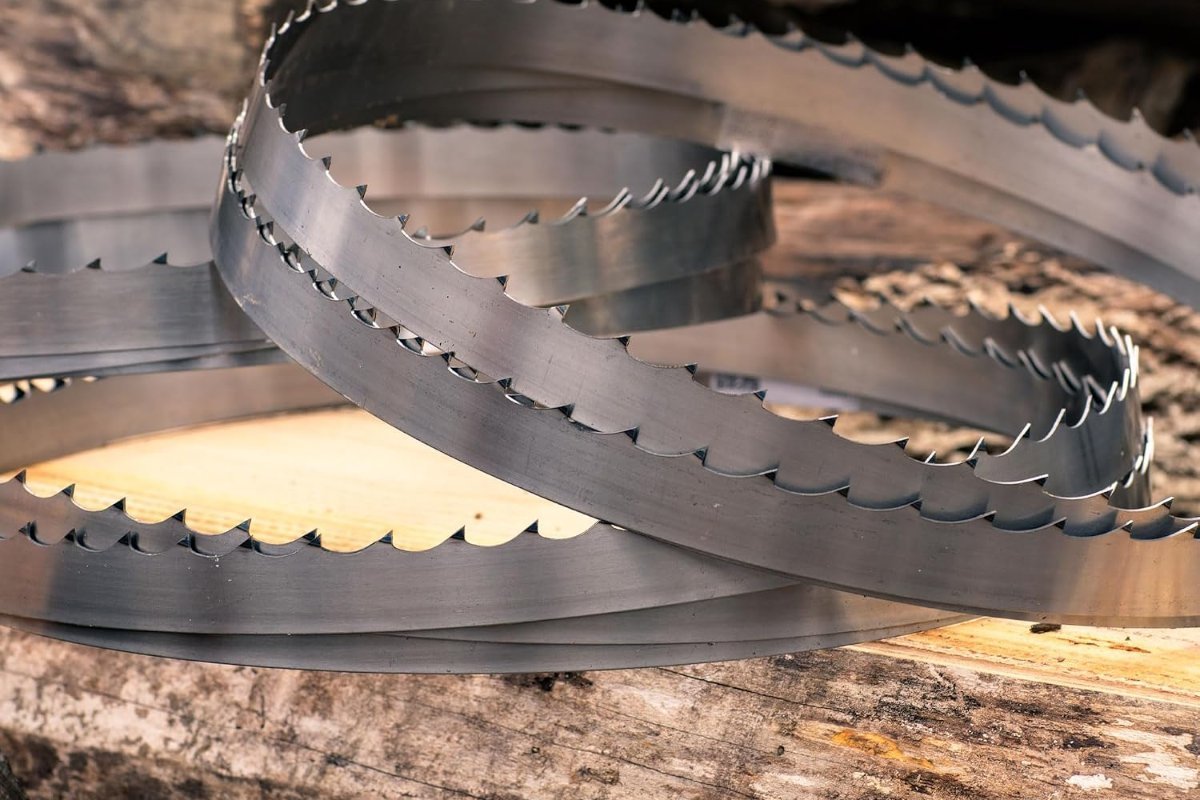
Choosing portable sawmill blades is a decision most new mill owners skip entirely: they buy their first replacement blade the same way they bought their first pack of nails, whatever the hardware aisle has in stock. That works until a blade dulls in twenty minutes on a knotty oak log it was never built for, or a carbide blade gets used on a log full of old nails. The blade is the one part of a portable sawmill that touches every board that comes off it, and it's also the part most owners think about least.
Here's what separates one sawmill blade from another, what a real budget for blades looks like, and what working sawyers say when you ask them directly rather than read a spec sheet. For the mill itself rather than the blade, our professional and commercial milling guide covers the equipment side of this same decision, and our price and cost guide covers the mill's own price tiers.
Table of Contents
The four blade types, and what each is for
Nearly every portable sawmill blade on the market falls into one of four categories, and the differences are in the steel and tooth tip, not the brand name stamped on the box.
Standard carbon steel blades are the economical starting point, suited to general-purpose cutting but needing more frequent resharpening than anything above them. Induction-hardened blades step up from there, built from higher-alloy steel with hardened teeth that roughly double the sharp life of a standard carbon blade, and they hold up well across softwood, hardwood, knotty wood, and frozen wood alike. Bi-metal blades go further, using a wire-welded hardened tooth tip that can hold an edge up to three times longer than a standard carbon blade, which is why production sawmills running long hours tend to default to bi-metal.
Carbide-tipped blades sit at the top, built to cut through tropical hardwoods, kiln-dried lumber, engineered wood, and other abrasive material that would dull a steel blade fast, according to Wood-Mizer's blade type guide. The tradeoff is real: carbide blades need diamond-wheel resharpening, which most owners can't do themselves, and they cost several times as much as a standard blade.
Matching hook angle to the wood you're cutting
A blade's hook angle determines whether it's the right blade for the log in front of it, and it's a simpler decision than the marketing suggests. A 7-degree hook angle is the standard choice for frozen timber and dense hardwoods, a 10-degree angle covers general-purpose cutting across most species, and a 14-degree angle is built for softwoods, where a more aggressive tooth clears sawdust faster without bogging down.
Running the wrong angle doesn't just cut slower. It shortens blade life. A softwood-tuned blade forced through frozen oak will dull fast and can start to wander in the cut, while a hardwood-tuned blade on soft pine will clog with sawdust and generate extra heat. Keeping one blade in each range on hand, rather than one all-purpose blade for everything, is the cheapest fix most owners never make.
What blades cost
Standard carbon steel band blades vary in price depending on length and supplier, while carbide-tipped blades cost several times that upfront. Bulk pricing shifts the math further. A side-by-side pricing breakdown found Wood-Mizer's blades running noticeably higher per blade when ordered in a 10-pack than a comparable bi-metal blade from a lower-cost supplier. That gap adds up across a season of regular resharpening cycles, according to a bi-metal blade pricing comparison. None of these figures are quotes, and actual pricing depends on the supplier, blade length for your specific mill, and how many you buy at once.
How long a blade lasts
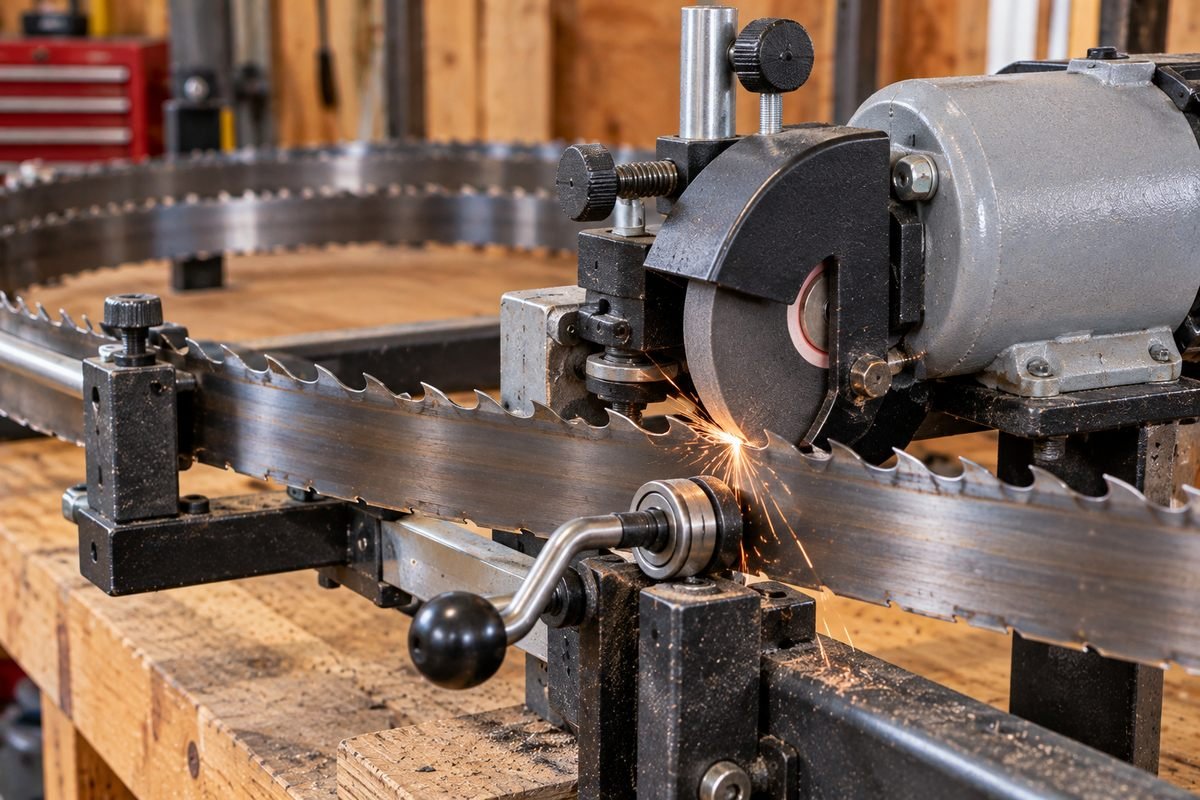
There's no single answer for how long portable sawmill blades last, since it depends more on maintenance and cutting conditions than on a fixed number. But the ranges working sawyers report give a useful planning baseline. Most blades run somewhere between 2,000 and 4,000-plus board feet (a lumber volume unit: 12 by 12 by 1 inch) before needing a resharpening. A well-maintained blade can typically be resharpened up to five times before it's retired for good.
Many production sawyers swap in a freshly sharpened blade roughly every hour and a half of active cutting rather than running one blade until it's visibly dull. A slightly premature swap costs less than the rough cuts and wasted lumber a dulling blade produces.
Dirty logs are the fastest way to shorten that life. Bark, embedded grit, and buried metal dull a blade far faster than clean wood, which is why a blade that hits a fence staple or an old nail often needs an unscheduled resharpening mid-job. Worn guide rollers, loose belts, and a mistracked blade wheel accelerate wear too, so a blade that keeps dulling fast even on clean logs is sometimes a mill maintenance problem rather than a blade problem.
What working sawyers say about brands
Ask five sawyers which blade brand is best, and you'll usually get five different answers, and that's the most useful data point of all. In a survey of working sawmill operators, Timberwolf blades drew the most consistent praise for longevity, with one operator reporting up to 24 hours of running time cutting pine and hemlock before needing a resharpening.
Wood-Mizer's own blades remain the most widely used, valued by many operators for consistency in the set, though opinions on cutting performance varied. Simonds Red Streak blades came up repeatedly as sharper straight out of the box than Wood-Mizer's stock offering. Long-time users rated Cook's Saw blades as functionally equivalent to Wood-Mizer's. One sawyer stuck with Wood-Mizer mainly for its resharpening service rather than any cutting advantage.
The pattern across nearly every account is the same: brand differences are smaller than the difference proper sharpening, correct tooth set (how far the teeth are bent outward to clear the cut), and blade tension make. An operator running a mid-tier blade with a well-maintained sharpener will consistently outcut someone running a premium blade with sloppy setup.
Where to buy blades that fit your mill
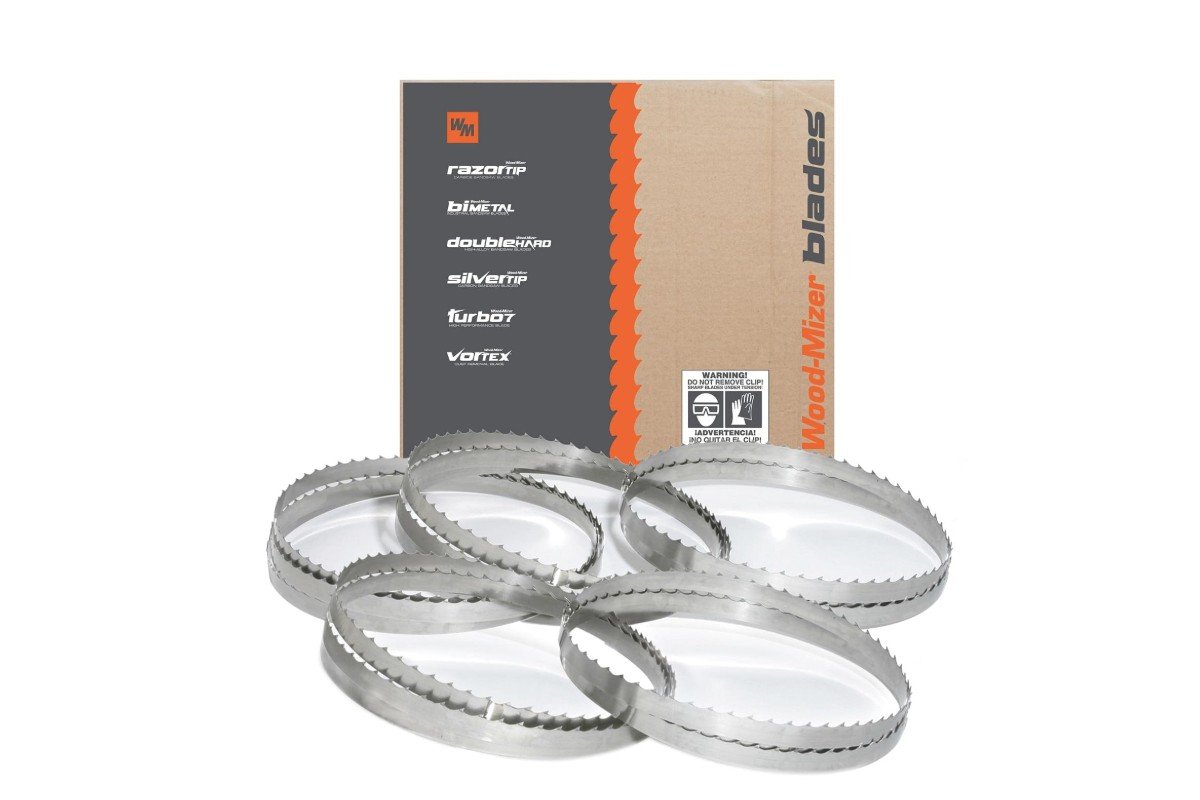
Blade length and width vary by mill model, so before ordering portable sawmill blades from anyone, first confirm the exact blade size your mill takes, not just its brand. Most manufacturers, including Wood-Mizer and Cook's Saw, sell portable sawmill blades cut specifically for their own mills and for several competing brands' mills as well, and independent suppliers often carry the same steel in more sizes than either manufacturer stocks directly. Buying a full box rather than single blades is worth doing once cutting volume is steady, since per-blade pricing drops noticeably at 10-blade quantities across nearly every supplier.
Best portable sawmill blades: quick recap
Standard carbon blades cost the least and suit occasional cutting, bi-metal blades hold an edge up to three times longer and suit regular use, and carbide blades handle the hardest, most abrasive material but need diamond-wheel resharpening. Match hook angle to wood: 7 degrees for hardwood and frozen timber, 10 for general use, 14 for softwood, and expect 2,000 to 4,000-plus board feet per sharpening with up to five resharpenings per blade. Brand matters less than maintenance: Timberwolf, Wood-Mizer, Cook's Saw, and Simonds all have loyal users, and working sawyers consistently say setup and sharpening quality outweigh whatever name is stamped on the blade.
Frequently asked questions
What's the best all-around sawmill blade for a beginner?
A double-hard or bi-metal blade with a 10-degree general-purpose hook angle is the most practical starting point, since it handles a wide mix of softwood and hardwood without needing a blade swap for every log. Carbide blades are more than a beginner needs, and standard carbon blades will need resharpening too often to be convenient while learning.
How do I know when a blade needs sharpening?
Rougher cut surfaces, increased resistance pushing the blade through the log, a cut line that wanders instead of running straight, and visible burning or discoloration on the wood are the clearest signs. If the blade's core is still sound, resharpening restores performance. Visible cracks in the gullet, broken or missing teeth, or repeated tracking problems mean it's time to retire the blade.
Is it worth buying a more expensive blade brand?
Not automatically. Working sawyers report that maintenance quality, correct tooth set, and proper tension make a bigger difference in cut quality and blade life than brand choice does. A mid-priced blade that's properly sharpened and set will usually outperform a premium blade that isn't.
Can I use the same blade on softwood and hardwood?
A 10-degree general-purpose hook angle blade can cut both reasonably well, but a blade tuned to the wood (14 degrees for softwood or 7 degrees for hardwood) will cut faster and last longer. Owners who cut a consistent mix of species often keep one blade of each type on hand rather than compromising with a single general-purpose blade.