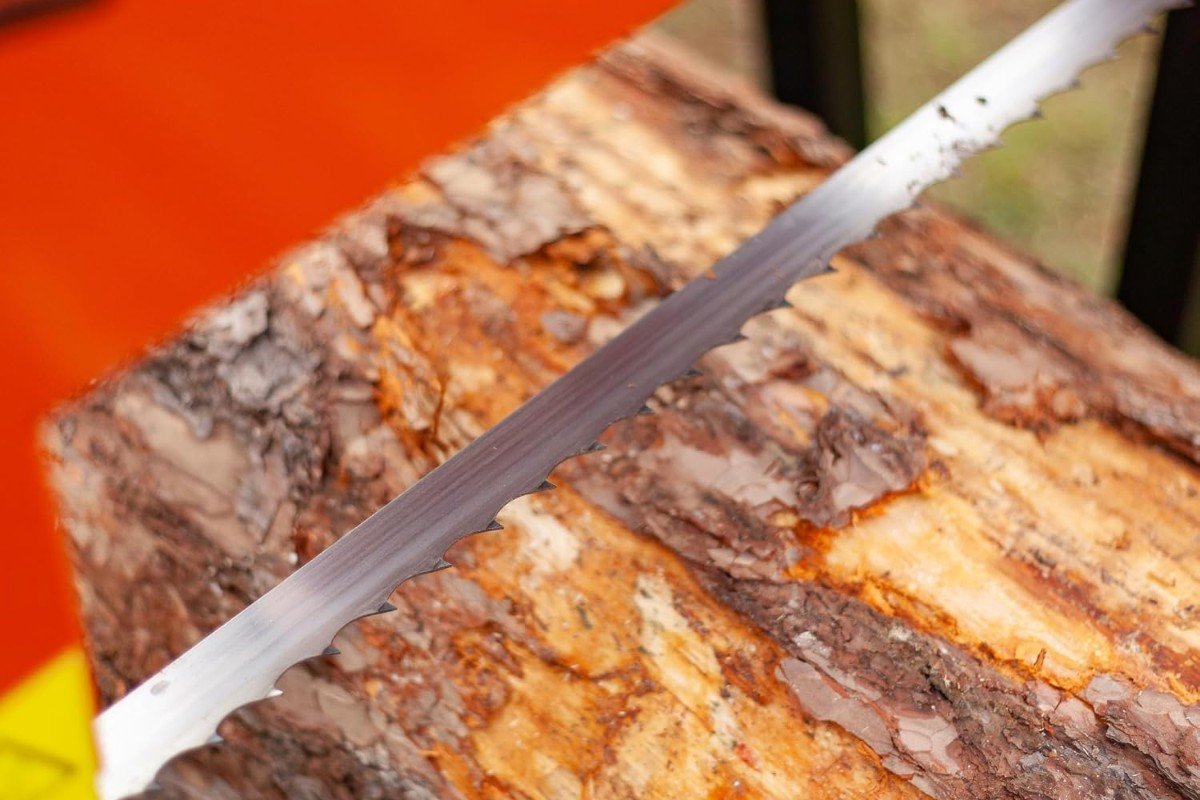
A portable sawmill will eventually need a part that isn't the blade: a stretched drive belt, a worn blade guide roller, a hydraulic seal that starts weeping fluid onto the frame. When that happens, most owners learn that sourcing portable sawmill parts isn't one aisle at a hardware store. It's a brand-specific catalog, a model number, and sometimes a serial number that changed what fits partway through a production run.
Here's how parts sourcing works across the major brands, what tends to wear out first and what it costs, and when an independent supplier is a smart alternative to paying manufacturer prices. For the blade itself, our portable sawmill blades guide covers blade types, costs, and where to buy them, and our price and cost guide covers what the mill itself runs by size and type.
Table of Contents
Why mill parts are brand-specific
Unlike a lawn mower or a table saw, portable sawmills aren't built to a common industry standard for belts, guides, or hydraulic fittings. Each manufacturer designs its own frame geometry, roller sizes, and hydraulic layout, and even within one brand, parts can change between model years or between a base model and its upgraded variant. A blade guide roller that fits a Wood-Mizer LT40 doesn't fit an LT15, and neither fits a Norwood or a Woodland Mills mill.
That means the starting point for any portable sawmill parts order isn't the part name. It's the mill's exact model and, for older or upgraded mills, the serial number. Most manufacturer parts catalogs are filterable by model for exactly this reason, and skipping that step is the single most common cause of an order that shows up and doesn't fit.
Buying direct from the manufacturer
For most owners buying portable sawmill parts, the manufacturer's own parts catalog is the simplest and safest place to start, since fit is guaranteed and the catalog is organized by model. Wood-Mizer's parts site breaks its inventory into categories including belts, bearings, blade guide parts, hydraulic components, and full parts packs bundled by model, according to Wood-Mizer's parts catalog. Norwood's replacement parts collection includes over 350 individual items organized by model, from small hardware like flanged nuts and lock nuts to carriage wheels and blade guide assemblies, per Norwood's parts listings. Woodland Mills and Hud-Son both run similar model-filtered catalogs, covering everything from bearings and belt kits to full maintenance kits bundled for a specific mill.
The tradeoff is price. Manufacturer parts carry a brand premium, and shipping on a heavy item like a carriage wheel or a hydraulic component can add meaningfully to the total. What you're paying for is certainty: the part is guaranteed to fit, and it's built to the same spec as what came on the mill originally.
What wears out first, and what it costs
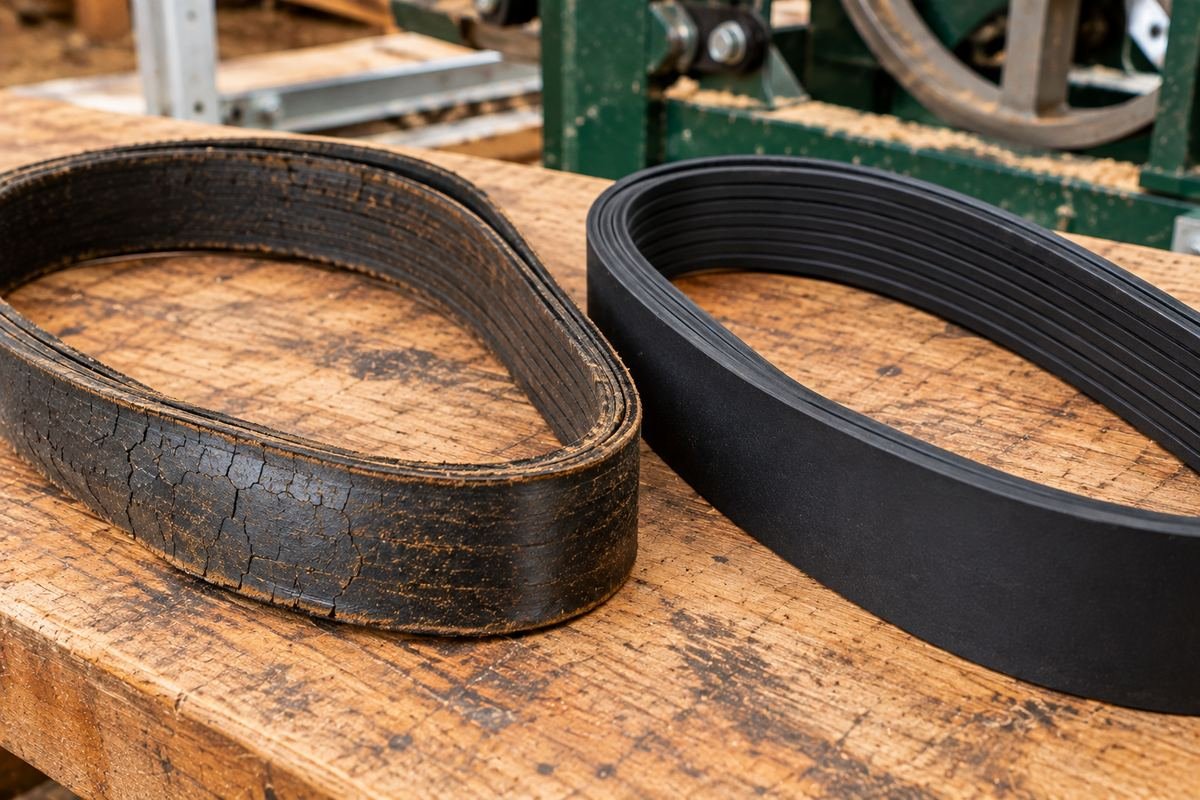
A handful of components account for most portable sawmill parts orders across every brand, and knowing what to expect ahead of time makes budgeting for ongoing ownership easier. Drive belts and blade wheel belts are the most frequent wear items outside the blade itself. Wood-Mizer's blade wheel belts and drive belts are both relatively inexpensive individually, according to its parts catalog. Woodland Mills sells its belts bundled into a kit that runs somewhat higher depending on the model.
Blade guide parts come next. These rollers and guide assemblies keep the blade tracking straight through the cut, and they wear from constant contact with the moving blade. Wood-Mizer's individual blade guide rollers carry a moderate per-unit cost, Norwood's ceramic guide inserts run somewhat less each, and Woodland Mills' adjustable blade guide upgrade is priced noticeably higher as a full assembly.
Bearings are the third common category, since every roller, wheel, and shaft on the mill rides on one. Individual bearings are relatively affordable across brands, though flanged carriage wheel bearings and clutch assemblies run noticeably higher on Woodland Mills' catalog. Hydraulic components, on mills equipped with hydraulic log handling or blade height adjustment, are the priciest common wear category. Tensioner seal kits stay inexpensive, but larger hydraulic assemblies and control modules climb well past that. Wood-Mizer's own hydraulic parts category spans a wide range depending on the component.
Independent suppliers and when they make sense
Independent suppliers of portable sawmill parts exist alongside the manufacturer catalogs, and for common items like bearings, belts, and generic hardware, they can cost meaningfully less than the brand's own part for the identical or near-identical component. Cook's Saw, for instance, sells roller guides and general sawmill parts and tools directly, and marketplaces like SawmillTrader list used and surplus band sawmill parts from private sellers and dealers.
The tradeoff runs the other way from buying direct: fit isn't guaranteed the way it is from the manufacturer's own catalog, and a generic bearing or belt that's close but not exact can wear unevenly or fail early. Independent suppliers make the most sense for generic hardware, common bearing sizes, and belts where the spec is easy to confirm. They make less sense for mill-specific assemblies like hydraulic manifolds or carriage components, where an exact match matters more and a mistake is more expensive to undo.
Matching parts to your exact mill
Before ordering anything beyond the most generic hardware, confirm three things. You need the mill's model name, its year or serial number if the manufacturer's catalog asks for one, and, for anything that touches the drivetrain or hydraulics, a photo or measurement of the part being replaced. Manufacturers sometimes revise a component mid-production without changing the model name, so a part that should fit by model number alone occasionally doesn't. Keeping the mill's manual and any parts diagrams that came with it on hand makes this lookup far faster than guessing from memory.
Parts packs and maintenance kits
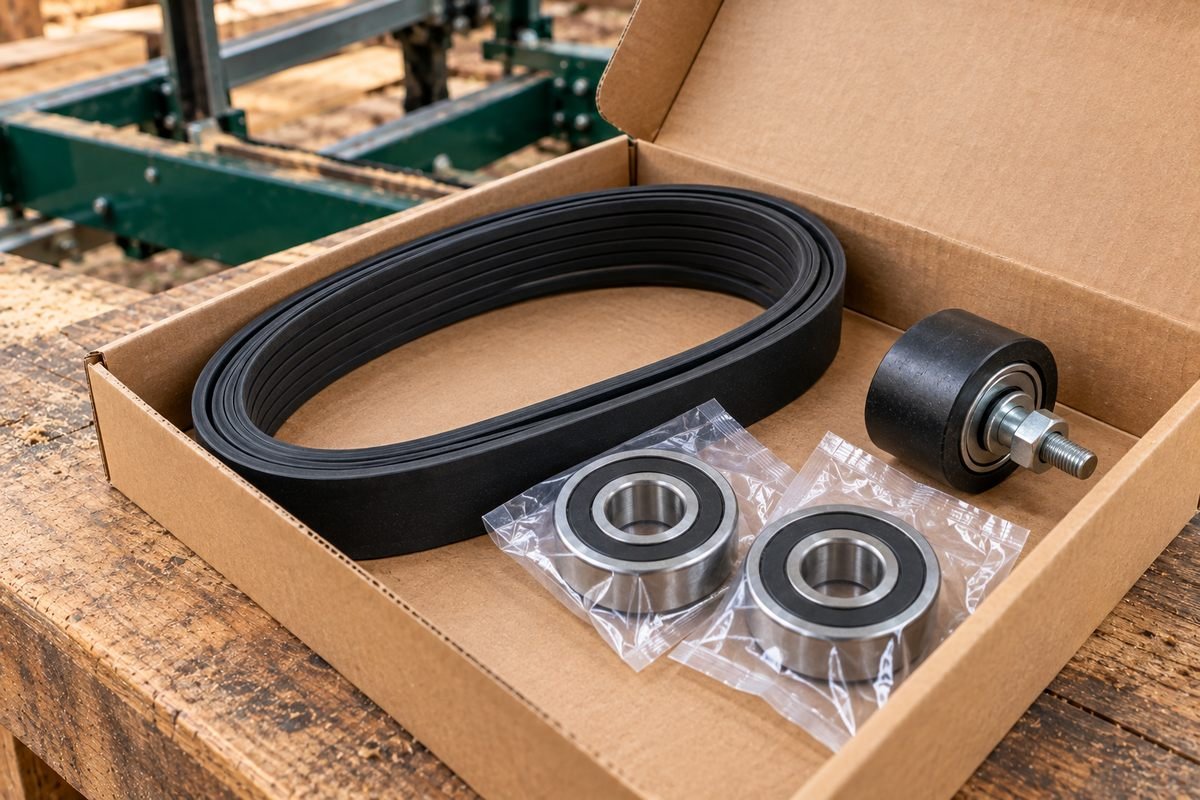
Most manufacturers bundle their most commonly replaced portable sawmill parts into a single parts pack or maintenance kit priced below what the same items would cost ordered separately. Wood-Mizer's sawmill parts packs vary by mill model and roller size, and bundle belts, bearings, and guide components likely to wear together. Woodland Mills' maintenance kits are priced similarly and bundle a comparable mix. For an owner doing scheduled maintenance rather than reacting to a specific failure, a kit is usually the better value than piecing together the same parts individually. It's priced as a bundle and covers the items most likely to need attention at the same service interval.
Portable sawmill parts: quick recap
Portable sawmill parts are model-specific, not universal, so start any order with the mill's exact model and serial number rather than the part's generic name. Manufacturer catalogs guarantee fit at a price premium, while independent suppliers can save money on generic hardware, bearings, and belts but carry more fit risk on mill-specific assemblies. Belts, blade guide parts, bearings, and hydraulic components account for most ongoing parts spending, ranging from inexpensive small hardware up to pricier hydraulic assemblies or full parts packs. Bundled maintenance kits are usually the better value for scheduled upkeep rather than ordering the same items piecemeal.
Frequently asked questions
Can I use aftermarket parts on any brand of portable sawmill?
Generic hardware, common bearing sizes, and belts can often be sourced from independent suppliers at a lower cost than manufacturer parts. But mill-specific assemblies like hydraulic components, carriage parts, and blade guide brackets are safer to buy from the manufacturer's catalog, where fit is guaranteed.
How do I know which parts fit my sawmill?
Start with the mill's exact model name and, if the manufacturer's catalog asks for it, the serial number or year of manufacture, since parts can change mid-production without a model name change. Most manufacturer parts catalogs filter by model to help confirm fit before ordering.
What sawmill parts wear out the fastest?
Drive belts and blade wheel belts are typically the most frequently replaced items outside the blade itself, followed by blade guide rollers and bearings, all of which see constant contact and movement during cutting.
Are maintenance kits worth it compared to buying parts individually?
Usually yes, for scheduled upkeep. Kits bundle the items most likely to need replacement at the same service interval and are typically priced lower than buying the same parts individually.